How Much Does a Bleach Bowl Cost? Work Out the Price Per Gram
How much a bleach bowl really costs: compare each tub of powder and developer by price per gram, apply the mixing ratio on your sheet and weigh what you use.
Blendsor
Blendsor Team
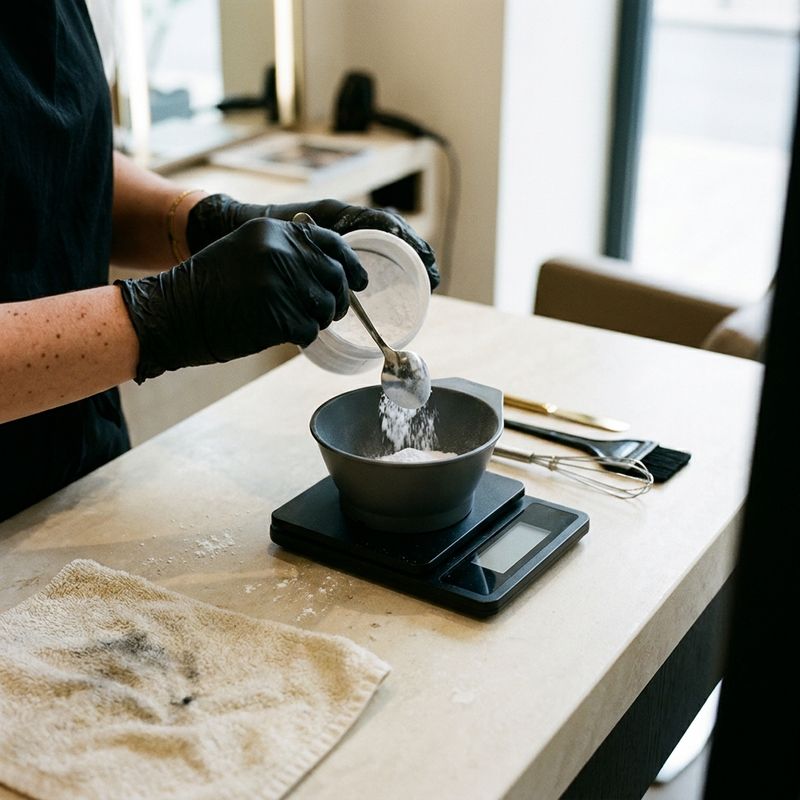
Time to restock bleach powder, and the supplier offers two tubs. One costs $12. The other, $20.
With only those two prices on screen, the bargain looks obvious. But a salon does not pay for a tub: it pays for a bowl, and a bowl costs whatever you weigh into it, times what each gram of that costs.
In this article you will see how to compare two tubs by what each gram costs, where the mixing ratio comes in, and how to weigh the bowl so the math is really yours. The full formula for pricing a service is already in the hair color pricing guide, and the grams each service takes are in how much hair dye you need. Here we stay with a single piece: the bleach bowl. This article is part of our complete business guide for color salons.
Quick summary: compare a tub of powder by its price per gram (the price of the tub divided by its grams), and do the same for developer. A bowl costs the powder’s price per gram times the grams of powder, plus the developer’s price per gram times the grams of developer. The ratio comes from your manufacturer: in Wella’s US lightening guide (2020), Blondor Multi Blonde Powder takes developer from 1:1.5 up to 1:2, and inside that range the job decides, not the savings. The dollar figures in this article are invented examples: no real prices, no shops, no brand compared on price.
How do you compare two tubs of bleach powder?
By the price of the gram, not the price of the tub. Divide what each tub costs by the grams it holds. With example figures, made up only for the math:
| Tub A | Tub B | |
|---|---|---|
| Price of the tub | $12 | $20 |
| Grams in the tub | 250 g | 500 g |
| Price per gram | almost 5 cents | 4 cents |
Tub A, the one that looked like the bargain, comes to almost 5 cents a gram, because 12 divided by 250 is 4.8 cents. Tub B is 4. In the example, the tub that costs less at checkout costs more per gram, and you never see that difference when you order: you see it in the bowl.
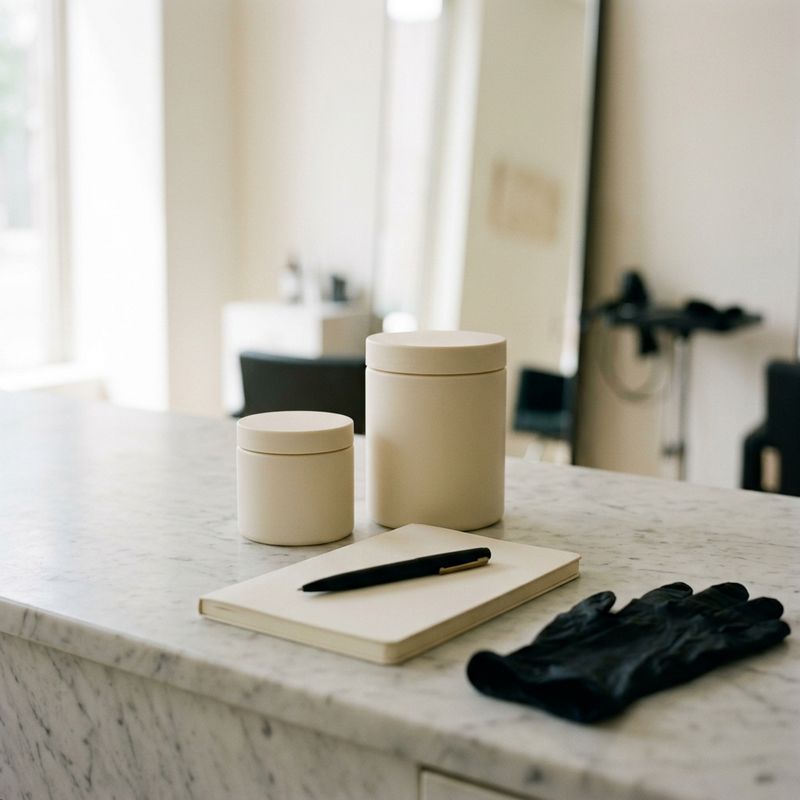
At checkout you see the price of the tub. In the bowl, the price of the gram.
Do you compare developer by the gram too?
Yes, with the same math: price of the bottle divided by what it holds. Developer is usually sold by volume: if a $5 bottle holds one liter (33.8 fl oz, 1,000 ml), each milliliter comes to half a cent. For the example we count that liter as 1,000 g; if you weigh developer instead of measuring it, a liter needn’t weigh exactly 1,000 g.
Half a cent looks like nothing, which is why it gets forgotten. But a bowl holds more developer than powder, so it belongs in the math even if it weighs little on the total. For a refresher on how one developer differs from another, the guide to developer volumes covers the other half of the decision.
How much powder and how much developer go in the bowl?
Whatever your sheet says. In Wella’s US lightening guide (2020), the instruction for Blondor Multi Blonde Powder is to add developer from 1:1.5 up to 1:2. At 1:2, each part of powder takes two of developer: the powder is one part in three.
If your product sheet doesn’t say when to use each end of the range, the job in front of you makes that call, not the savings. If it doesn’t say whether the ratio is by weight or by volume either, confirm it with your brand’s distributor before it becomes a habit. Each brand, and sometimes each country, sets its own limit: check your manual.
For the math, suppose you weigh both and mix the bowl at 1:2, with 60 g of powder and 120 g of developer. With the prices above:
| Part of the bowl | Grams | With tub A | With tub B |
|---|---|---|---|
| Powder | 60 g | $2.88 | $2.40 |
| Developer | 120 g | $0.60 | $0.60 |
| Bowl of 180 g | $3.48 | $3.00 |
That is 48 cents of difference per bowl. Over twenty bleach services, almost ten dollars.
The example shows one more thing: the powder is a third of the bowl by weight, yet it carries around eight of every ten dollars of its cost. That is why the powder is the tub to compare closely, and also why the temptation to cut corners shows up there first. It is not the place. The ratio comes from the sheet and, inside its range, from the job; what is in your hands is which tub you buy and how much you really weigh.
How do you weigh the bowl so the math is real?
With a scale and a notebook. This is the habit that turns a price per gram into a cost per bowl:
- Put the bowl on the scale and zero it. Wella’s Spanish store page for this powder asks for a non-metallic bowl; check what your own sheet says about the container.
- Add the powder and write down the grams.
- Add the developer and write it down again. Price per gram and grams used must be in the same unit: if you buy by weight, weigh; if you buy by volume, note the volume.
- On long hair, repeat by zone: each zone, its own bowl, its own note. If your sheet asks you to use the mix right away, you mix in parts, not all at once.
- At the end, weigh the bowl with what is left and write that down.
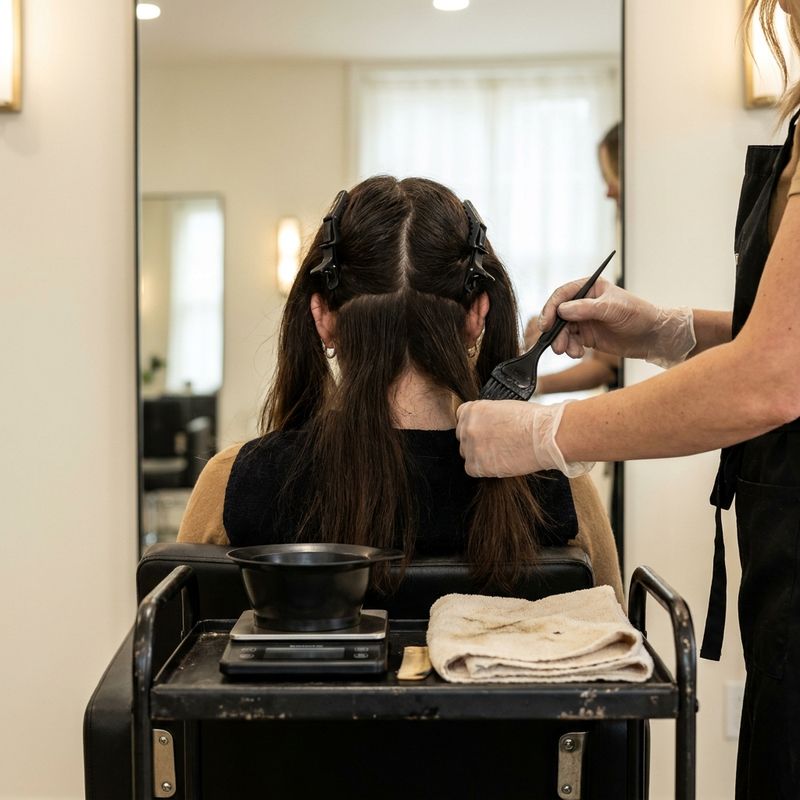
Each zone, its own bowl, its own line in the notebook.
After a few bleach services, the notebook shows how much the bowl in your salon really weighs, and that number, not the one in your head, is the one that goes into the math. To know which grams to start from by length and thickness, the table in how much hair dye you need works as a starting point; the notebook has the last word.
Before any lightening: a patch test, not on the same day as the color appointment, and a strand test with an elasticity check. This article is about dollars and grams, not technique: the step by step is in the professional bleaching guide.
What makes the bowl math go wrong?
Four mistakes keep coming back:
- Comparing by the price of the tub. It is the only number the order screen shows and the least useful one.
- Forgetting the developer. It weighs little in dollars, but it is in every bowl and in quantity.
- Mixing units. A price per gram multiplied by milliliters gives a figure that looks fine and is not.
- Using the grams from a chart instead of the grams you use. A chart guides the order; the scale tells the truth.
Frequently asked questions
Can a cheaper tub end up costing more?
Yes, if it holds fewer grams. What counts is the price per gram: in the example, the $12 tub with 250 g comes to almost 5 cents a gram and the $20 tub with 500 g, to 4. With a 60 g bowl of powder, that is 48 cents of difference.
How much does a bleach bowl cost?
There is no figure that fits every salon: it depends on what your salon pays per gram of powder and developer and on what you really weigh. The math has two parts: grams of powder times their price per gram, plus grams of developer times theirs. To turn that cost into the price of a service, the hair color pricing guide adds time, fixed costs and profit.
Can I save by putting less powder in the bowl?
That is not the place. The manufacturer gives a ratio range (in Wella’s US guide for Blondor Multi Blonde Powder, 1:1.5 up to 1:2) and inside it the job decides. The cost of the bowl comes down elsewhere: comparing tubs by the gram, weighing what you use and mixing by zone if your sheet asks for the mix to be used right away.
Should I weigh developer or measure it in milliliters?
What matters is that price and quantity are in the same unit. If you buy developer by weight, weigh it; if you buy it by volume, note the volume. The scale also repeats better than the pulse of a busy afternoon.
In short
- Compare by the gram: price of the tub divided by its grams, for powder and for developer.
- A bowl adds two products: grams of powder times their price per gram, plus grams of developer times theirs.
- The ratio comes from the sheet: inside its range, the job decides.
- Weigh what you use and note it by zone: that notebook is your real cost.
Count it in grams.
Calculate professional formulas with AI
Want to generate personalized lightening formulas based on the starting level and the chemical history of each person?
How much product went into the last bleach service you did?
Manufacturer sources
Manufacturer documents consulted for this article. A copy of each one is kept, and the passages noted from it are checked against that copy.
Note each one's country: the same line's instructions can differ from one market to another, so follow the directions for the product you use.
Related articles


The Blendsor newsletter
Color techniques and trends for professionals. No spam.
Every client, one tap from their history
Formulas, hair health and evolution saved on their own. You and your team open the card and pick up where you left off.
See how it worksWritten by the Blendsor team
Professional hair colorimetry experts with experience in AI-assisted formulation. We combine color science, salon practice and technology to help colorists formulate with precision.