Toner on Bleached Hair: The Complete Guide
How to choose and apply toner on bleached hair. Read the undertone, pick the right toner family, developer volume, timing by porosity, and fix mistakes fast.
Blendsor
Blendsor Team
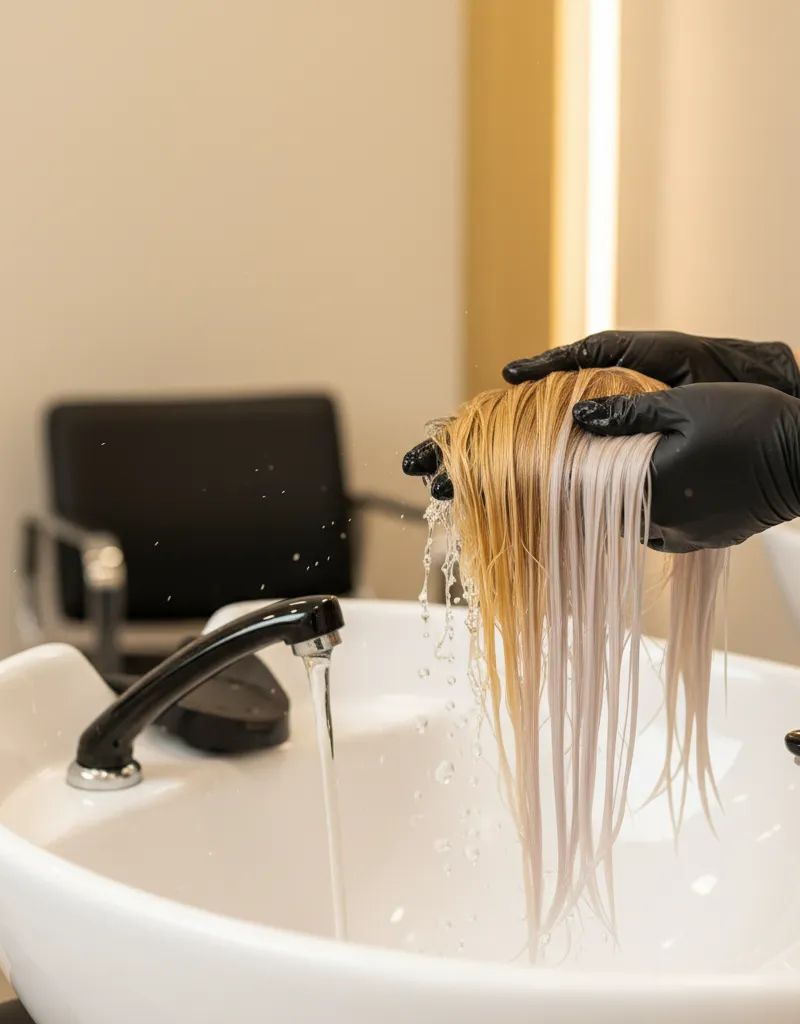
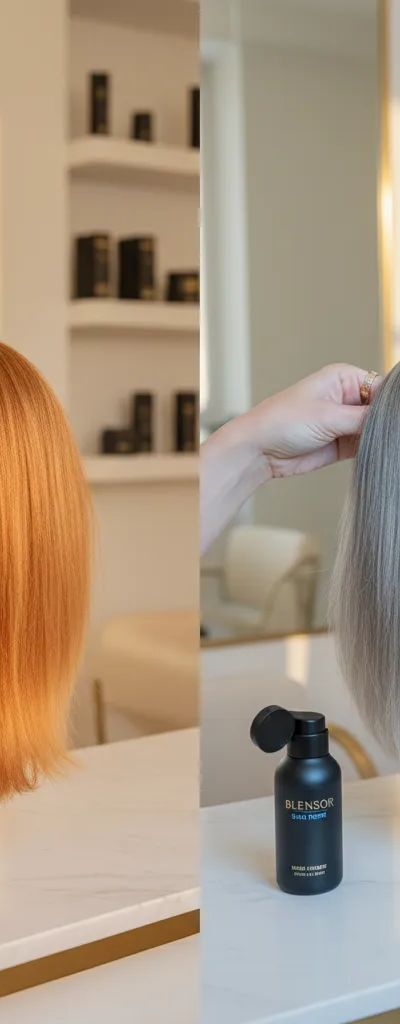
You just rinsed the bleach. Your client is looking in the mirror. And there it is: that brassy yellow-orange nobody asked for. That moment of tension is exactly what toner exists to solve.
Toner on bleached hair neutralizes the residual undertone and deposits the final desired shade. It is the step that transforms raw lifted hair into a finished color result. Without it, the result simply does not exist.
This guide covers exactly how to read the canvas after bleaching, which toner family to choose based on that undertone, which developer to use, and how long to leave it on. Practical, ready to apply in your next appointment.
This article is part of our complete guide to hair colorimetry basics, where you will find the theory behind every tone decision.
Reading the Underlying Pigment After Bleaching
Before opening any toner, you need to read the canvas. The underlying pigment — also called the lifting stage or contributing pigment — is the residual tone left in the hair after melanin has been oxidized. It changes predictably with each level of lift.
According to the Society of Cosmetic Chemists, melanin oxidation follows a consistent sequence: black and brown melanin degrade first, followed by red and orange, and finally yellow. This is why each level of lift exposes a different underlying tone.
| Level reached | Underlying pigment | What you see |
|---|---|---|
| 6 | Red-orange | Intense copper tone |
| 7 | Orange | Clearly visible orange |
| 8 | Yellow-orange | Orange with a golden touch |
| 9 | Yellow | Straw or golden yellow |
| 10 | Pale yellow | Near-white with a champagne cast |
Professional tip: Always evaluate the underlying pigment under neutral light, never under the basin lamp. Warm light masks orange undertones and leads to the wrong toner choice.
Picture this: your client came in at a natural level 5. You bleached with 30-volume developer and foils. After 40 minutes, you rinse and see a level 8 with a visible yellow-orange undertone. That is your starting point. Everything else follows from there.
Choosing the Right Toner Family Based on Undertone
Once you identify the underlying pigment, the choice becomes technical. It is not about aesthetic preference: the toner must neutralize what is there and deposit what you want.
For a deeper look at the complementary color logic behind this, see our guide on neutralizing unwanted hair tones.
| Underlying pigment | Toner family | Typical result |
|---|---|---|
| Orange (level 6-7) | Blue / Cold ash | Dark neutral or ash blonde |
| Yellow-orange (level 8) | Blue-violet / Ash | Medium cool or beige blonde |
| Yellow (level 9) | Violet / Platinum | Cool blonde or warm platinum |
| Pale yellow (level 10) | Soft violet / Pearl | Platinum, silver, or pearl blonde |
A client at level 9 wanting an ash blonde needs a violet-based toner, not a blue one. Blue over a yellow undertone can pull green. Violet over yellow gives the cool gray-blonde result you are after.
Not sure which toner family fits your specific client? The Blendsor Toner Selector analyzes the underlying pigment and the target result to give you the exact recommendation in seconds.
For level 6-7 cases with intense orange, blue toner is the most direct tool. You can see specific application scenarios in our article on blue toner for orange hair.
Developer Volume for Post-Bleach Toning: Always Go Low
Here is the most common error in the salon: using the same developer volume from the color service on the toner.
Freshly bleached hair has an open cuticle, an exposed cortex, and elevated porosity. Using 20-volume developer in that state damages already-compromised structure and can lift out the deposited tone before it sets.
The rule is clear: always tone bleached hair with low-volume developer.
| Developer | When to use it |
|---|---|
| 5-volume (1.5%) | Very porous hair, previously bleached multiple times, or fine hair. Maximum gentleness. |
| 10-volume (3%) | Hair with a single bleach process, normal porosity. Standard option. |
| 20-volume (6%) | Only if the toner formula requires additional lift, or the manufacturer explicitly specifies it. Use with caution. |
For most post-bleach toning cases, 10-volume is sufficient. If the hair is highly sensitized or the client has a history of breakage, go straight to 5-volume.
Our article on developer volumes explains in detail how each concentration affects hair structure.
Timing by Porosity
Toner processing time is not fixed. It depends on hair porosity: the more porous the hair, the faster it absorbs pigment and the sooner it can overtone.
| Porosity | Indicators | Approximate time |
|---|---|---|
| High | Matte finish, rough texture, frizz-prone, absorbs water quickly | 5-10 minutes |
| Medium | Smooth texture, some shine, normal to the touch | 15-20 minutes |
| Low | High shine, slow to absorb water, resists dye penetration | 25-30 minutes |
Professional tip: Always do a strand test on high-porosity hair before applying the full toner. A few minutes can be the difference between a perfect platinum and a muddy gray result.
In freshly bleached hair, you will typically find medium-to-high porosity. Plan for shorter times and check regularly.
Our guide on hair porosity and its effect on coloring gives you a quick diagnostic method to run before any technical service.
How to Tone Bleached Hair: Step by Step
-
Evaluate the level and underlying pigment under neutral light. Confirm the hair reached the level needed for the final target result.
-
Diagnose porosity using the strand-in-water test: if the strand sinks quickly, porosity is high; if it floats, porosity is low.
-
Pre-condition if porosity is very high. A leave-in conditioner applied for 2-3 minutes before toning homogenizes absorption and prevents uneven results.
-
Select the toner based on the underlying pigment table and the desired outcome. Use the Toner Selector if there is any doubt.
-
Mix the formula with 5- or 10-volume developer depending on porosity. Follow the manufacturer’s ratio (typically 1:2 toner to developer).
-
Apply from ends to roots. Ends are typically more porous and absorb faster; starting there balances absorption across the length.
-
Monitor the time. Check every 5 minutes on very porous hair. On medium porosity, check at 15 minutes.
-
Rinse with cool water to close the cuticle and seal the deposited tone.
-
Apply a bonding sealer or gloss as a closing treatment to extend toner longevity.
Common Mistakes When Toning Bleached Hair
Mistake 1: Toning over an undertone that is not ready
If the hair did not reach the right level, the toner cannot neutralize the remaining pigment. A violet toner over an intense orange undertone (level 7) produces a muddy brown, not a cool blonde. The solution is to re-bleach before toning.
Mistake 2: Wrong toner family
The most common error. Choosing by the shade name in the catalogue without reading the underlying pigment first. An “ash blonde” toner with a blue base applied over pale yellow can create a greenish cast at the ends. Always: read the undertone first, then select the toner.
Mistake 3: Developer too high
20- or 30-volume developer on bleached hair will lift out the toner’s pigment before it can fix properly. The result: uneven deposit, cool in some areas and warm in others.
Mistake 4: Skipping pre-conditioning on highly porous hair
Uneven porosity causes uneven toner absorption: more intense in damaged areas, lighter in healthier sections. The result is a patchy, inconsistent color.
Mistake 5: Leaving the toner on too long
Particularly damaging on highly porous hair. The toner oversaturates and the result comes out darker or grayer than planned. Always check before reaching the maximum time.
For a comprehensive breakdown of toning errors and how to avoid them, see our article on professional toner mistakes to avoid.
Emergency: The Toner Went Wrong
These situations happen. What matters is acting quickly.
Result is too gray or too cold
The toner overprocessed or a very intense violet was used over a very pale undertone. Fix: apply a highly diluted golden or beige toner (1:4 ratio or more) for 3-5 minutes to warm the tone back up.
Result is intense violet or lilac
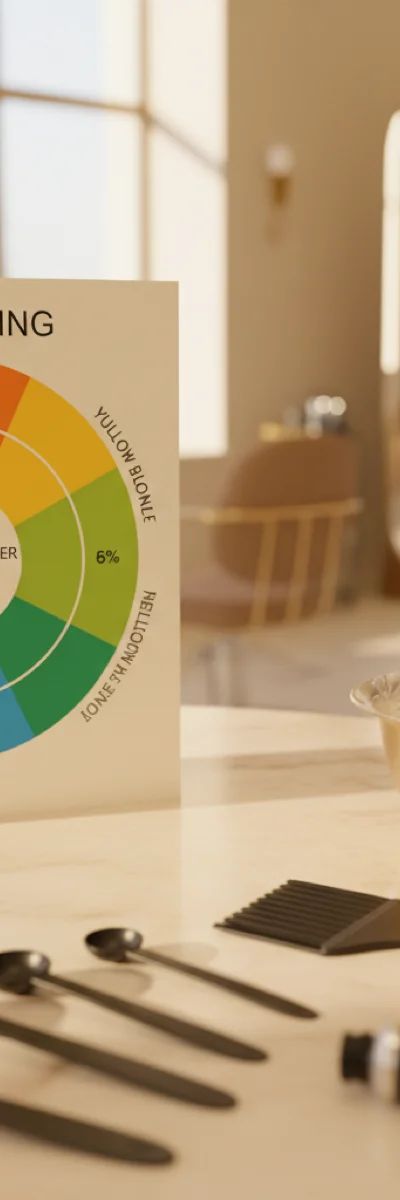
Excessive processing time or higher-than-expected porosity. Correct with a neutral gloss bath or a conditioner with a soft golden pigment. The neutralization wheel helps you calculate the exact compensating pigment needed.
Greenish cast at the ends
This indicates you applied a blue-based toner over a slightly yellow undertone and it pulled green. Apply a very diluted, gentle copper-orange gloss to compensate. Check the underlying pigment before the next session.
The toner had no effect
Possible causes: the underlying pigment was too dark for the chosen toner, the developer was too weak, or the hair has keratin coating buildup that blocked absorption. Diagnose which of the three applies before repeating the process.
Frequently Asked Questions
How long should toner stay on bleached hair?
It depends on porosity. On high-porosity hair, 5-10 minutes is sufficient. On medium porosity, 15-20 minutes. On low porosity, up to 30 minutes. Check every 5 minutes to avoid overprocessing.
Can you tone on the same day as bleaching?
Yes, this is standard salon practice. Rinse the bleach thoroughly and apply toner immediately, or after a brief equalizing conditioner if porosity is very high.
What happens if you use 20-volume instead of 10-volume developer?
20-volume has lifting action that can degrade the toner’s pigment before it sets correctly. The result is typically uneven and less long-lasting. On very porous hair, it also increases the risk of structural damage.
How long does toner last on bleached hair?
Between 4 and 8 weeks on average, depending on the brand, wash frequency, and shampoo type. Sulfate shampoos degrade the tone significantly faster. Recommending a sulfate-free shampoo extends results considerably.
Do you need to bleach to level 10 for platinum?
Not always. A warm or beige platinum can work from a level 9. For an intense cool platinum or silver, a level 10 with very pale yellow undertone is necessary. Level 9 with a yellow undertone can still produce attractive cool results with the right toner.
Summary
- Always read the underlying pigment before choosing a toner — it is the starting point for every technical decision.
- Use low-volume developer (5 or 10 volumes) on bleached hair without exception.
- Adjust processing time to the actual porosity of the hair, not just the manufacturer’s standard time.
- The most common mistakes are wrong toner family and developer too high.
- When results are unexpected, reach for a compensating tone before re-bleaching.
Use the Blendsor Toner Selector to find the exact formula for each underlying pigment and target result. No guesswork, no second-guessing.
What is the most common post-bleach toning mistake you see in your salon? Misread undertones or developer volume too high tend to lead the list, but every colorist has their own story.
Related articles
Practice with our free tools
Calculators, neutralization wheel, AI consultation...
Apply this theory with precision
Blendsor analyzes 70+ variables and generates exact formulas based on real colorimetry. Try our free color consultation or download the app.
Download free