What Hair Color Suits Me? Complete Guide by Skin Tone
Find out what hair color suits you based on your skin tone, undertone, and natural contrast. Quick guide with charts + free color analysis quiz.
Blendsor
Blendsor Team
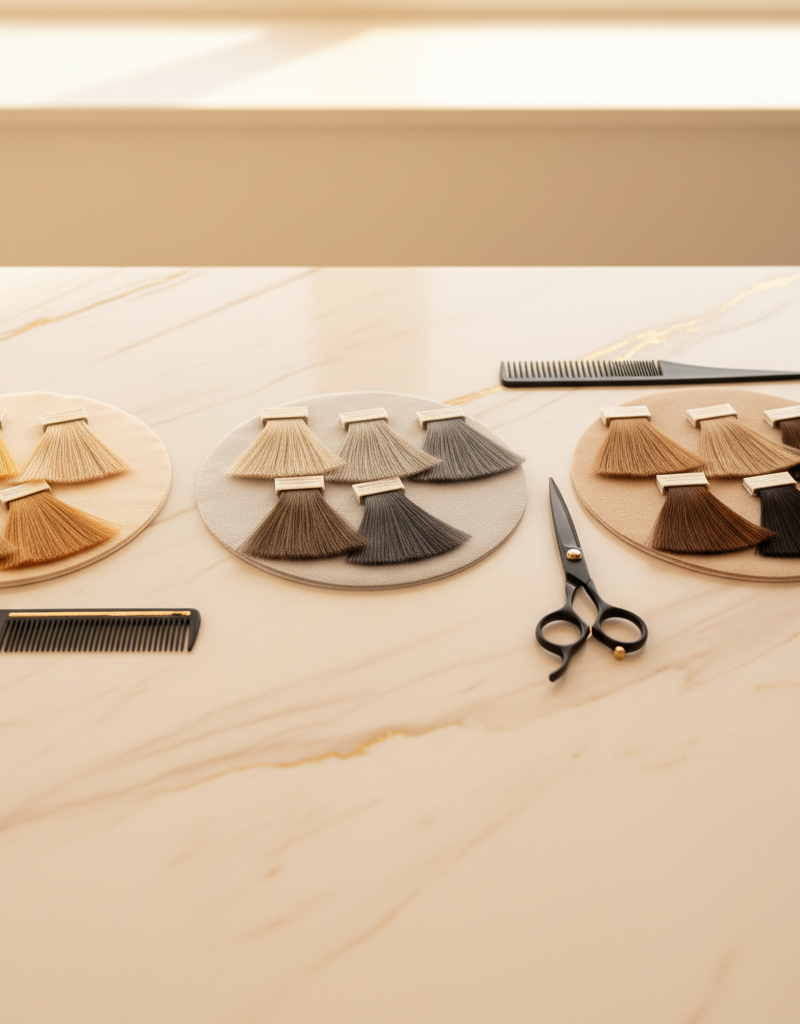
How many times have you scrolled Instagram thinking “I want that color” without knowing if it would actually suit you?
Choosing what hair color suits you isn’t about taste — it’s about colorimetry. Your skin tone, undertone (warm, cool, or neutral), and the natural contrast between your skin, eyes, and hair determine which colors flatter you and which wash you out.
This guide covers the quick fundamentals. For a personalized answer, try our free color analysis quiz — 9 questions and in 3 minutes you’ll know your color season and the shades that work for you.
The 3 factors that determine your ideal color
According to the International Association of Trichologists, the visual harmony between hair and face depends on three variables:
1. Skin undertone
Undertone is what decides whether golds or ashes flatter you:
| Undertone | How to identify | Hair colors that flatter |
|---|---|---|
| Warm | Green-ish veins, gold jewelry looks better | Copper, golden, honey, caramel, warm brown |
| Cool | Blue/purple veins, silver jewelry looks better | Ash, platinum, cool brown, blue-black |
| Neutral | Mix of both, gold and silver both work | Nearly anything — adjust based on contrast |
2. Natural contrast
Contrast is the difference between your skin tone and your hair/eye color:
- High contrast (light skin + dark hair/eyes): You can go extreme — very light blondes or intense blacks
- Low contrast (everything similar in tonality): Better with subtle changes, 1-2 levels from natural
- Medium contrast: Maximum flexibility — most colors work
3. Natural hair level
Your natural level (from 1 black to 10 extra light blonde) determines how much you can lighten or darken safely:
- Lightening more than 3-4 levels requires professional bleaching
- Going darker is technically simpler but affects contrast
- Within 2 levels of natural is the safest and most flattering change
Quick guide by skin tone
| Skin tone | Undertone | Flattering colors | Colors to avoid |
|---|---|---|---|
| Very fair | Cool | Ash blonde, cool brown, blue-black | Intense gold, copper |
| Very fair | Warm | Honey blonde, strawberry, golden brown | Ash, pure platinum |
| Light-medium | Cool | Cool brown, champagne blonde, ash | Caramel, warm coppers |
| Light-medium | Warm | Caramel, copper, golden blonde | Blue-black, cool ash |
| Medium (olive) | Neutral | Chocolate brown, mocha, dark honey | Very light ash, Nordic blonde |
| Dark | Warm | Mahogany, deep copper, dark caramel | Light ash, platinum |
| Dark | Cool | Intense black, aubergine, burgundy | Light gold, honey blonde |
Pro tip: If you’re torn between two shades, always choose the one closer to your natural level. Subtle changes look best and are easiest to maintain.
Find your ideal color with our free quiz
The table above is general guidance. For a personalized result that considers your exact undertone, contrast, and natural level, we’ve created a colorimetry quiz based on the 12-season color system.
Take the free color analysis quiz →
9 questions · 3 minutes · Instant result including:
- Your color season (spring, summer, autumn, or winter)
- Clothing color palette that flatters you
- Recommended hair colors with professional level and reflect
- Hair colors to avoid and why
Frequently asked questions
Can I dye my hair any color regardless of my skin tone?
Technically yes, but not every color will flatter you equally. A color that doesn’t harmonize with your undertone can make skin look dull, flushed, or sallow. Professional colorists adjust the dye’s reflect to compensate.
Does eye color affect what hair color suits me?
Yes, because it affects overall contrast. Light eyes with dark hair create high contrast (dramatic). Eyes and hair of similar tones create low contrast (soft, natural). Both can look great if the undertone is correct.
What if I’m neutral and “everything suits me”?
If your undertone is neutral, you have maximum flexibility. The key is contrast: if you have high natural contrast, you can go for intense colors. If you have low contrast, medium and soft tones are your safe zone.
Key takeaways
- Undertone: Determines whether warm (golds, coppers) or cool (ashes, platinums) suit you
- Contrast: Defines how far you can go from your natural level
- Safest bet: Always within 2 levels of natural with the correct undertone — use our hair color level guide (1 to 10) if you need to identify your starting point
Calculate professional formulas with AI
Already know what color suits you and want the exact formula? Blendsor generates custom formulas with level, reflect, and ratio.
Try Blendsor free - 5 formulas per month, no credit card required.
Related articles



Practice with our free tools
Calculators, neutralization wheel, AI consultation...
Apply this theory with precision
Blendsor analyzes 70+ variables and generates exact formulas based on real colorimetry. Try our free color consultation or download the app.
Download freeWritten by the Blendsor team
Professional hair colorimetry experts with experience in AI-assisted formulation. We combine color science, salon practice and technology to help colorists formulate with precision.