Blue Shampoo for Brunette Hair: When It Kills Brass
Blue shampoo doesn't fix orange that's already set: it holds the toner you paid for. When to reach for blue, when for purple, and how to use it without going grey.
Blendsor
Blendsor Team
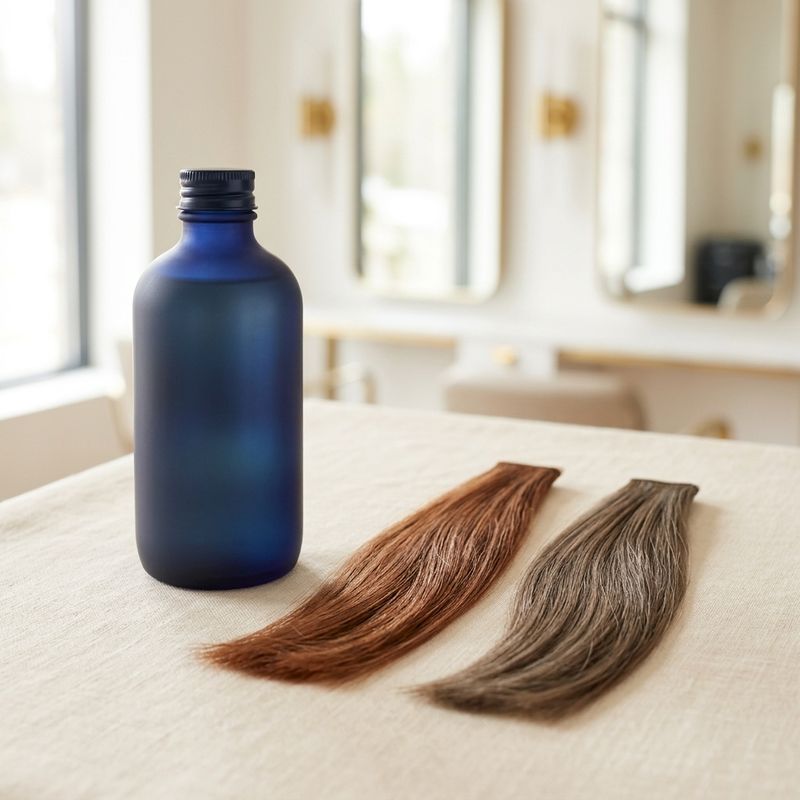
You left the salon with a clean, expensive-looking brunette. A few weeks later the mirror hands you a copper cast that definitely wasn’t there on day one. You buy the blue shampoo, you use it religiously, and the brass is still winning.
First, the sentence that puts everything else in order: blue shampoo holds a toner, it doesn’t install one. It deposits pigment and cancels warmth optically for as long as it lasts, but it can’t touch the warm base that lifting exposed underneath. Its job is to keep the work you paid for looking clean for longer. Its job is not to undo brass that’s already set: if your starting point is “my hair has turned orange,” the bottle showed up late.
Used properly, though, it helps your color reach your next appointment in better shape. Here’s when blue is the right call, when it isn’t, and how to use it without ending up dull and grey.
Short answer: blue shampoo carries direct dye. It sits mostly in the outer layers of the hair and rinses out over a few washes. It cancels copper and orange tones on lightened brunette hair: think light brown through to highlighted dark blonde. The less lifted your hair is, the less you will see. If what you’re seeing is pale yellow, purple is your bottle. And if your toner dies in a few washes and your hair feels coated and rough, blame the water before you blame the color.
What blue shampoo actually does
It carries direct dye: pre-formed color, no developer, nothing that alters the structure of your hair. It doesn’t lift, it doesn’t permanently darken, it doesn’t react. It deposits.
Now the part that usually gets flattened into a half-truth. It mostly sits in the outer layers (which is why it shampoos out), but not only there. According to Goldwell’s technical education on direct dyes, to build intensity these dyes need a more porous hair structure, which lets them penetrate deeper. Translated: the more open your hair is, the more goes in and the harder it clings.
That flips one thing you need to know: on lightened, porous ends, the risk isn’t that blue shampoo does nothing. The risk is that it does too much.
That’s why the same bottle behaves like two different products on two different heads. It isn’t the formula. It’s how open your hair is.
So what is it for? It mutes the copper or orange cast that shows through on lightened brunette hair, and it holds the toner you were given between appointments. What it doesn’t do is lighten. It doesn’t take the orange pigment out of your hair: it lays a little blue on top that cancels it visually, and that blue washes out. That’s why a mild brassy cast fades, but hair that has gone properly orange won’t turn into a cool brunette on shampoo alone. If that’s you after bleaching, the next step is in what to do about orange hair after bleaching.
| Blue shampoo (home) | Professional toner (salon) | |
|---|---|---|
| What it is | Direct dye, no developer | Demi-permanent color |
| How long it lasts | A few washes on healthy hair; much longer, and cumulative, on porous ends | Well beyond a shampoo; how long depends on the product, your porosity and how often you wash |
| What it’s for | Holding tone between appointments | Actually changing the tone |
| Control | Depends on your hair and your hand | Measured formula and timing |
| Against set-in brass | Won’t solve it | Your colorist corrects it: sometimes toning is enough, sometimes it needs a little more lift first |
Blue or purple: read the tone, not the level
This is where nearly everyone gets lost, and marketing earned it: blue bottles and purple bottles are sold with almost identical promises.
The actual rule is color theory 101: blue cancels orange, purple cancels yellow. They’re opposites on the wheel. Cross them and nothing good happens.
And the deciding factor isn’t your level, and it isn’t the color you want. It’s the tone that’s showing right now. Reduce it to one binary question:
- Do you see copper, rust, penny? → blue.
- Do you see straw, gold, yellow? → purple (covered in purple shampoo for blonde hair).
For that read to mean anything, do it under honest conditions:
- Dry hair. Wet hair looks darker and hides warmth. That’s an optical trick of the water film, not a real change in your color, and it will push you to the wrong bottle.
- Window light. A warm bathroom bulb drags every head of hair toward orange. Decide under that light and you’ll decide wrong.
- A photo with no flash, hair laid flat against something white. The contrast tells you whether copper or gold is running the show.
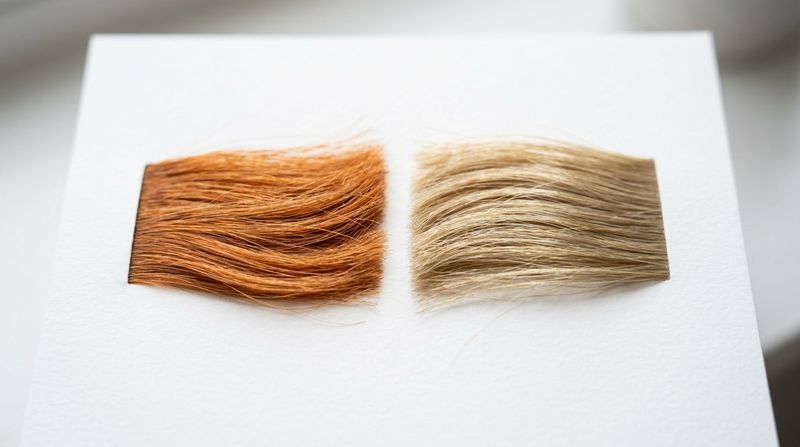
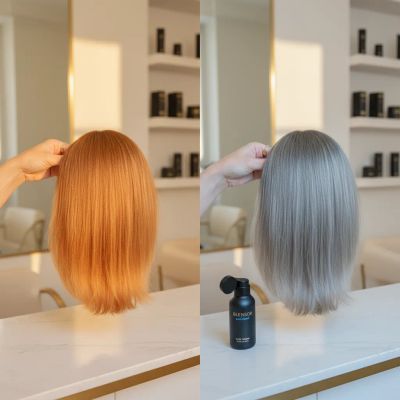
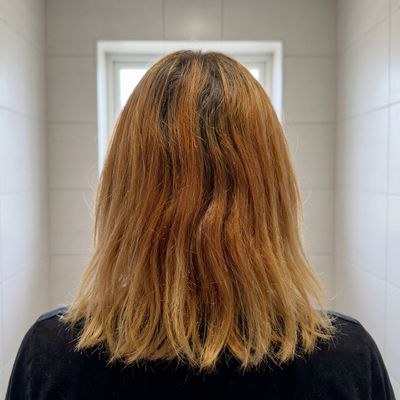
Left, copper: blue territory. Right, straw: purple territory.
The trap: when your hair gives two answers
Take one section, root to tip. It’s extremely common for the mid-lengths to read copper while the ends have already gone straw: the ends have been through more lightening and sat higher.
Which means that one section needs two different things at once. No single bottle wins that: chase the copper in the mids with blue and you’re handing blue to ends that stopped needing it a while ago. When you’re in that spot, don’t experiment. It’s a ten-second conversation with your colorist, not a blind purchase.
If you want the full professional logic (which reflect cancels which underlying pigment, level by level), it’s laid out in our guide to blue toner for orange hair.
If your toner dies in a few washes, suspect the water
This is the case people most often misdiagnose as “my color was bad” when the real culprit is the shower.
Hair picks up metals from tap water. A study on the uptake of water hardness metals by human hair measured mainly calcium and magnesium, and found that the biggest variable isn’t how hard your water is but the condition of the hair itself: hair damaged by chemical processing, such as lightening, holds on to considerably more. If your water also carries iron, that’s the metal usually linked to a rusty, warm cast.
The tell isn’t the color. It’s the behavior:
- Your toner is gone in a few washes, not weeks.
- Hair feels rough and coated, dull, no matter how much mask you use.
- It keeps happening, whoever does your color.
If that’s you, more blue shampoo fixes nothing: you’re trying to cover a mineral deposit with pigment. What removes metal is a chelating shampoo (these usually contain agents such as EDTA or citric acid), and that is not the same thing as a clarifying one:
| Chelating | Clarifying | |
|---|---|---|
| Removes | Water metals (iron, copper, limescale) | Product buildup, silicone, excess pigment |
| When | Hard water, pools, toner that won’t hold | Weighed-down hair, toner buildup |
One thing to keep straight so you don’t chase the wrong problem: copper (from pipes or pool water) is linked to a greenish cast, not orange, and pool chlorine helps it cling to the hair and leaves the hair rougher. That’s why sealing masks and acid rinses don’t shift it: the metal has to come out, not be smoothed over. If your problem reads green rather than copper, that’s a different conversation.
If you want to understand your local water and why hardness matters more than pH for color, it’s covered in salon water pH and hair color.
One scheduling note: if you have an appointment coming up, don’t get ahead of it with a chelating wash. Tell your colorist, who will decide whether that step happens at the salon before the color or at home afterward.
How to use it without overdoing it
Almost every blue shampoo disaster starts with the same thought: “if I leave it on longer, it’ll cancel more.” It won’t. Extra time doesn’t cancel more warmth; it just deposits more blue. Once the copper is neutralised there’s nothing left for that pigment to cancel, so it stacks up on your most porous ends. Longer doesn’t neutralize more, it over-deposits.
Before anything else, test on a hidden section: one at the nape, not the front. It costs you one wash and saves you finding out on your whole head. Then, first time out, do it like this:
- Wash with your normal shampoo first. The first wash cleans; the second one deposits. On hair with buildup, pigment grabs in patches.
- Dilute it the first time, unless the label says otherwise: mix a little blue shampoo with your regular one in your palm before it touches your hair.
- The minimum time on the bottle. The low end of the range, not the high one. With a timer, not by feel.
- Spread it with open hands, then a comb, so it never pools in one spot. A wide-tooth comb through product is the difference between even tone and a map of patches.
- Check your ends first when you rinse. They take the most and they’ll warn you first.
And frequency runs on signal, not schedule: use it when warmth starts showing through, not “every Monday.” On lightened, porous hair you usually need less than you think, and no more than the label allows.
And if diluted at minimum timing isn’t moving it, don’t raise the dose or the time to make up for it: that tone is past what a shampoo can do. That’s an appointment, not a stronger dose.
If your hair isn’t lightened, blue shampoo has nothing to work on: a natural brunette has no exposed warmth and no professional tone to hold, and leaving it on longer won’t change that.
When it goes wrong: the grey cast
On lightened brunette hair, the classic failure isn’t green. It’s a grey-blue cast: the hair goes flat, dull, slightly dirty-looking, like someone laid ash over it. That’s accumulated blue, and it shows up exactly where the hair is most porous.
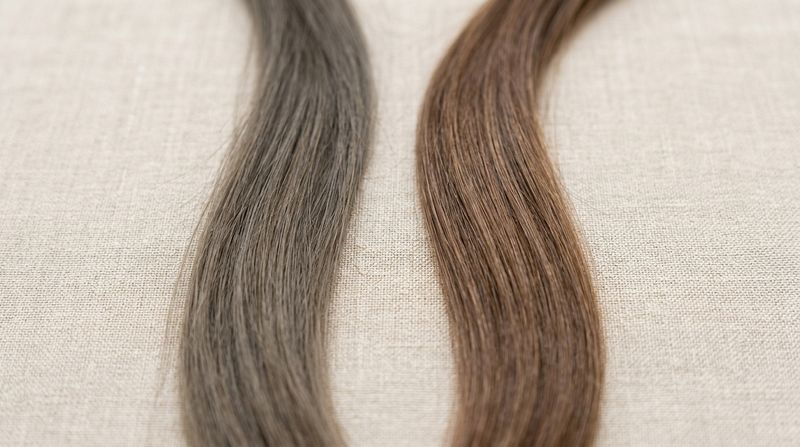
A grey cast isn’t “pretty ash”: it’s excess pigment, and it lands on whatever is most porous.
What to do, in order:
- Stop using it. Obvious, and the step people skip.
- Give it a few normal washes. A good part of the blue leaves on its own.
- Before you reach for a clarifier, know the price. Clarifying doesn’t discriminate: it also strips the professional toner you paid for. You can trade the grey back for the copper, with your appointment still a long way off.
- Knowing that, one wash with a clarifying shampoo (not chelating: what’s in excess here is pigment, not metal). If your appointment is close, don’t even do that: wait and let your colorist see it. On very light, very porous ends, built-up blue sometimes doesn’t lift with one wash, and pushing harder there gets expensive.
Green does happen, but in a different scenario: blue over an already-yellow base. On brunette hair that tends to happen on very light ends that have drifted to straw. If you’re seeing green from blue shampoo, that’s your sign you were in the purple lane all along. The full map of these failures is in our piece on the most common toning mistakes.
Five things your colorist wishes you knew
This is what gets thought behind the chair and rarely said out loud:
- Stop the blue shampoo a few days before your color appointment, and say so. How many days: ask your colorist as you leave the salon, or when you book. Hair loaded with blue reads cooler than it is; if the formula gets built on that reading, the real orange surfaces once the blue washes out. Your hair may turn a little orange again during those days: that’s exactly what your colorist needs to see. And if you didn’t manage to stop in time, go anyway and say which one you use and when you last used it.
- Blue doesn’t distinguish between your brass and your gloss. It deposits over everything, including the toner you just paid for, muddying it.
- Greys and your finest highlights take blue differently. Greys have no pigment of their own to hide behind, so whatever you deposit shows at full strength; your finest, most-lightened strands are the most porous and simply grab more. Either can go grey-cast while everything else looks perfect.
- Not every blue bottle is loaded the same. Pigment strength swings wildly between brands, and the label won’t tell you. Assume yours is stronger than you think: dilute the first time and check your ends early, whatever it’s marketed for.
- After your service, ask before you use anything. No toning shampoo, no clarifying, no chelating until your colorist tells you when. Let the color settle.
Frequently asked questions
Does blue shampoo remove brass from brunette hair?
It mutes it, it doesn’t remove it: it deposits blue pigment on top, it doesn’t lighten or take the orange out. If the copper cast is mild and recent, blue shampoo softens it and slows it down. Once hair has gone properly orange, the pigment load in a shampoo is far too small: that gets corrected at the salon, where sometimes a professional toner is enough and sometimes it needs a little more lift first, depending on your hair.
How often should I use blue shampoo?
By signal, not by schedule: when you start seeing warmth push through. On lightened, porous hair you usually need less than it seems, and no more than the label allows. If you’re using it and seeing no difference, the answer is not longer or more often.
Can I use blue and purple shampoo together?
Not at the same time, and you rarely need both. Choose by what you see: copper → blue, yellow → purple. If your mids read copper and your ends read straw, that’s precisely the case worth solving in the salon rather than alternating bottles at home.
Why has my hair gone dull and grey?
That’s blue pigment buildup, usually from leaving it on longer than needed or using it on very porous hair. Stop using it and give it a few normal washes. If it doesn’t lift, bear in mind a clarifier also takes part of the toner you paid for: with an appointment close, it’s worth waiting.
Does blue shampoo work on natural brunette hair with no highlights?
Barely. The warm tone you’re cancelling is what gets exposed when hair is lightened. On a natural brunette there’s no exposed underlying pigment to work on and no professional tone to maintain.
Recommended products for holding your tone
What you actually need at home is short, and it depends on which lane you’re in. These are the three categories the article covers:
- Blue shampoo: if what you see is copper. Whatever brand you land on, assume it is strong: dilute the first time and stick to the low end of the timing on the bottle. Which brand is a shorter list than it looks: we checked the ones the big lists recommend and four of them are no longer catalogued by their own makers.
- Purple shampoo: if what you see is pale yellow. One of the best-known is Fanola No Yellow, and it’s heavily pigmented: the dilute-it advice counts double here.
- Chelating shampoo: if you’re on hard water or in the pool. This is what removes the metal no toning product can cover. Browse chelating shampoos.
This article contains affiliate links. If you purchase through them, we receive a small commission at no additional cost to you. We link categories and products that fit what the article explains; the final pick is yours and your colorist’s.
The short version
- Blue shampoo holds tone, it doesn’t install it. Against brass that’s already set, it arrives too late.
- Decide by the tone you can see, dry and in daylight: copper → blue, straw → purple.
- If your toner dies in a few washes and your hair feels coated, suspect your water: that takes a chelating shampoo, not more pigment.
- Longer doesn’t neutralize more, it over-deposits. Diluted the first time, minimum timing on the bottle, and by signal instead of schedule.
- Stop a few days before your appointment and mention it. Hair loaded with blue reads cooler than it is.
If you’re behind the chair: a good handoff can spare you color corrections, and it fits in three sentences. One, hand the bottle over with the start rule (second wash deposits, diluted the first time if the label allows, minimum timing) and an explicit ceiling, because the failure mode of whoever takes it home won’t be forgetting, it’ll be leaving it on longer. Two, prescribe against the tone that will be exposed on the lightened section, not the level of the formula you just applied: on a section with uneven mids and ends, the most porous part sets the ceiling, and that’s usually the lightest. Three, build into the handoff itself how many days ahead of the next appointment to stop: that’s what buys you an honest read at the next consultation.
Find the exact shade without guessing
Want to know what tone you’re actually sitting on, and its equivalent in any brand, before your next appointment?
Check it in the hair color converter →
What’s your experience with blue shampoo: did it save your color, or leave your hair flat?
Manufacturer sources
Manufacturer documents consulted for this article. A copy of each one is kept, and the passages noted from it are checked against that copy.
Related articles
The Blendsor newsletter
Color techniques and trends for professionals. No spam.
The second opinion, in your pocket
Photo, question, an answer grounded in colour theory. And every formula saved to your client's card.
Start with BlendsorWritten by the Blendsor team
Professional hair colorimetry experts with experience in AI-assisted formulation. We combine color science, salon practice and technology to help colorists formulate with precision.