Boy Blonde Hair: the Trending Blonde for Spring 2026
What is boy blonde hair, how to formulate it, and why it dominates spring 2026. Professional formulas by starting level, blonde comparison table, and key mistakes.
Blendsor
Blendsor Team
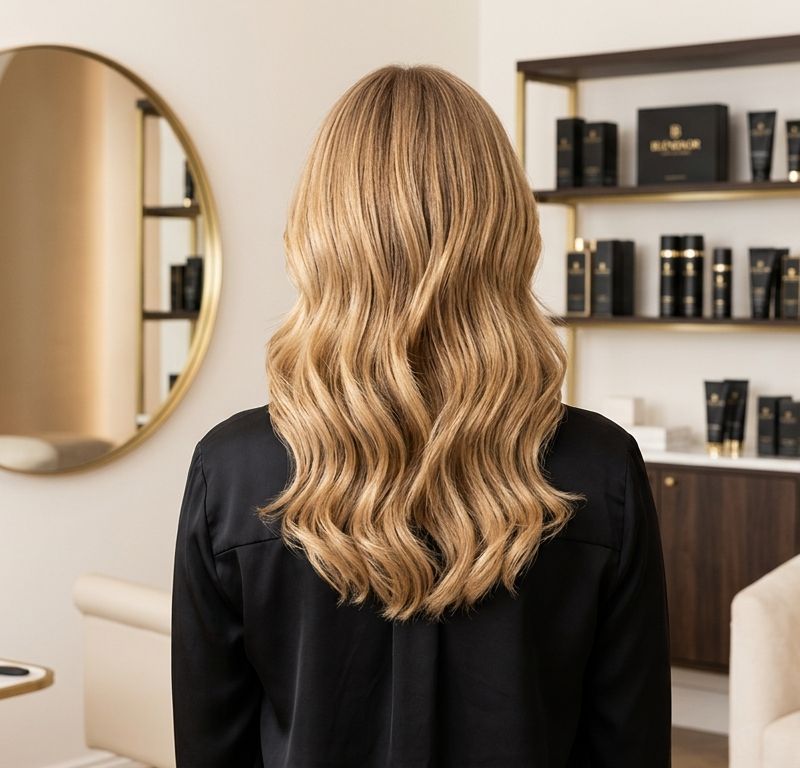
Does your client walk in with a photo of 90s Leonardo DiCaprio or a California surfer and say “I want that blonde”?
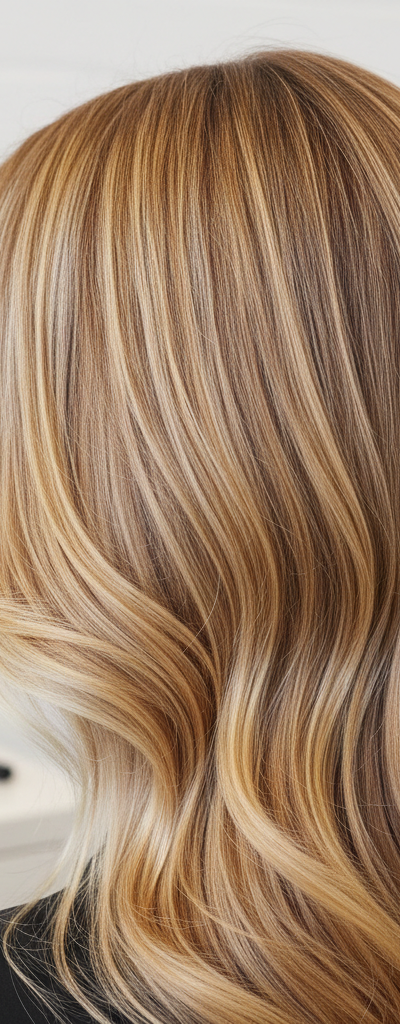
If you’re a professional colorist, that request has already landed in your chair this year. It’s called boy blonde hair and it’s the most searched blonde of spring 2026. It’s not a polished, perfected blonde — it’s the blonde of someone who woke up, headed to the beach, and let the sun do the work. Warm, natural, with intentional visible roots and effortless dimension that clients love precisely because it looks like it was always there.
Quick summary: Boy blonde hair is a warm, dimensional, naturally effortless blonde with golden undertones (.3 and .31) and intentionally visible roots. It’s trending for spring 2026 because of its low maintenance and versatility. The formula key is a dominant .3 (golden) tone with minimal .31 (golden-ash) to add dimension without cooling the result.
What exactly is boy blonde hair?
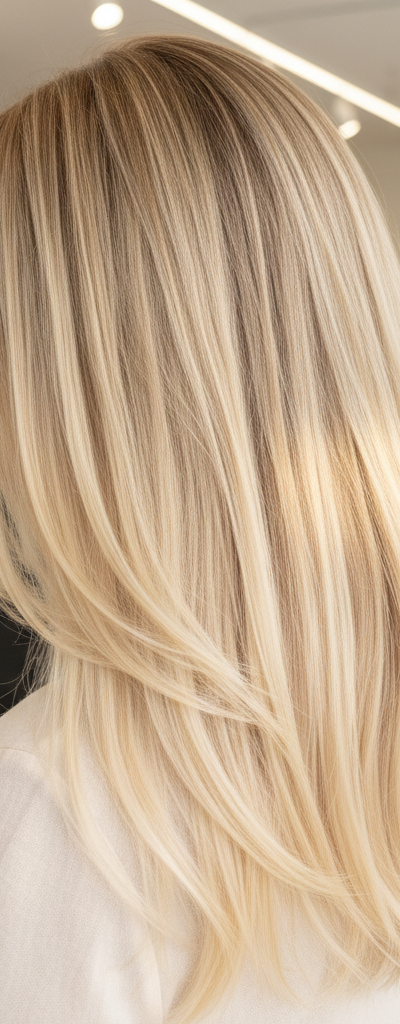
Boy blonde hair is a casual, warm blonde with golden undertones and a visible root that’s designed into the look — not something to fix. It doesn’t aim for platinum or flawless ash blonde. It aims to look like the color someone might have after a summer outdoors. Levels between 7 and 9, with movement, dimension, and that textured, undone quality that makes it look effortless in the most intentional way.
According to Pantone Color Institute, warm golden and earthy tones dominate the 2026 trend palette, which explains the simultaneous rise of blondes like boy blonde, teddy bear blonde, and butter blonde within 2026 hair color trends this season.
What sets it apart from its closest relatives is the intention: boy blonde has that “it happened on its own” quality, without the refinement of cashmere blonde or the depth of teddy bear. It’s lighter, more solar, more casual.
How does boy blonde compare to other trending blondes?
This is the question that comes up most in consultations. Your client arrives with a reference photo and you need to understand exactly what they’re asking for before touching a single formula.
| Blonde | Undertone | Target Level | Root | Maintenance | Style |
|---|---|---|---|---|---|
| Boy Blonde | Golden (.3 + .31) | 7-9 | Visible, part of design | Low (8-10 weeks) | Casual, sun-kissed, effortless |
| Teddy Bear Blonde | Golden-honey (.3 + .34) | 7-9 | Naturally blended | Low (6-8 weeks) | Warm, cozy, luminous |
| Cashmere Blonde | Neutral-creamy | 8-9 | Softly integrated | Medium (8-10 weeks) | Refined, elegant, polished |
| Butter Blonde | Pure creamy golden (.3) | 8-9 | Nearly invisible | Medium (6-8 weeks) | Creamy, soft, even |
| Honey Blonde | Golden-amber (.34 + .3) | 7-8 | Warm blended | Low (6-8 weeks) | Warm, intense, summery |
The key difference between boy blonde and butter blonde is dimension: butter tends to be more even and creamy throughout, while boy blonde has tonal variation — lighter in some areas, with more depth near the root. They’re very close, but butter is softer and boy blonde has more “character.”
Compared to warm honey blonde, boy blonde is lighter and less intensely warm. It’s not chasing that vibrant golden-amber of honey blonde — it’s after something dustier, more solar.
How to formulate boy blonde by starting level
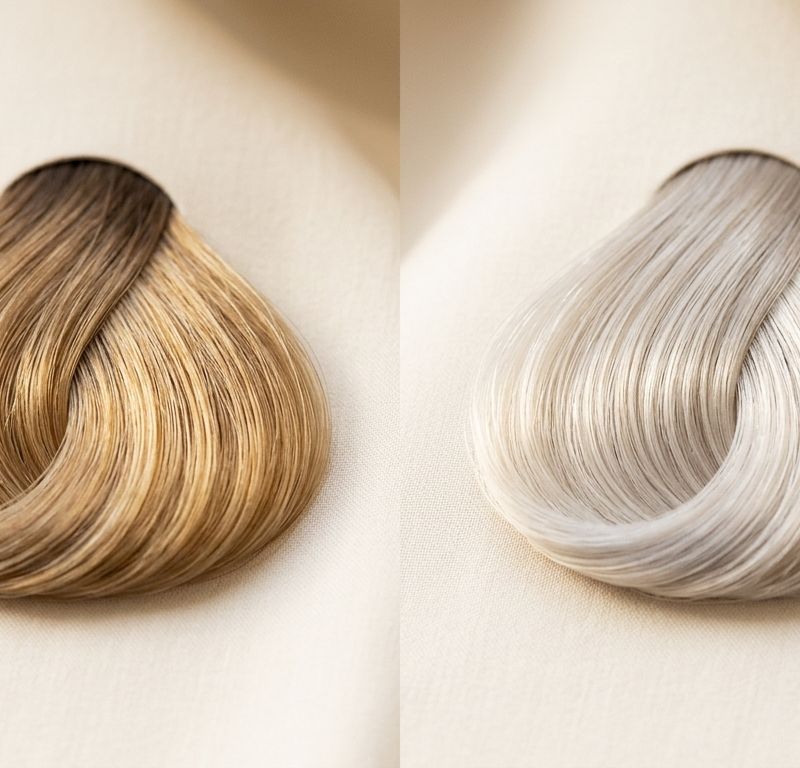
The boy blonde formula follows a clear logic: the .3 (golden) reflection dominates, with doses of .31 (golden-ash) to add dimension without over-cooling. That touch of ash is what delivers the “natural solar” effect rather than a flat golden.
Pro tip: Avoid using too much .31 — the ideal ratio is a maximum of 1 part .31 for every 3-4 parts .3. If you exceed that, the result starts to cool down and loses the spirit of the look.
Starting level 4-5 (medium-dark brown)
From this base you need to pre-lighten before toning. The target underlying pigment is level 7-8, with a controlled yellow-orange base.
Step 1 — Bleach: Bleach powder + 20-30 vol developer to level 7-8 Step 2 — Boy blonde toning:
- Formula: 8.3 + 8.31 in a 3:1 ratio with 10 vol
- Timing: 15-20 minutes
- Result: Level 8 boy blonde with golden dimension and slight depth
Starting level 6-7 (dark blonde to medium blonde)
From this base you can work directly with oxidative color. The natural underlying pigment already has enough golden base for the .3 to shine.
Standard formula: 8.3 + 9.31 in a 3:1 ratio with 20 vol Softer alternative: 8.3 + 8.31 in a 2:1 ratio with 10 vol (demi-permanent) Timing: 25-35 minutes
To build true boy blonde dimension, apply the darker formula at the root and crown, and the lighter formula through mid-lengths and ends using balayage or color melting technique for the transition.
Starting level 8-9 (light blonde)
From light blonde you only need to deposit pigment. Don’t force lift — boy blonde is not an all-over very light blonde. It has depth.
Formula: 9.3 + 9.31 in a 4:1 ratio with 5-10 vol Gloss alternative: Pigment treatment with .3 direct, no developer Timing: 10-15 minutes
Warning: If your client has a previous very cool or platinum blonde, neutralize the remaining violet pigment first with a color bath using .03 (natural golden) + 10 vol for 10 minutes. Without this step, the result will blend cool and warm tones in an uncontrolled way.
| Starting Level | Prior Process | Boy Blonde Formula | Developer | Timing |
|---|---|---|---|---|
| 4-5 | Bleach to level 7-8 | 8.3 + 8.31 (3:1) | 10 vol | 15-20 min |
| 6-7 | None needed | 8.3 + 9.31 (3:1) | 20 vol | 25-35 min |
| 8-9 | None needed | 9.3 + 9.31 (4:1) | 5-10 vol | 10-15 min |
| Previous cool blonde | .03 bath + 10 vol | By level | By level | +10 min pre |
Why is boy blonde trending in spring 2026?
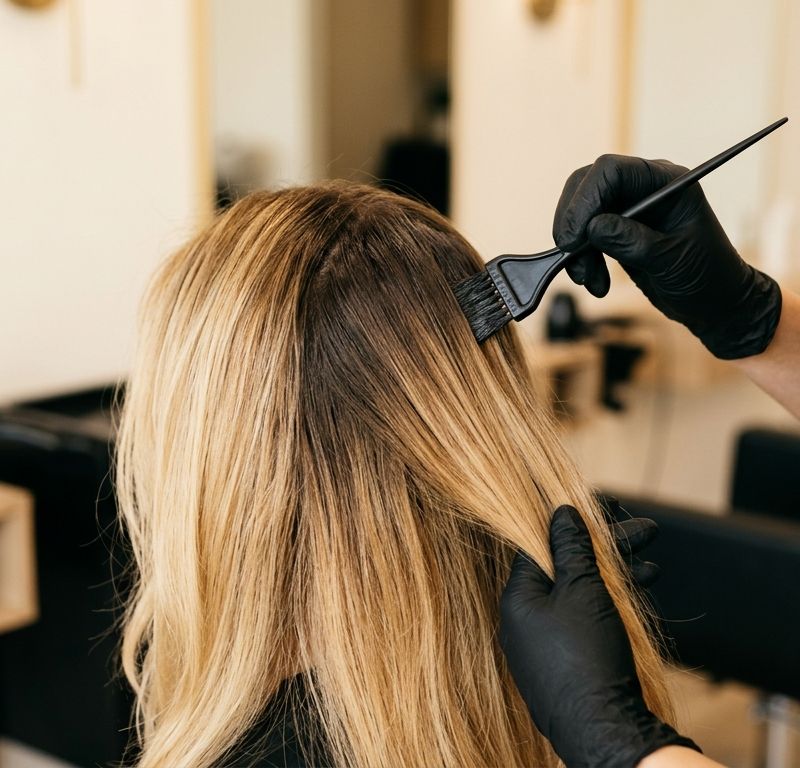
Think about two clients you have scheduled this Friday. The first wants a very cool ash blonde — she needs a touch-up every 3-4 weeks because her root contrast is too strong. The second wants boy blonde — the visible root is part of the look, so she can come back in two months without anyone noticing she hasn’t retouched.
That’s the main reason boy blonde is succeeding: low maintenance is a feature, not a compromise.
On top of that, the tone works across a wide variety of skin tones — the golden undertones with a slight ash note are more versatile than purely warm or purely cool blondes. The cultural reference also matters: the look is associated with celebrities like Jacob Elordi and other 2025-2026 figures who wear this tone with that studied effortlessness.
From the salon business perspective, it’s also profitable: it can be positioned as a low-maintenance balayage service with a 60-90 minute chair time, compared to the 2-3 hours of a full color transformation.
The most common boy blonde mistakes
The errors that most undermine this look fall into two categories:
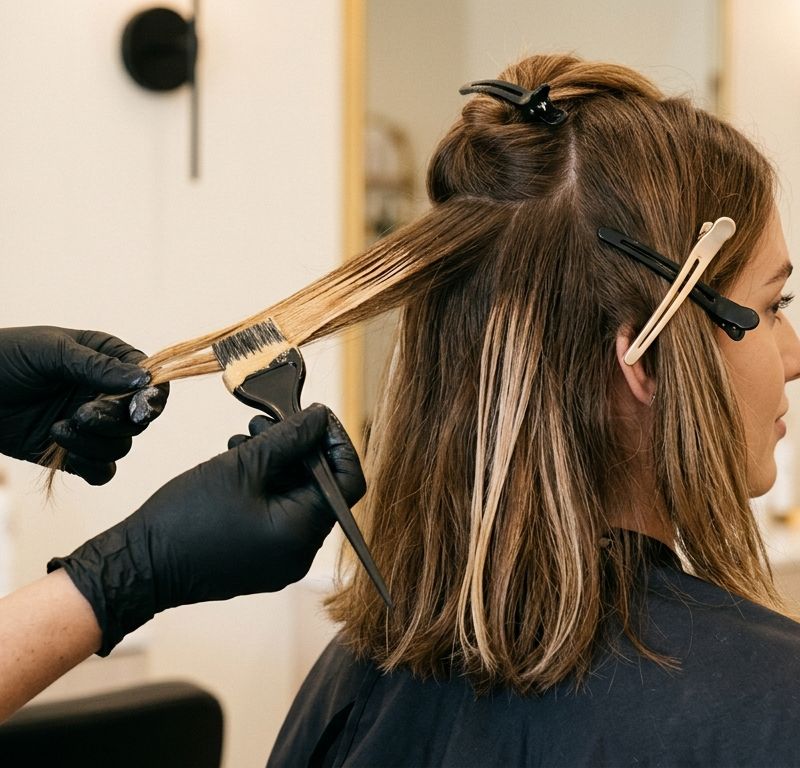
The mistake of going too light: If you lift to level 10 or platinum before toning, the look loses all its “boy” essence. Boy blonde has root depth and tonal variation — a uniformly very light result is not boy blonde, it’s a different blonde entirely.
The mistake of over-cooling: If you use too much .31 (golden-ash) or blend in .1 (pure ash) reflection, the result stops being solar and becomes flat and dull. Remember: .3 always dominates over .31, not the other way around.
The mistake of too-harsh root contrast: Boy blonde has visible roots, yes — but not a brutal contrast. Use a soft shadow root or color melting in the first 3-4 centimeters so the transition is natural. An 8-centimeter very dark root over light blonde is not boy blonde — it’s actual regrowth.
Frequently asked questions
Is boy blonde only for men?
No. Despite the name, boy blonde is completely gender-neutral. The “boy” refers to the casual, effortless aesthetic, not to gender. It works equally well on any length and hair type, although naturally wavy or voluminous textures particularly favor that solar-movement look.
How long does boy blonde last between appointments?
With a visible root integrated into the design, boy blonde is one of the highest-durability blondes between appointments. You can space retouches to 8-10 weeks without the regrowth disrupting the look — in fact, a couple of weeks of growth actually adds more authenticity. To maintain vibrant tone, recommend sulfate-free shampoo and a golden-pigment mask once a week.
Can boy blonde be done on naturally dark hair?
Yes, but it requires a two-step process: bleaching to level 7-8 followed by toning. From natural level 4-5, the first appointment is 2-3 hours, with controlled bleaching and precise toning. It’s important to set the right expectations: this is a transformation appointment, not a maintenance one.
What’s the difference between boy blonde and butter blonde?
They’re the two closest looks in this family. Butter blonde is more even, creamy, and soft throughout — the root is nearly invisible. Boy blonde has more dimension, with variation between lighter areas and zones with more depth, and the visible root is an intentional design element. If your client wants evenness, it’s butter blonde. If they want casual and solar, it’s boy blonde.
What technique works best for boy blonde?
Freehand balayage or open-foil balayage is the most natural technique for achieving that solar effect. Combine it with a base applied from the root in strategic sections (face framing, crown) to build dimension. Color melting is key to making the root-to-mid transition invisible and fluid.
In summary
- Boy blonde hair is a warm, casual, dimensional blonde with intentional visible roots and golden undertones (.3 + .31)
- It differs from butter blonde through its dimension, and from teddy bear blonde by being lighter and less honeyed
- The core formula: dominant .3 reflection with minimal .31 — maximum 3:1 ratio
- Target level is between 7 and 9 — never go platinum or the look loses its essence
- Offers 8-10 weeks between retouches — one of the most profitable blondes of the season
Calculate precise boy blonde formulas
Want to generate personalized boy blonde formulas based on each client’s level and color history?
Try Blendsor free — 5 formulas per month, no credit card required.
What about you — has the boy blonde request already landed in your chair? How are you handling it?
Related articles
Apply this theory with precision
Blendsor analyzes 70+ variables and generates exact formulas based on real colorimetry. Try our free color consultation or download the app.
Download freeWritten by the Blendsor team
Professional hair colorimetry experts with experience in AI-assisted formulation. We combine color science, salon practice and technology to help colorists formulate with precision.