Chocolate Hair Dye: Which Tone It Is and How It Covers Gray
On Schwarzkopf's US Igora chart, chocolate is the -6 reflect, one of ten. How to read the tube code and which range covers gray. Each manual sets its own limit.
Blendsor
Blendsor Team
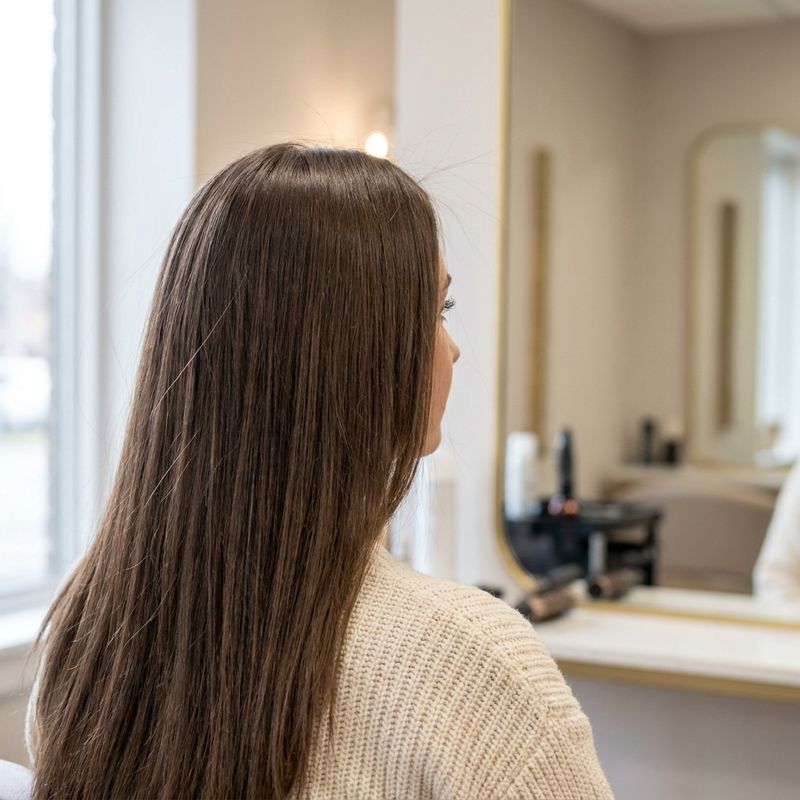
Someone sits down with a photo of a chocolate brown and, when you part the hair, there’s a band of white at the temple. On some charts, chocolate has a number of its own. Which one is it, and does it cover that band?
There are two questions hiding inside “a chocolate.” The first is about the code: which reflect it is. The second is about gray, and the tube’s color doesn’t answer it. Its range does. Here are both, with Igora Royal’s documents in hand as the example.
Which reflect is a chocolate hair dye?
On Schwarzkopf Professional’s US wall chart, chocolate is the -6 reflect, one of ten in Igora Royal’s numbering, which runs from -0 to -9. It’s the first number after the dash in the tube code. The chart lists them in order: Natural, Cendré, Ash, Matte, Beige, Gold, Chocolate, Copper, Red and Violet, per the IGORA Color System wall chart.
| Number after the dash | Reflect |
|---|---|
| -0 | Natural |
| -1 | Cendré |
| -2 | Ash |
| -3 | Matte |
| -4 | Beige |
| -5 | Gold |
| -6 | Chocolate |
| -7 | Copper |
| -8 | Red |
| -9 | Violet |
That numbering is Igora Royal’s. Each manufacturer numbers its reflects its own way, so don’t assume a 6 means chocolate on another brand’s chart: look it up on yours before you ask for a tube by number.
How to read a chocolate hair dye code
To find the chocolate, you first have to read the code. In the Spanish edition of the Igora Royal technical manual, the number to the left of the dash gives the level of the shade (the manual’s word is “altura”, literally height). The first number after the dash gives the primary reflect, the dominant tone. The second gives the secondary tone direction.
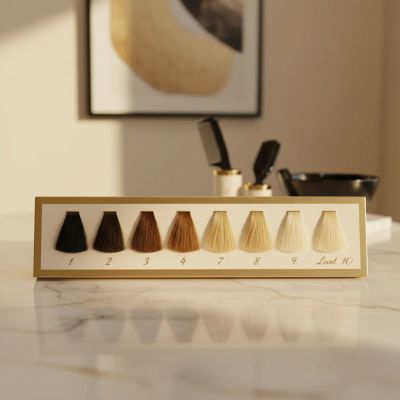
So when the first number after the dash is a 6, that tube’s primary reflect is chocolate. Level and reflect are read separately: the number before the dash doesn’t tell you whether the tube is chocolate, and the 6 doesn’t tell you the level. To place the level, use the color level guide, levels 1 to 10.
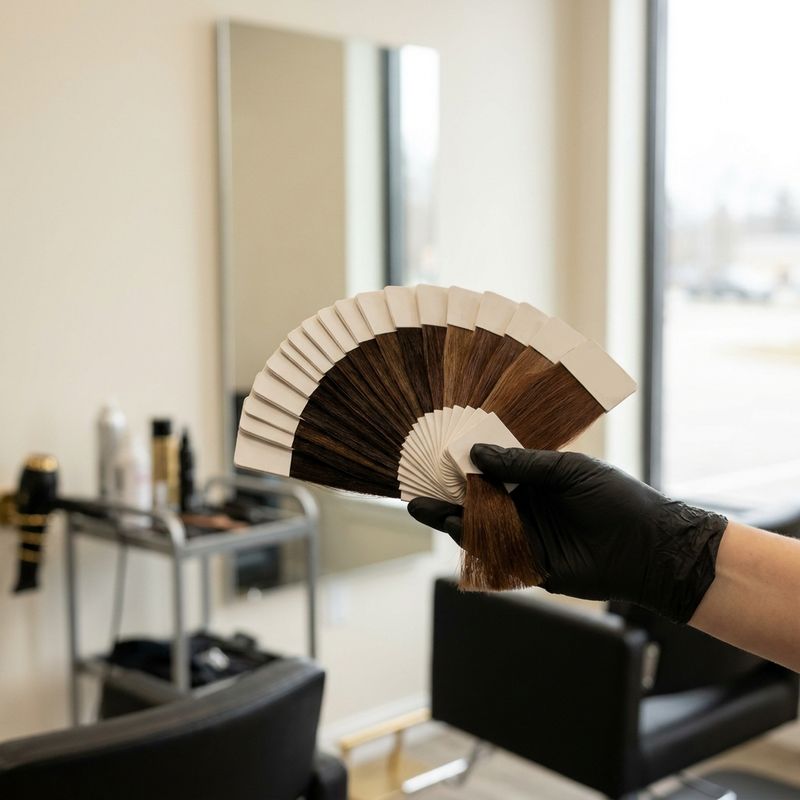
Chart first, tube second.
Does a chocolate hair dye cover gray?
It depends on the range the tube belongs to. Chocolate tells you the color; the range sets the coverage. Here is what each Igora Royal document says:
| Range | What the manual says about gray | Document |
|---|---|---|
| Natural shades | 100% coverage up to level 9 | Spain technical manual |
| Fashion shades | Pure up to 70% gray; for 70-100%, mix 2:1 with a Natural shade; for thick, color-resistant hair, shade and natural in equal parts | UK technical manual |
| Natural Extra shades | 100% coverage even on thick and color-resistant hair | UK technical manual |
| Absolutes | Up to 100% coverage on more than 50% gray without mixing a natural | US wall chart |
If your chocolate is a Fashion shade, the UK manual uses it pure up to 70% gray; if it’s a -63, note that the UK manual’s range table marks it with an asterisk the manual doesn’t explain, so check with the brand before treating it as just another Fashion shade. From 70 to 100%, the UK manual says to mix 2:1 with a Natural shade, and in equal parts for thick, color-resistant hair. Before applying it, do a patch test, and not on the same day as the color appointment; the first time you use that mix on someone, do a strand test.
Level 9 in the Spanish manual’s Natural shades is the number before the dash, the one you can already read. It isn’t a percentage of gray: it’s how high up the levels the 100% coverage goes.
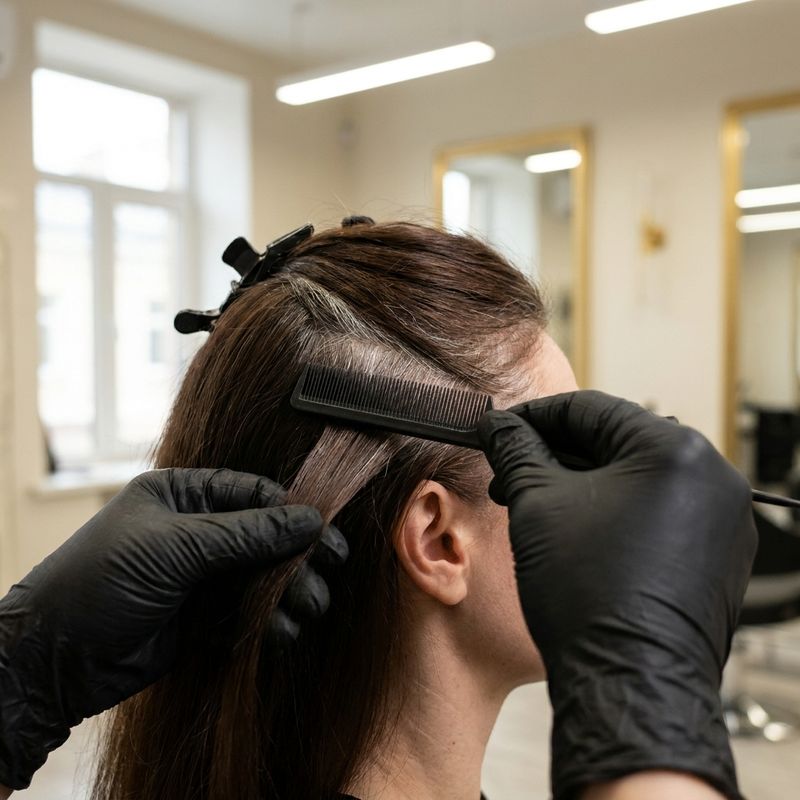
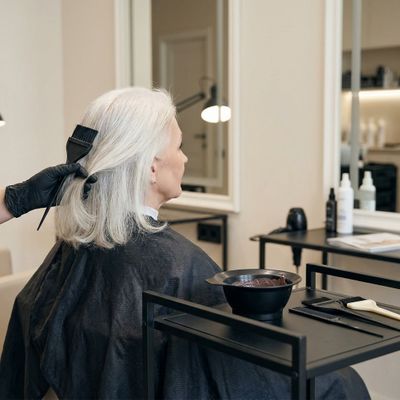
The band at the temple outranks the photo.
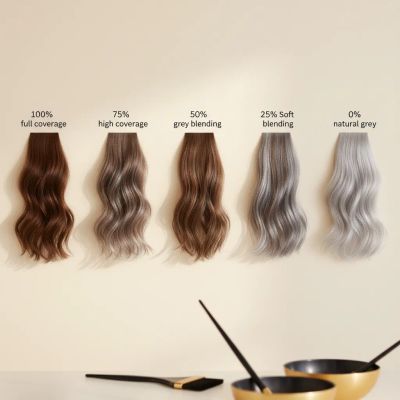
Watch which document is in front of you. Schwarzkopf’s US wall chart draws the line elsewhere: on more than 50% gray, partial-coverage shades call for adding a Natural (-0) or Beige (-4), in a 2:1 ratio. Each brand, and sometimes each country, sets its own limit: check your manual.
The ratio with grams, and the documents side by side, are in how to cover gray hair with Igora Royal. How much to cover for each person’s style is in the gray coverage levels. And for very resistant gray, the Absolutes range has its own guide.
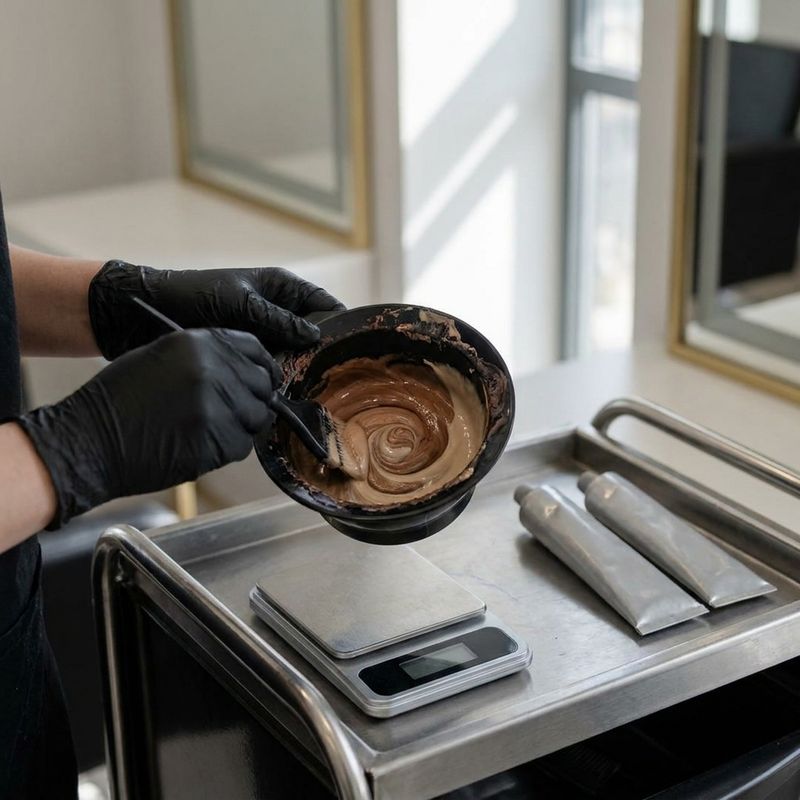
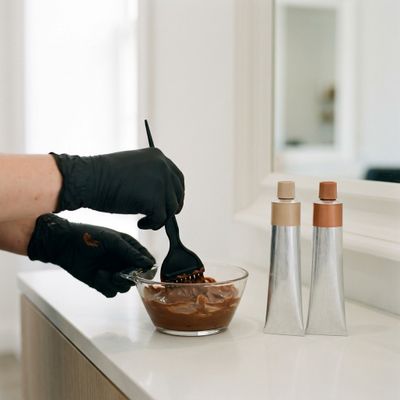
Two tubes, one bowl.
Common mistakes when choosing a chocolate for gray
- Asking for the tube by its name. “Chocolate” is a name; the reflect is the number after the dash. On Igora Royal, look for the 6 after the dash; on another brand, look for chocolate on its chart.
- Assuming it covers because it’s dark. Gray coverage is set by the tube’s range. Check which range it belongs to before you decide whether it goes pure or with a Natural beside it.
- Reading level 9 as a gray percentage. It’s the tube’s level, the number before the dash. The percentage of gray is measured separately, zone by zone, and it decides whether a Fashion shade goes pure or mixed: if the temple is almost white and the rest isn’t, read that zone on its own, because it may need its own mix.
- Applying another document’s limit. The 70% gray limit is the UK and Spanish manuals’; the US wall chart talks about more than 50% and about partial-coverage shades. Use the document for your market.
Frequently asked questions
What number is chocolate in Igora Royal?
The -6, the first number after the dash. Igora Royal’s ten reflects run from -0, Natural, to -9, Violet. On another brand, check its chart.
Does a chocolate hair dye cover gray?
It depends on its range. In the UK manual, Fashion shades go pure up to 70% gray and, from 70 to 100%, are mixed 2:1 with a Natural shade. In the Spanish manual, the Natural shades give 100% coverage up to level 9.
What does the first number in a hair color code mean?
It’s the number to the left of the dash and gives the level of the shade. The first number after the dash is the primary reflect, and the second is the secondary tone direction.
Which Igora Royal range covers resistant gray?
Schwarzkopf’s US wall chart says Absolutes give up to 100% coverage on more than 50% gray without mixing a natural. The UK manual’s Natural Extra shades give 100% coverage even on thick, color-resistant hair, but they are the -00 series, so they aren’t a chocolate: on Igora Royal, chocolate is the 6 right after the dash. Check your own manual for your market.
In short
- Chocolate is a reflect: on Igora Royal, the 6 after the dash; on another brand, look it up on its chart.
- Gray coverage is set by the range: in the Spanish manual, Natural shades up to level 9; in the UK manual, Fashion shades pure up to 70% and, from there to 100%, 2:1 with a Natural shade.
- Your manual sets the limit: each brand, and sometimes each country, sets its own.
Calculate coverage with the exact tone
Want Blendsor to propose the coverage formula with your manual’s rule applied to the gray percentage and each person’s starting level?
Which chocolate range do you use over gray?
Manufacturer sources
Manufacturer documents consulted for this article. A copy of each one is kept, and the passages noted from it are checked against that copy.
Note each one's country: the same line's instructions can differ from one market to another, so follow the directions for the product you use.
Is chocolate still the -6 reflect in Igora Royal's numbering, and do these gray-coverage limits still match the manuals?
In the app, we ask you a question like this one, but about your own client.
Up for this week’s case? →Related articles
Practice with our colorimetry tools
Calculators, neutralization wheel, AI consultation...
The Blendsor newsletter
Color techniques and trends for professionals. No spam.
You know the theory. What about today's case?
Send a photo to the Blendsor advisor and get an answer grounded in colour theory: toner, developer and timing, with the brands on your shelf.
Ask about your caseWritten by the Blendsor team
Professional hair colorimetry experts with experience in AI-assisted formulation. We combine color science, salon practice and technology to help colorists formulate with precision.