Shades EQ Color Chart: All Tones and Formulas by Level
Complete Redken Shades EQ chart with 80+ shades organized by family. Find the right code for every level and learn how to combine them.
Blendsor
Blendsor Team
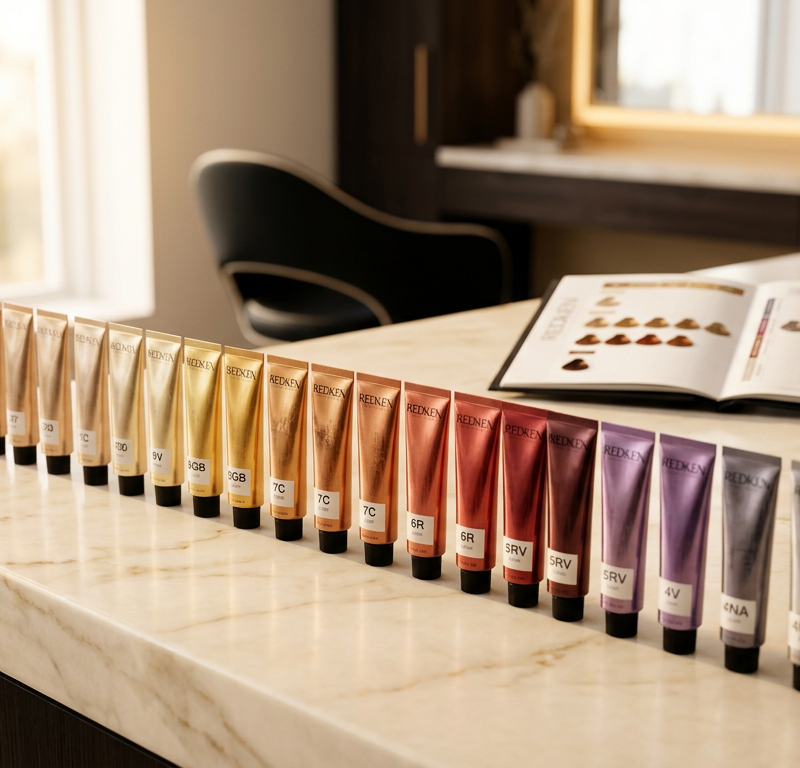
How many times have you searched “08NB Shades EQ” to confirm exactly what tone it deposits?
If you work with Redken, you know that the Shades EQ color chart is one of the most extensive on the market — over 80 shades organized into families with codes that aren’t always intuitive. And when you have a client in the chair, you need certainty, not guesswork.
In this guide you’ll find the complete updated shade chart, what each code means, the most requested shades with real-world combinations, and the most common mistakes. Everything you need to formulate with Shades EQ without hesitation.
If you’re not yet comfortable with how demi-permanent systems work, check our colorimetry basics guide first.
Quick summary: Redken Shades EQ is an acidic demi-permanent gloss (pH ~6.0) with over 80 shades in 25 families. Each code combines a level number (01-10) plus family letters (N, NB, V, T, etc.). Deposit only — no lift. Most used: 09NB (creamy beige), 06N (shadow root), 09V (cool platinum).
What is Shades EQ and why does it dominate professional salons?
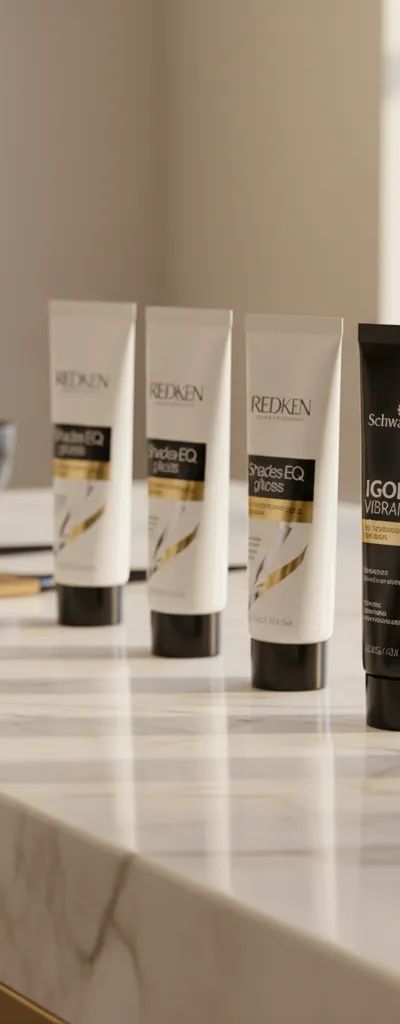
Shades EQ is Redken’s acidic demi-permanent gloss (pH ~6.0), ammonia-free, that deposits color on the cuticle without opening it. Mixed 1:1 with Processing Solution, it processes in 20 minutes and lasts 15-20 washes. Key advantage: one system for toning post-bleach, refreshing color between services, pure shine gloss (Clear 000 shade), and shadow roots.
Shades EQ is Redken’s acidic demi-permanent gloss, with a pH of approximately 6.0 that deposits color without opening the cuticle. Unlike permanent color, it contains no ammonia and works exclusively on the hair surface.
| Feature | Shades EQ |
|---|---|
| Type | Acidic demi-permanent |
| pH | ~6.0 |
| Ammonia | No |
| Activator | Processing Solution (not peroxide) |
| Mix ratio | 1:1 |
| Processing time | 20 minutes |
| Durability | 15-20 washes |
| Lifting power | None (deposit only) |
According to the Society of Cosmetic Chemists, acidic pH systems deposit pigment on the outer cuticle without altering the hair’s internal structure. This is why Shades EQ leaves hair with more shine and better texture than alkaline color.
What makes Shades EQ unique is its versatility: it works as a post-lightening toner, as a color refresh between services, as a pure shine gloss (with the Clear 000 shade), and as a base for shadow roots. One system, multiple services.
Pro tip: Shades EQ doesn’t lift. If your client needs to go lighter, lighten first with bleach or permanent color, then apply Shades EQ as a final toner.
How do you read Shades EQ color codes?
Each Shades EQ code has two parts: a number from 01 to 10 indicating depth level (01 = black, 10 = extra light blonde) and one or two letters identifying the tone family. For example, 08NB = level 8 + Natural Beige. Understanding this system lets you decode any shade in seconds. You can also use the Redken color chart tool for quick lookups.
Before seeing the full chart, you need to understand the naming system. Each shade has a two-part format: number + letters.
- The number (01–10) indicates the depth level. 01 is black, 10 is extra light blonde.
- The letters indicate the tone family — the reflect or undertone it deposits.
Tone families
| Code | Family | What it deposits | Primary use |
|---|---|---|---|
| N | Natural | Neutral, no dominant reflect | Base, gray coverage, refreshing natural |
| NB | Natural Beige | Neutral with warm beige undertone | Shadow roots, creamy natural tones |
| NW | Natural Warm | Neutral with extra warmth | Counteract excess ash, add warmth |
| NA | Natural Ash | Neutral with ash undertone | Neutralize unwanted warmth |
| G | Gold | Golden | Golden blondes, warm highlights |
| GB | Gold Beige | Golden with beige | Buttery blondes, “buttercream” tones |
| GG | Gold Gold | Intense gold | Maximum golden reflects |
| GI | Gold Iridescent | Iridescent gold | Multi-dimensional blondes |
| GN | Gold Natural | Gold with natural base | Subtle golds, more discreet |
| V | Violet | Violet | Neutralize yellow in blondes |
| VB | Violet Blue | Blue-violet | Neutralize yellow-orange |
| VRo | Violet Rose | Rose violet | Rosé blondes, mauve tones |
| T | Titanium | Metallic ash | Cool blondes, grays, smoky |
| P | Pearl | Pearl | Pearlescent blondes with iridescence |
| C | Copper | Copper | Vibrant coppers |
| CB | Copper Brown | Brown copper | Deep coppers, amber |
| CC | Copper Copper | Intense copper | Maximum coppers, fantasy |
| CR | Copper Red | Red copper | Transition between copper and red |
| R | Red | Red | Vibrant reds |
| RB | Red Brown | Brown red | Mahoganies, cherry cola |
| RR | Red Red | Intense red | Maximum reds |
| RV | Red Violet | Violet red | Burgundies, wines |
| AA | Ash Ash | Intense ash | Maximum orange neutralization |
| M | Matte | Matte (green) | Neutralize red in dark levels |
| WG | Warm Gold | Warm gold | Honey tones, soft warmth |
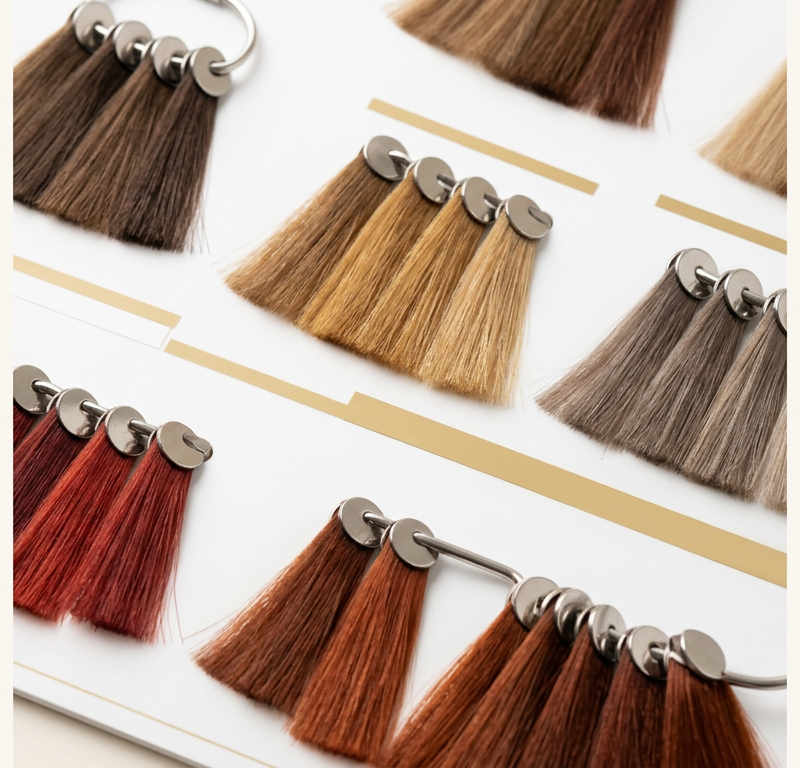
Example: The code 08NB means level 8 (light blonde) + Natural Beige family. It deposits a neutral reflect with a beige undertone — one of the most versatile and requested shades in the entire chart.
What are all the Shades EQ shades organized by level?
The complete Shades EQ chart spans over 80 shades across 10 depth levels, from 01B (Onyx) to level 9 shades for very light blondes. Levels 6 and 7 have the widest variety — 17 and 15 shades respectively — covering the dark blonde to medium blonde range where most color correction work happens.
Here are all available shades organized by depth level. The commercial names help you visualize the result.
Levels 1-3 (darks)
| Code | Name | Family |
|---|---|---|
| 01B | Onyx | Blue |
| 02M | Midnight Ash | Matte |
| 03A | Terra Cotta | Ash |
| 03G | Cinnamon | Gold |
| 03N | Espresso | Natural |
| 03NB | Mocha Java | Natural Beige |
| 03NW | Cocoa Bean | Natural Warm |
| 03R | Roxy Red | Red |
| 03RB | Mahogany | Red Brown |
| 03RV | Merlot | Red Violet |
| 03V | Orchid | Violet |
Level 4 (medium brown)
| Code | Name | Family |
|---|---|---|
| 04CB | Clove | Copper Brown |
| 04M | Smoked Cedar | Matte |
| 04N | Chicory | Natural |
| 04NA | Storm Cloud | Natural Ash |
| 04NB | Maple | Natural Beige |
| 04RV | Cabernet | Red Violet |
| 04VRo | Violet Rose | Violet Rose |
| 04WG | Sun Tea | Warm Gold |
Level 5 (light brown)
| Code | Name | Family |
|---|---|---|
| 05C | Chili | Copper |
| 05CC | Electric Shock | Copper Copper |
| 05G | Caramel | Gold |
| 05N | Walnut | Natural |
| 05NA | Smoke | Natural Ash |
| 05NW | Macchiato | Natural Warm |
| 05RB | Manzanita | Red Brown |
| 05RV | Sangria | Red Violet |
| 05V | Cosmic Violet | Violet |
Level 6 (dark blonde)
| Code | Name | Family |
|---|---|---|
| 06AA | Bonfire | Ash Ash |
| 06CB | Amber Glaze | Copper Brown |
| 06CR | Sunset | Copper Red |
| 06G | St. Tropez | Gold |
| 06GB | Toffee | Gold Beige |
| 06GG | Midas Touch | Gold Gold |
| 06GI | Tenerife | Gold Iridescent |
| 06GN | Moss | Gold Natural |
| 06N | Moroccan Sand | Natural |
| 06NA | Granite | Natural Ash |
| 06NB | Brandy | Natural Beige |
| 06R | Rocket Fire | Red |
| 06RB | Cherry Cola | Red Brown |
| 06RR | Blaze | Red Red |
| 06T | Iron | Titanium |
| 06VB | Violet Lagoon | Violet Blue |
| 06VRo | Mauve Rose | Violet Rose |
| 06WG | Mango | Warm Gold |
Level 7 (medium blonde)
| Code | Name | Family |
|---|---|---|
| 07C | Curry | Copper |
| 07CB | Spicestone | Copper Brown |
| 07CC | Urban Fever | Copper Copper |
| 07G | Saffron | Gold |
| 07GB | Butterscotch | Gold Beige |
| 07M | Driftwood | Matte |
| 07N | Mirage | Natural |
| 07NA | Pewter | Natural Ash |
| 07NB | Chestnut | Natural Beige |
| 07NW | Milk Tea | Natural Warm |
| 07P | Mother of Pearl | Pearl |
| 07RR | Flame | Red Red |
| 07T | Steel | Titanium |
| 07V | Crushed Amethyst | Violet |
| 07VB | Violet Star | Violet Blue |
Level 8 (light blonde)
| Code | Name | Family |
|---|---|---|
| 08C | Cayenne | Copper |
| 08CR | Sunrise | Copper Red |
| 08GG | Gold Dip | Gold Gold |
| 08GI | St. Barths | Gold Iridescent |
| 08GN | Ivy | Gold Natural |
| 08N | Mojave | Natural |
| 08NA | Volcanic | Natural Ash |
| 08NB | — | Natural Beige |
| 08T | Silver | Titanium |
| 08V | Iridescent Quartz | Violet |
| 08VB | Violet Frost | Violet Blue |
Level 9 (very light blonde)
| Code | Name | Family |
|---|---|---|
| 09AA | Papaya | Ash Ash |
| 09G | Vanilla Crème | Gold |
| 09GB | Buttercream | Gold Beige |
| 09N | Café Au Lait | Natural |
| 09NB | Irish Crème | Natural Beige |
| 09P | Opal Glow | Pearl |
| 09T | Chrome | Titanium |
| 09V | Platinum Ice | Violet |
Pro tip: Level 9 shades are the most used as post-lightening toners. If your client reaches a clean yellow undertone (level 9-10), these are your go-to formulas.
What are the 5 most-used Shades EQ shades in professional salons?
The five most-used salon shades are 09NB Irish Crème (the universal blonde toner), 06N Moroccan Sand (the all-purpose shadow root and refresh shade), 09V Platinum Ice (maximum cool platinum), 09GB Buttercream (honey blonde with sophistication), and 08N Mojave (neutral base in light blonde). Each solves a distinct color objective.
These are the shades that get searched the most and used the most in salons, based on search data and professional trends.
1. 09NB Irish Crème
The universal blonde toner. Deposits a creamy beige that neutralizes yellow without going ashy. Perfect when your client wants a “natural but better” blonde.
- Best for: Level 9-10 blondes post-lightening
- Neutralizes: Soft yellow
- Result: Creamy beige, “crème brûlée” quality
2. 06N Moroccan Sand
The most versatile shade in the chart. Works as a shadow root base, as a midtone refresher, and as a transition tone. If you could only have one Shades EQ shade, many colorists would choose this one.
- Best for: Shadow roots, refreshing brunettes, neutral base
- Neutralizes: Keeps neutral without cooling or warming
- Result: Natural luminous dark blonde
3. 09V Platinum Ice
When the goal is icy blonde with no compromise. It’s the most intense violet at level 9, designed to eliminate every trace of yellow.
- Best for: Platinum blondes, cool ash blondes
- Neutralizes: Maximum yellow
- Result: Icy platinum, “ice blonde” quality
4. 09GB Buttercream
For golden blondes with sophistication. Unlike a pure gold (09G), the beige component softens the warmth and prevents the result from looking “yellow.” It’s the tone behind the warm honey blonde trend everyone’s requesting.
- Best for: Honey blondes, buttery blondes
- Neutralizes: Doesn’t neutralize — adds golden-beige reflect
- Result: Soft gold, “butter blonde” quality
5. 08N Mojave
The level 8 neutralizer. When you need a clean natural tone in light blonde with no dominant reflect, this is your shade. Widely used to prepare a neutral base before applying a more specific reflect.
- Best for: Neutral base in light blonde, preparation
- Neutralizes: Soft gold
- Result: Clean natural light blonde, no dominant reflect
For a side-by-side comparison of these shades with their Schwarzkopf equivalents, check our Redken to Schwarzkopf conversion guide.
How do you mix Shades EQ shades for custom results?
You can mix any Shades EQ shades while always maintaining the overall 1:1 ratio of total color to Processing Solution. Most-used blends: 09NB + 09GB (2:1) for soft golden beige, 09V + 09P (1:1) for pearlescent platinum, and 06AA + 06N (1:2) to neutralize orange at levels 6-7 without going overly ashy.
The real power of Shades EQ lies in mixing. Here are verified combinations for the most requested results.
| Goal | Formula | Ratio | Result |
|---|---|---|---|
| Creamy beige blonde | 09NB + 09GB | 2:1 | Soft golden beige |
| Cool platinum blonde | 09V + 09P | 1:1 | Pearlescent platinum |
| Natural shadow root | 06N + 07NB | 1:1 | Smooth root transition |
| Elegant copper | 07C + 07CB | 1:1 | Copper with depth |
| Neutralize orange (level 6-7) | 06AA + 06N | 1:2 | Neutralizes without excess ash |
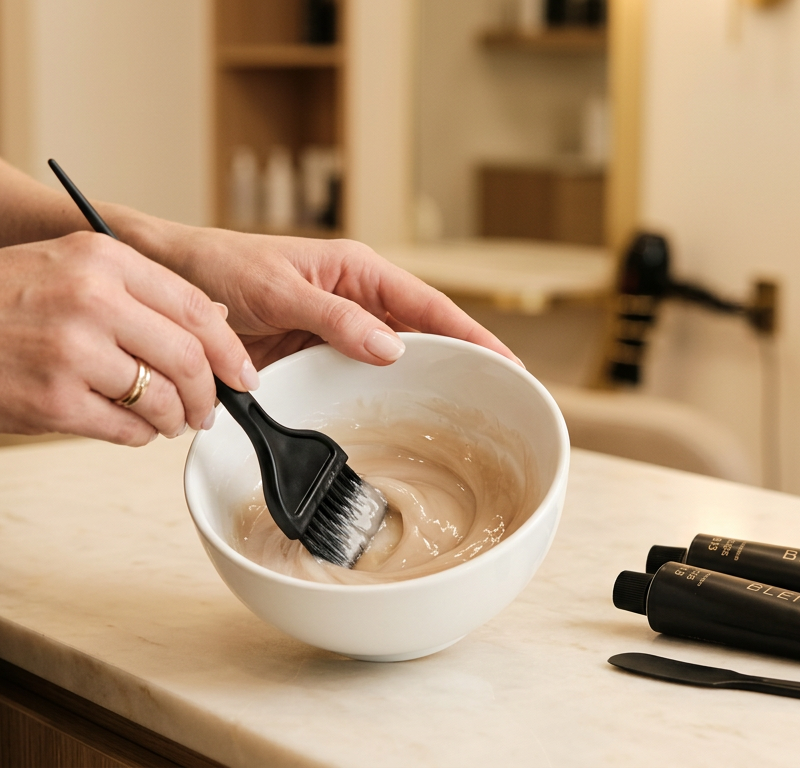
Pro tip: When mixing two Shades EQ tones, always maintain the same 1:1 mix ratio with Processing Solution based on the total color amount. That is: if you use 30 ml of color (20 ml of one shade + 10 ml of another), mix with 30 ml of Processing Solution.
What are the most common mistakes when using Shades EQ?
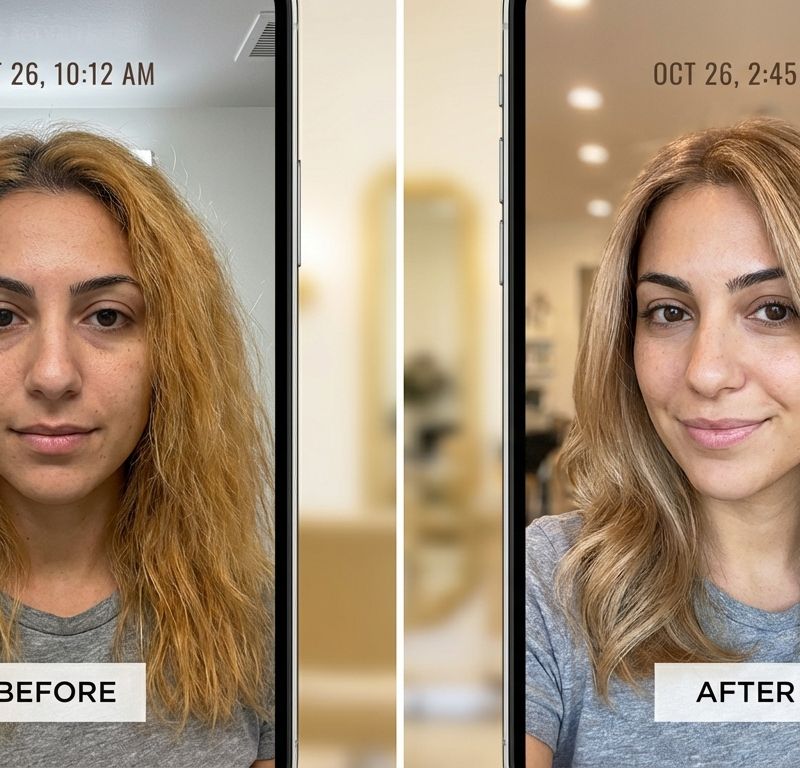
The four main mistakes: trying to lift with Shades EQ (deposit only), substituting Processing Solution with conventional developer (disrupts the acidic pH), not adjusting the formula on highly porous hair (deposits darker than expected), and expecting full gray coverage (maximum ~50% with Natural series tones).
Even with a system as forgiving as Shades EQ, there are pitfalls. These are the most common mistakes when working with this gloss.
-
Using Shades EQ to lift: Shades EQ only deposits. If you apply a higher level than the natural base expecting to lighten, nothing will happen. Lift first with bleach or permanent color.
-
Confusing Processing Solution with developer: Shades EQ Processing Solution isn’t a conventional developer. It has a specific pH designed for this system. Substituting it with 10 or 20 volume peroxide alters the acidic pH and can produce unpredictable results.
-
Applying on very porous hair without adjusting: On highly porous hair (multiple lightening sessions), Shades EQ can deposit darker than expected. The fix: mix your chosen shade with Clear (000) at a 1:1 ratio to dilute the intensity.
-
Not saturating grays properly: Shades EQ covers grays partially (up to approximately 50% with natural tones). If your client has more than 50% gray, you need a permanent system or a mix with Redken’s Cover Fusion.
Frequently asked questions
Does Shades EQ cover gray hair 100%?
No. Shades EQ is demi-permanent and covers up to 50% gray using Natural (N) family tones. For full coverage, Redken recommends their Cover Fusion system or mixing Shades EQ with specific N-series tones at a level equal to or darker than natural.
How long does Shades EQ last?
Between 15 and 20 washes under normal conditions. Duration varies based on hair porosity, washing frequency, and the products your client uses. Highly porous hair retains more pigment but also releases it faster.
Can I mix shades from different levels?
Yes. It’s a common practice for achieving custom results. When mixing two different levels, the result will fall approximately between both. For example, mixing 08N with 06N at a 1:1 ratio will give a deposit close to level 7.
What’s the difference between Shades EQ and a regular salon gloss?
Shades EQ works with acidic pH (~6.0) and deposits real pigment, not just shine. A generic hair gloss is usually a shine treatment with no pigment or minimal pigment. Shades EQ changes the visible tone of the hair; a basic gloss only improves shine.
Are 08NB and 09NB the same tone at different levels?
Not exactly. While both belong to the Natural Beige (NB) family, each level has a specific formulation adapted to its corresponding underlying pigment. 08NB deposits beige over a yellow-orange undertone (level 8), while 09NB deposits beige over a pure yellow undertone (level 9). The final result is different.
In summary
- Shades EQ has over 80 shades organized into 25 families with specific letter codes
- The naming system combines number (level 1-10) + letters (tone family)
- Most versatile shades: 09NB (beige blonde), 06N (shadow root), 09V (cool platinum)
- Deposit only, no lift — always lighten first if you need to go higher
- Mix with Processing Solution 1:1 — never substitute with conventional developer
Calculate professional formulas with AI
Want to generate custom Shades EQ formulas based on each client’s starting level and desired result?
Try Blendsor free — 5 formulas per month, no credit card required.
What’s your go-to Shades EQ shade? The classic 09NB or do you have a secret mix?
Related articles
Practice with our free tools
Calculators, neutralization wheel, AI consultation...
The Monday Briefing
Color techniques and trends for professionals. No spam.
Apply this theory with precision
Blendsor analyzes 70+ variables and generates exact formulas based on real colorimetry. Try our free color consultation or download the app.
Download freeWritten by the Blendsor team
Professional hair colorimetry experts with experience in AI-assisted formulation. We combine color science, salon practice and technology to help colorists formulate with precision.