Strand Test: When It's Color Remover and When It's Lightening
The strand test decides between reductive color remover and lightening on faded mid-lengths and ends from buildup. How to run it, read it dry, and what to check before lightening.
Blendsor
Blendsor Team
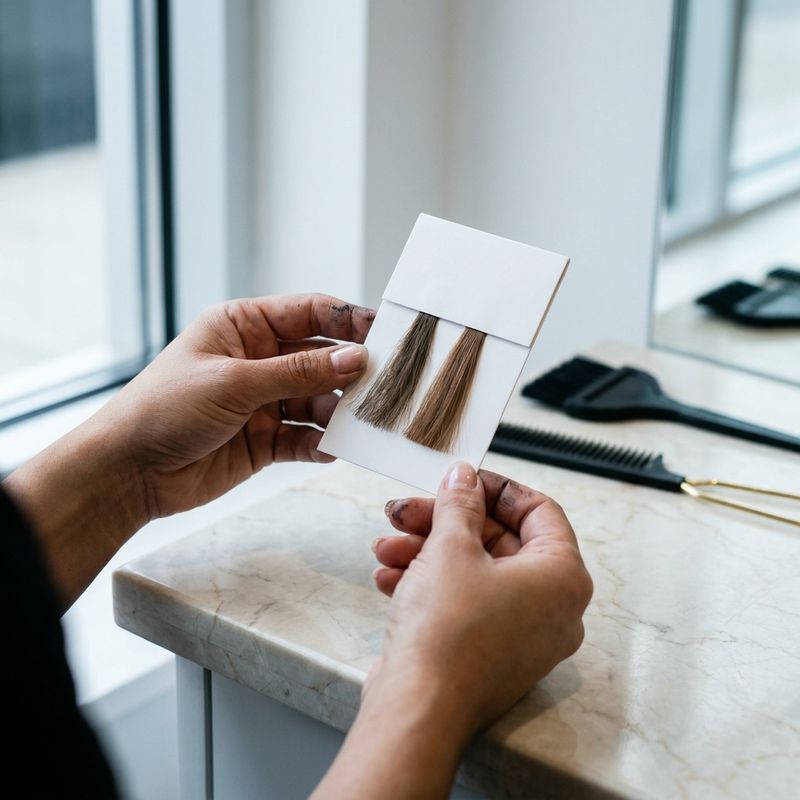
Roots at the level you wanted. Mid-lengths and ends, duller than the formula predicted, again. Before deciding anything, there’s a question that looking at the hair doesn’t answer: is that dullness just pigment buildup sitting on a correct level, or is the real level below target.
Confusing the two is expensive. Applying a color remover when the level actually needs raising leaves the result half-done, with the client back in two weeks asking why the dullness is still there. Lightening when the level was already correct is an aggressive, unnecessary process, and on the most porous hair in the whole head.
The answer isn’t in the eye. It’s in a strand test worked as the test that decides, not a quick glance before you reach for the bowl.
TL;DR: On faded mid-lengths and ends from buildup, the choice between reductive color remover and lightening is decided by a strand test worked small: remove first, then lighten if the strand calls for it, dry it, and read the level dry. Correct level with excess pigment, color remover. Level below target, lightening, with compatibility and elasticity checked first, and a closing of a long rinse plus toning so the color shouldn’t come back.
Why does the strand decide, and the eye isn’t enough?
The level you see across the whole head isn’t reliable when buildup is in play: every root touch-up that overlaps onto the mid-lengths deposits another layer of color on top of the last one, and that layer hides the real level of the fiber. Mid-lengths at a true level 6 can read as a 4, even a 3, to the eye.
The problem is that “by eye” doesn’t tell you whether that dullness is just the artificial pigment layer, or whether the level genuinely needs raising too. Both scenarios look alike from the outside and call for opposite tools. One is solved with a reductive color remover that doesn’t touch the natural melanin. The other needs oxidation, with everything that implies on fiber already worn by years of service.
That’s why the diagnosis doesn’t happen on the whole head. It happens small, on a strand, before you commit anything, and it’s not excessive caution: it’s the difference between getting the process right the first time and having to correct a correction.
How do you run the strand test for this decision?
The strand test for this decision isn’t just eyeballing a piece of hair: it’s applying the planned process in miniature and reading the result dry, exactly the way you’d read the full service.
- Isolate a representative strand. A low-visibility section, usually at the nape, that reflects the real state of the mid-lengths and ends you’re correcting.
- Apply the remover, always the remover first. It’s the non-oxidative path, and the only one that shows what’s underneath the buildup without committing to anything. Use the same mix you’d use in the full service: change anything between the test and the service and the reading stops being valid.
- Time it. Clock it from application, don’t eyeball the timing.
- Rinse and dry the strand before reading anything. This isn’t optional: it’s the step that decides whether the reading holds.
- Read the level dry. Wet hair lies, it always looks darker and more saturated than the finished result. The reading that counts is the dry one, under salon light.
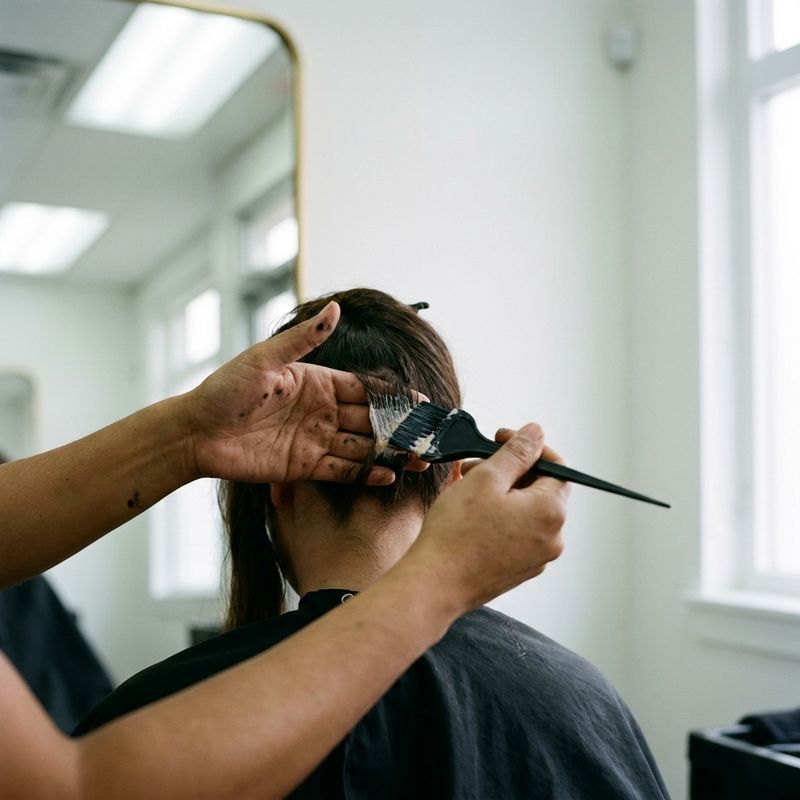
Pro tip: keep the test strand with the formula and time noted in an envelope. If the client comes back for the next touch-up, you have the exact record of what worked, instead of starting the guesswork over.
When does the strand call for a reductive color remover?
If the dry strand shows the level you expected and the only thing in excess is artificial pigment buildup, the path is a reductive color remover. It reduces the oxidative dye until it’s colorless, without touching the natural melanin in the fiber, so it strips the excess deposit without raising the base level. According to Wella’s Color Renew technical data sheet, this type of product doesn’t lighten the natural hair color: it reduces the artificial pigment sitting on top, not the fiber’s own pigment.
It’s the right tool when the problem is purely buildup: several overlapping touch-ups left more layer than the formula accounted for, but the real level is still the target. Think of a client who’s kept the same base for a year and a half, always at the same salon, whose only variable has been the number of touch-ups stacking up: that’s the case where the strand almost always confirms correct level, excess pigment.
| What the dry strand shows | Tool |
|---|---|
| Correct level, excess artificial pigment | Reductive color remover |
| Level below target | Lightening, with the checks done first |
| Surface dulling from product residue | Clarifying shampoo |
| Surface dulling from mineral buildup in the water | Chelating shampoo, since clarifying shampoo doesn’t bind metals |
| Oxidative pigment already fixed in the cortex | Clarifying shampoo isn’t enough, needs a remover |
What do you need to check before lightening?
If the dry strand shows a level below target, no color remover is going to get you there. There’s no shortcut here: it’s lightening, with a different risk and a different price. But before mixing anything, two checks come first, and they’re not exclusive to this path: elasticity is required just as much before a color remover, because that’s not a neutral process either.
Compatibility, when the chemical history is an unknown. This is the typical case of a new client walking in with color carried over from somewhere else, no record card to back it up. You don’t know what’s been put on that fiber up to now: dye from a different brand, home treatments, metallic products. Some signs give themselves away with noise: heat during processing, an odd smell, a shade turning greenish, a sudden violent shift. But the ones that get missed most are the silent ones, which is why it helps to keep an untreated reference strand alongside. A strand that falls apart, lightens all at once, or doesn’t move at all after thirty minutes points just as strongly to metallic salts, and that’s where the chemical service closes. No reaction is not a green light: the only negative that clears the service is one that lightens just slightly with no physical reaction at all, and that’s read against the reference strand, not from memory.
Elasticity, because those mid-lengths and ends are already porous. The same buildup that darkened the fiber also made it more absorbent, and porous fiber reacts faster than expected. Check elasticity before you start: it tells you whether that specific fiber will hold up to lightening or whether the margin is tighter than it looks. With low volume and checks every few minutes, what takes half an hour on virgin fiber can be done in a fraction of that on porous ends.
And the sensitivity test, separately. It doesn’t replace anything above, and nothing above replaces it: it goes 48 hours before every application, even with someone who’s been sitting in your chair for years. Trust isn’t an exemption.
Only once those checks are done does it make sense to reach for the bowl.
What closing decides whether the color comes back?
Whichever path you took, the process doesn’t end when you see the result in the basin. A reductive remover doesn’t destroy artificial pigment, it shrinks it. That reduced molecule is smaller and lighter, but it’s still inside the fiber, and if it doesn’t come out, oxygen in the air re-oxidizes it: it returns to its original size and the color reappears, sometimes hours after the service, once the client is already home and you can’t see it anymore.
The correct closing has an order. First, a long rinse, longer than you think you need, until the water runs clear. Then, clarifying shampoo, which removes what water alone leaves behind. Then dry and read the real base on dry hair before deciding whether to re-pigment. And always tone: the remover leaves the base bare and uneven, especially on porous ends, and without that last step the shade settles in blotches.

Common mistakes when deciding
- Reading the level wet. Wet hair looks darker and more saturated than the finished result. Read it there and the call between remover and lightening can come out backwards, and you find out once the formula’s already mixed.
- Lightening over unknown history without checking first. Skipping the compatibility check because “there’s time” is the most direct route to a process that shifts color, smells burnt, or breaks the fiber mid-application.
- Skipping the toner after the remover. Leaving the hair without that last step hands over a result that, on top of looking uneven, can reappear within days if the reduced pigment was still inside. It’s the mistake that confuses people most, because it looks like the remover failed when what actually failed was the closing.
FAQ
Can I decide between color remover and lightening just by looking at the color?
Not reliably. Pigment buildup can make a correct real level look two or three shades darker than it is. The strand test, read dry, is the only data point that separates “excess pigment” from “level too low.”
How long does the strand test take to give a reliable reading?
The time of the planned formula, no more, no less: if you’d process 20 minutes in the real service, time the test the same way. Cutting the time to go faster invalidates the reading.
What if the strand looks right but the color comes back on the full head?
It’s almost always a closing failure, not a diagnosis one. If the rinse was short or the clarifying shampoo got skipped, the reduced pigment stays inside and oxygen brings it back to its visible form.
Do I need to repeat the strand test on every visit for the same client?
Not if you already know how their fiber responds and the history hasn’t changed since last time. Yes as soon as something changes: a new treatment, color applied elsewhere, or a gap of several months since the last visit.
In summary
- The strand test, not the eye, decides the path. Work it like the real process: remove or lighten, dry it, read it dry.
- Correct level with excess pigment calls for a reductive remover. Level below target calls for lightening, with compatibility and elasticity checked first.
- The closing isn’t optional. Long rinse, clarifying shampoo, dry, and tone: if the reduced pigment doesn’t leave the fiber, the color comes back.
Calculate zone corrections with AI
Want to formulate the correction factoring in the real level the strand test revealed and the porosity of each zone? Blendsor helps you build the formula with the data that matters.
Formulate your correction with Blendsor →
What case made you switch branches at the last minute because of the strand test?
How does the strand test decide between color remover and lightening?
In the app, we ask you a question like this one, but about your own client.
Related articles

Practice with our colorimetry tools
Calculators, neutralization wheel, AI consultation...
The Blendsor newsletter
Color techniques and trends for professionals. No spam.
A client in the chair right now?
The Blendsor advisor gives you the precise formula for this technique with your salon's brands — and saves it to your client's card.
Ask about your caseWritten by the Blendsor team
Professional hair colorimetry experts with experience in AI-assisted formulation. We combine color science, salon practice and technology to help colorists formulate with precision.