Root Touch-Up: What Goes on the Lengths, and the Dual System
A root touch-up is two zones. What the dual system is, what goes on the lengths and what to look for in your brand's manual, with a full Igora Royal example.
Blendsor
Blendsor Team
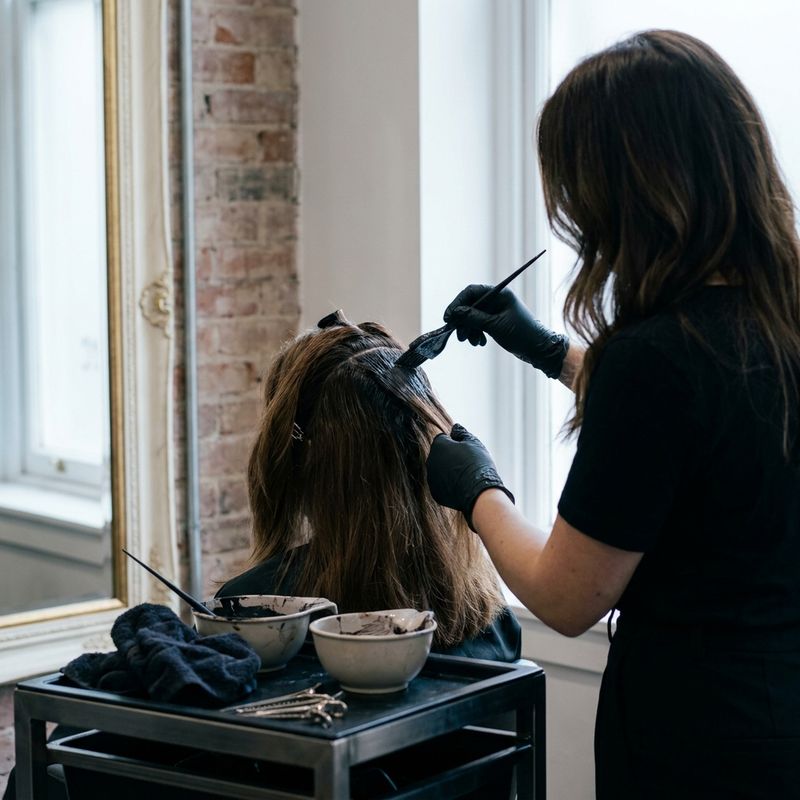

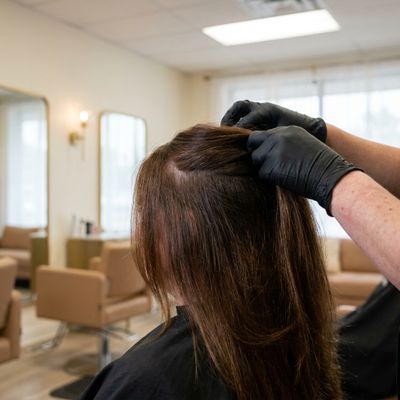
Someone sits down in your chair with a chestnut brown, an inch of regrowth and lengths that look lighter, the shine gone. You know how the root will turn out: rich and glossy. What you’re less sure of, bowl in hand, is what to do with those lengths inside the same touch-up.
If you color hair every day, you know that moment. There is no single mix or timing that works for every brand. The answer is knowing what your brand’s manual proposes for each zone.
Here is what the dual system is, how two different brands handle it, the four things to look for in your manual, and a full example with its numbers.
What is the dual system in a root touch-up?
It means using a different product on each zone of the touch-up: the permanent color on the regrowth and a demi-permanent on the mid-lengths and ends. It is the name Igora Royal gives, in its UK technical manual, to what it recommends on the Fashion Shades page. In the manual’s own words, the Dual System is “a professional application method that combines permanent hair colour to cover re-growth with demi-permanent hair colour for mid-lengths and ends.” It comes from the Igora Royal technical manual for the UK (03/2026), p. 14.
With the brand’s products: Igora Royal, the permanent, goes on the root, and Igora Vibrance, the demi-permanent, on the mid-lengths and ends. The same manual presents Igora Vibrance as a “demi-permanent hair colour” (p. 28). One detail to keep in mind: the UK manual describes the Dual System, with its two products and its timings, only on the Fashion Shades page. Its general touch-up instructions mention a “Dual application” on the mid-lengths and ends without saying which product: Igora Vibrance on the lengths is an instruction from that page, not for the whole brand.
A root touch-up is two zones
A touch-up means two different kinds of hair on the same head. One is the regrowth: new hair that has never seen color. The other is the mid-lengths and ends, which already carry the color from earlier appointments.
That is why the first habit of the trade is to separate them. Root color goes first on the new hair, and the brush stops before it overlaps the length that was already colored. If you want to know why overlap ends in uneven tone, it is covered in why your root touch-up comes out uneven.
Whether anything then goes down to the lengths, what and when, is not decided by eye to use up what is left in the bowl. You check what your manual proposes: which product those lengths get, for how long and in what order.
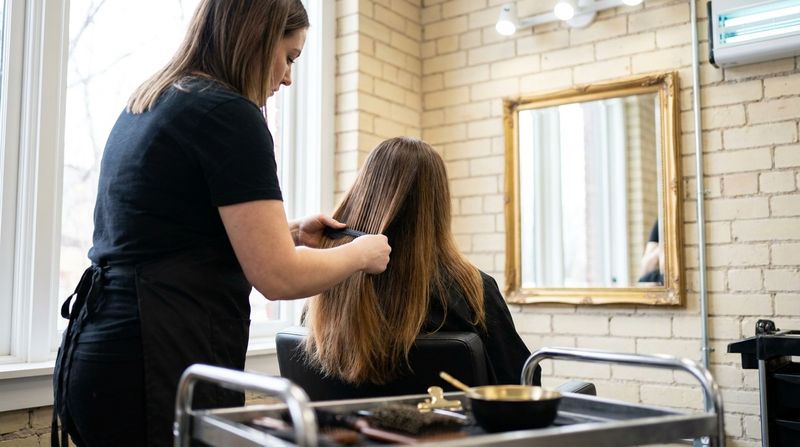
Before mixing, compare the hair at the front and at the back.
Two brands, two ways of treating the lengths
This separation is not specific to one brand, and brands do not solve it the same way. One example is the Koleston Perfect user guide from Wella (p. 3), which gives two options for the lengths in a touch-up:
| Option | What it does on the lengths | Time |
|---|---|---|
| Intense Balance | Apply the color on the lengths for the last minutes of the root’s development time | The last 10-15 min |
| Pure Soft Balance | When the time is up, dampen the hair well and emulsify the color through the lengths and ends | 5-10 min |
On its Fashion Shades, Igora Royal proposes a different product for the lengths, as you will see below. So before you mix, check what your manual proposes for the lengths.
What to look for in your brand’s manual
With the manual in front of you, look for four things for the touch-up:
- Where the root color goes. Whether it asks for the regrowth only or for the rest of the hair as well.
- What it asks for on mid-lengths and ends. The same mix, another product or nothing, and whether it names the product clearly.
- Under what conditions it is applied. On dry or damp hair: each manual states it its own way.
- How long each zone takes. The root and the lengths can run on different clocks, and it pays not to mix them up.
Also check whether the instruction applies to the whole brand or only to one range. And if one of the four is missing, that is information too: what the manual does not say, you decide.
The Igora Royal example: where the root goes and what goes on the lengths
For a touch-up, the general instruction in the UK manual is short: “In small sections, apply the colour only to the re-growth area” (p. 8). That answers the first question. For the lengths, the same block adds “Use Dual application for mid-lengths and ends”, without saying which product. The product with its own name is on the Fashion Shades page, the Dual System one above.
If the tube on your trolley is a Fashion Shade, this is your instruction. If it is another Igora range, check what its page says.
Step by step, from the Fashion Shades page
| Step | What you do | Timing |
|---|---|---|
| 1 | Apply directly on dry hair | Applies to the whole service |
| 2 | Divide the hair into fine sections and apply Igora Royal on the regrowth areas | 10 to 20 minutes |
| 3 | Apply Igora Vibrance evenly on the mid-lengths and ends | Another 10 to 20 minutes |
On the page, the dry-hair instruction comes before the two products, so it covers the whole procedure, not just the root. And mind the root’s timing: it belongs to this method. The general touch-up instructions in the same manual carry a different one, and each goes with its own, without mixing them. In the salon, that means two different mixes, one per zone.
The reason, and what it does not say
Why a demi-permanent on the lengths? Igora gives its reason, in the manual’s own words: “This system keeps hair lengths and ends in optimal condition for more vibrant and lasting colour results.”
That is the brand’s reason, and what it does not say is that the demi-permanent brings the shine back, because it does not promise that. Keep it in mind when you explain it to the person in your chair.
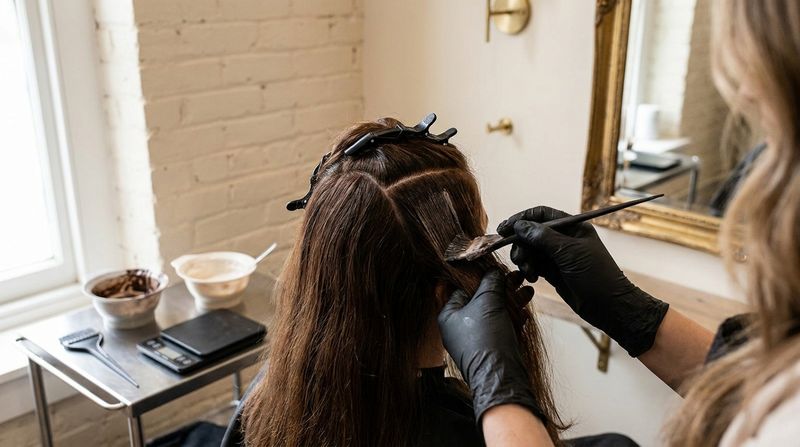
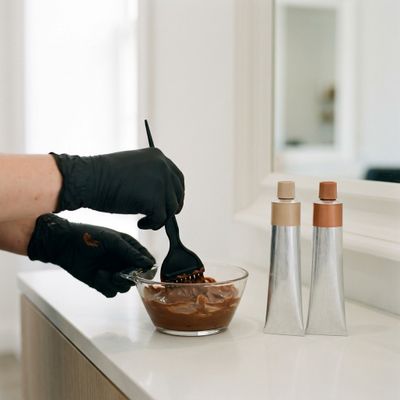
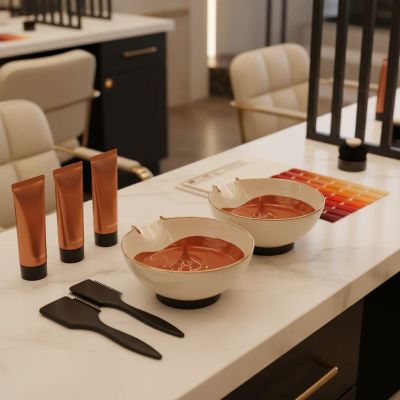
In the Dual System, two zones and two mixes: root and lengths don’t share a bowl.
A case in the chair
Someone with a chestnut brown sits down for a touch-up, and the lengths arrive without shine. Before mixing, comb the hair forward and back under the salon light and compare the intensity of the tone at three points: the root, the mid-lengths and ends, front and back. If you need to decide between a touch-up, a gloss or a targeted correction, the criteria are in root touch-up or gloss: what decides the second visit.
Then look at which tube you used:
- It is an Igora Royal Fashion Shade: the plan is written. Everything on dry hair, Igora Royal on the regrowth and then Igora Vibrance on the mid-lengths and ends.
- It is another range or another brand: go back to the four questions with its manual.
And in any case, the allergy test, with the products you are going to apply and not on the same day as the color appointment. How to schedule it is in the 48-hour allergy patch test.
If the color you are touching up is a copper, the Dual System also appears in copper hair formulas, and if your question is how much natural goes into the root mix on gray hair, see how to cover gray hair with Igora Royal.
Frequently asked questions
What is the dual system in a root touch-up?
It means applying the permanent color on the regrowth and a demi-permanent on the mid-lengths and ends. Igora Royal calls it the Dual System and describes it on the Fashion Shades page of its UK manual, with Igora Royal on the root and Igora Vibrance on the lengths.
Does it apply to every Igora range?
The UK manual describes it, with Igora Vibrance on the lengths, only on the Fashion Shades page. Its general touch-up instructions ask for a “Dual application” on the mid-lengths and ends without saying which product. If you work with another range, what its page says is what rules.
Is it applied on dry or damp hair?
In the Dual System, the manual asks for dry hair, and that instruction comes before the two products, so it covers the whole service. Other brands can differ: in Koleston Perfect, for example, one of the two options for the lengths ends by dampening the hair well and emulsifying the color.
Can I stretch the root mix down to the lengths to use it up?
Not without checking your brand’s manual first: the lengths may get a different product and a different clock. On Igora Royal Fashion Shades, for example, the lengths get Igora Vibrance, not what’s left over from the root.
Does the demi-permanent bring the shine back?
The manual does not promise that. Its reason is a different one: keeping hair lengths and ends in optimal condition for more vibrant and lasting colour.
In short
- Two zones: a touch-up is regrowth and lengths, and the root goes first, alone, on the new hair.
- Each brand, its own way: what goes on the lengths is not solved the same in Koleston Perfect as in Igora Royal. Check what yours proposes.
- Four questions for your manual: where the root goes, what it asks for on the lengths, on what hair and with what clock, and whether it applies to the whole brand or one range.
- The Igora Royal example, on its Fashion Shades: everything on dry hair, Igora Royal on the regrowth for 10 to 20 minutes and then Igora Vibrance on the mid-lengths and ends for another 10 to 20.
- The reason, without a promise of shine: keeping lengths and ends in optimal condition for more vibrant and lasting colour.
The rule to keep: root and lengths are two questions, and they are worth asking separately before you mix. Each brand, and sometimes each country, sets its own limit: check your manual.
Calculate the formulas for each zone of the touch-up
Want the root mix and the lengths mix based on the starting level and the chemical history of each person?
Next time the lengths arrive without shine at a touch-up, what does your manual say about them?
Manufacturer sources
Manufacturer documents consulted for this article. A copy of each one is kept, and the passages noted from it are checked against that copy.
Note each one's country: the same line's instructions can differ from one market to another, so follow the directions for the product you use.
Does the UK technical manual still describe the same Dual System and the same timings on the Fashion Shades page?
In the app, we ask you a question like this one, but about your own client.
Up for this week’s case? →Related articles
Practice with our colorimetry tools
Calculators, neutralization wheel, AI consultation...
The Blendsor newsletter
Color techniques and trends for professionals. No spam.
A client in the chair right now?
The Blendsor advisor gives you the precise formula for this technique with your salon's brands — and saves it to your client's card.
Ask about your caseWritten by the Blendsor team
Professional hair colorimetry experts with experience in AI-assisted formulation. We combine color science, salon practice and technology to help colorists formulate with precision.