How Many Levels Does Igora Royal's 12- Series Lift?
Schwarzkopf's IGORA ROYAL manual gives the 12- series 4-5 levels of lift with 40 vol on natural base 6 and lighter. What it says and how to check it first.
Blendsor
Blendsor Team
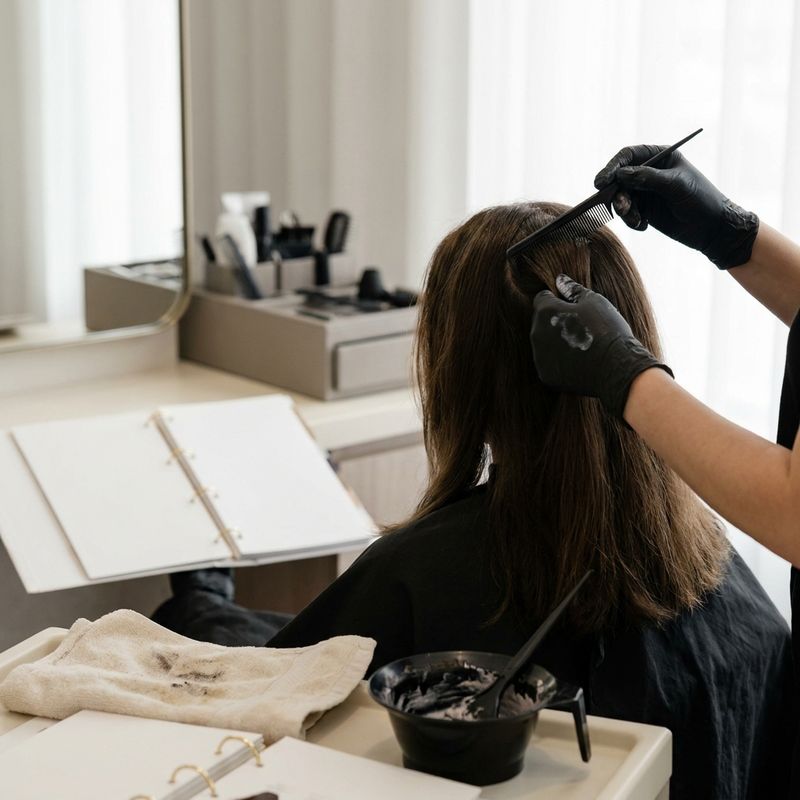
Picture it: a natural level 5 at the root and the high-lift tint open on the counter. Next to 40 vol, the manual says 4 to 5 levels of lift, and with that the mix seems settled. That figure, though, was not written for a level 5 root.
Starting level is exactly what the bowl won’t tell you. Here is what the manufacturer publishes for Igora Royal’s 12- series, which roots each figure refers to, and what is left for you to decide when the manual says nothing.
All the Igora figures below come from Schwarzkopf Professional’s IGORA ROYAL technical manual, UK edition (03/2026), which is also the manual linked from Schwarzkopf Professional’s US Highlifts page. The US IGORA wall chart gives the 12- series the same “4-5 levels” of lift with 12% (40 Vol.), on the same “natural base 6 and lighter”.
How many levels does Igora Royal’s high-lift series lift?
With 12% (40 vol) developer, the 12- series (Special Blonde) lifts 4 to 5 levels, and the manual ties that figure to a starting level: “4-5 levels of lift are achievable on natural base 6 and lighter.” With 9% (30 vol), the usage guide says “Lifting by 3-4 levels” and the series sheet, “up to 4 levels of lift”.
In the manual’s oil developer usage guide, the 12% column reads “Lifting 4-5 levels with IGORA ROYAL Special Blonde series (12-)*”, and the asterisk leads to a footnote: “*4-5 levels of lift are achievable on natural base 6 and lighter.” On the series sheet, the two figures by developer appear as “9% 30 Vol. (up to 4 levels of lift)” and “12% 40 Vol. (up to 5 levels of lift)” (IGORA ROYAL technical manual, Schwarzkopf Professional UK, 03/2026).
| Developer | Usage guide (p. 10) | 12- series sheet (p. 19) |
|---|---|---|
| 9% (30 vol) | lifting by 3-4 levels | up to 4 levels of lift |
| 12% (40 vol) | lifting 4-5 levels* | up to 5 levels of lift |
*Footnote to the usage guide: “4-5 levels of lift are achievable on natural base 6 and lighter.” For the whole series, with either developer, the sheet says “To be used on bases 6 to 8”.
Source: IGORA ROYAL technical manual, Schwarzkopf Professional UK, 03/2026. It is an oxidative high-lift color cream from the IGORA ROYAL Highlifts range, not a lightener, mixed 1:2 (the ratio and the series’ 30-45 minute development time are covered in our guide to the high-lift mixing ratio).
Why does it depend on the starting level?
Because the manual’s figure comes with a condition. The “Lifting 4-5 levels” in the 12% column carries an asterisk, and the footnote it leads to repeats the figure next to its condition: in the manual, the 4-5 does not appear on its own.
The 12- series sheet adds a second limit: “To be used on bases 6 to 8”. So for the whole series the manual gives you a range of bases and a lift figure, and nothing finer: there is no breakdown along the lines of “root 6, this much; root 7, this much; root 8, this much”. If someone shows you one, ask which document it comes from.
Mind the upper limit too: the usage guide’s footnote says “natural base 6 and lighter”, with no limit on the light side, but the series sheet stops at 8. A natural 9 root falls outside the sheet’s range.
The figure is the lift the manual gives the series on the bases it is meant for. What a given root will actually lift is a separate question, and only a strand test answers it.
What if the root is below a 6?
Below a 6, the manual gives the 12- series no figure. The usage guide’s footnote says “natural base 6 and lighter” and the series sheet says “To be used on bases 6 to 8”, so a root at 5, 4 or darker falls outside the bases the series is meant for.
When the person in your chair has a 5 at the root, “4-5 levels” is not a figure you can promise them: the manual does not give it for that level. If you are still weighing the 12- series for that root, you are working outside the bases the series sheet gives, and the call is yours. Only a strand test on that same root shows you what it will lift, and that result tells you whether the Special Blonde series is the right tool or the service needs a different approach.
That’s why, in the Blendsor app, the “I want to go from one shade to another” shortcut first asks “What level is it now?”, with the hint “At the root”, followed by what level they are going for and “What’s been on this hair?”. Without the first answer, no lift figure can be applied to that head.
Does the starting-level condition change from brand to brand?
Yes, which is why Igora’s figure can’t be carried over to another brand’s tube. Set two other high-lift sheets beside it and each one writes the condition its own way.
- Yellow Professional Color High Lift: its 2025 technical chart says it “enables you to achieve up to 4 levels of lift if applied to a natural base no darker than light brown (level 5)”, mixed 1:2 with 40 vol./12% Yellow Professional Peroxide, for 50-55 minutes.
- Majirel High Lift: L’Oréal’s US how-to-use table has it mixed 1:2 and says “Use 30-vol. on natural bases 6-9 for up to 4 levels of lift and maximum neutralization” and “Use 40-vol. on natural bases 5-6 for up to 4.5 levels of lift and maximum lift”. There the lowest base moves with the developer: a 6 with 30 vol, a 5 with 40 vol.
Same kind of product (three high-lift tints mixed 1:2), different lowest bases: a 6 at Igora, a 5 at Yellow Professional and, at L’Oréal, one that depends on the developer you pick. That is why our developer volumes guide keeps insisting that you read the sheet for the exact line instead of going on habit from another.
How do I check before mixing the bowl?
Four checks, in this order, before the developer touches the tint:
- Check the natural root and the hair’s chemical history. The manual’s condition speaks of the natural base, and if the hair has been colored, the root and the lengths can sit at different levels. On top of that, in its “Good to know” table, the manual gives IGORA ROYAL Highlifts (the range that includes the 12- series) a “No” in the row “Use on previous coloured hair”. That table does not separate root and lengths or address retouching.
- Check that it falls inside the sheet’s range. For the 12- series, the manual says “To be used on bases 6 to 8”. Below a 6 you have no figure from the manual; on a natural 9, the usage guide’s footnote (“6 and lighter”) does include it, but you are outside the sheet’s range.
- Pick the developer with the figure in front of you. With 12%, the manual gives “4-5 levels” in the usage guide and “up to 5 levels of lift” on the sheet; with 9%, “3-4 levels” in the guide and “up to 4 levels of lift” on the sheet. Each developer carries its own figure, and the one you quote has to match the developer in your bowl.
- Do a strand test at the root. Of the four checks, this is the one that shows you what the mix does on that particular head. If the strand falls short, why 30 volume delivers fewer levels than it promises goes through the variables that usually hold the lift back.
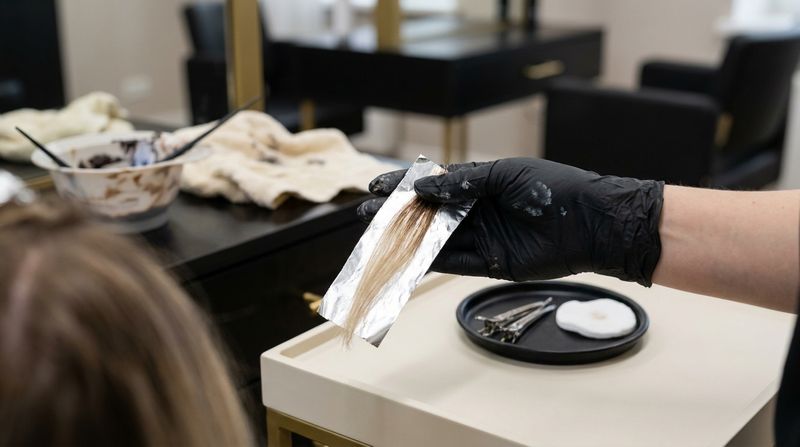
Do an allergy patch test as far ahead as your brand’s protocol requires, not on the day of the color appointment, and watch the test area for that whole window. If the hair has a chemical history, check its elasticity as well.
Frequently asked questions
What about a root retouch?
The manual does not give a retouch procedure of its own for the 12- series. Its “Good to know” table gives IGORA ROYAL Highlifts a “No” in the row “Use on previous coloured hair”, without separating root and lengths, so that table neither clears the series for the regrowth nor rules it out. The sheet’s “To be used on bases 6 to 8” still applies to that regrowth, and only a strand test taken at that root shows you what it will lift. The lengths are another matter: they are previously colored hair, so keep the mix off them and don’t overlap.
Does the 4-5 figure apply with 9%?
No. The 4-5 is tied to the 12% (40 vol) column. With 9% (30 vol), the usage guide says “Lifting by 3-4 levels” and the 12- series sheet, “up to 4 levels of lift”.
Is the starting-level condition the same across brands?
No. Schwarzkopf’s UK manual ties the 12- series’ 4-5 levels to a natural base 6 and lighter and limits the series to bases 6 to 8; L’Oréal’s US sheet for Majirel High Lift pairs 40 vol with natural bases 5-6 and 30 vol with 6-9; and Yellow Professional’s technical chart sets its Color High Lift at a natural base “no darker than light brown (level 5)”.
In summary
- Igora Royal’s 12- series (Special Blonde) lifts 4 to 5 levels with 12% (40 vol) per Schwarzkopf’s UK manual, “achievable on natural base 6 and lighter”, and the series sheet limits use to bases 6 to 8.
- With 9% (30 vol), the usage guide says 3-4 levels and the sheet, up to 4.
- The manual gives a range of bases and a lift figure, but no breakdown by level: don’t invent a number per root.
- Below a 6, the root falls outside the bases the sheet gives the series (“To be used on bases 6 to 8”) and the manual gives the 12- series no figure to promise.
- On previously colored hair, the manual’s “Good to know” table gives IGORA ROYAL Highlifts a “No” (the table does not separate root and lengths).
- The starting-level condition changes from brand to brand: each sheet writes it its own way.
A lift figure comes with its condition. For Igora Royal’s Special Blonde series that means 4-5 levels with 40 vol, on a natural base 6 and lighter, with a series sheet that keeps use to bases 6 to 8. Outside those bases you are off the sheet. Inside them, a strand test at the root tells you what each head will actually lift.
Calculate professional formulas with AI
Want to generate personalized formulas with high-lift tints based on starting level and each person’s chemical history?
How many levels does Igora Royal's 12- series lift by starting level?
In the app, we ask you a question like this one, but about your own client.
Up for this week’s case? →Related articles
Practice with our colorimetry tools
Calculators, neutralization wheel, AI consultation...
The Blendsor newsletter
Color techniques and trends for professionals. No spam.
You know the theory. What about today's case?
Send a photo to the Blendsor advisor and get an answer grounded in colour theory: toner, developer and timing, with the brands on your shelf.
Ask about your caseWritten by the Blendsor team
Professional hair colorimetry experts with experience in AI-assisted formulation. We combine color science, salon practice and technology to help colorists formulate with precision.