Stopping Gray Hair Dye: How to Guide the Transition
What to do when someone wants to stop dyeing their gray hair: what to check first, three routes for the transition and how to talk timing without inventing months.
Blendsor
Blendsor Team
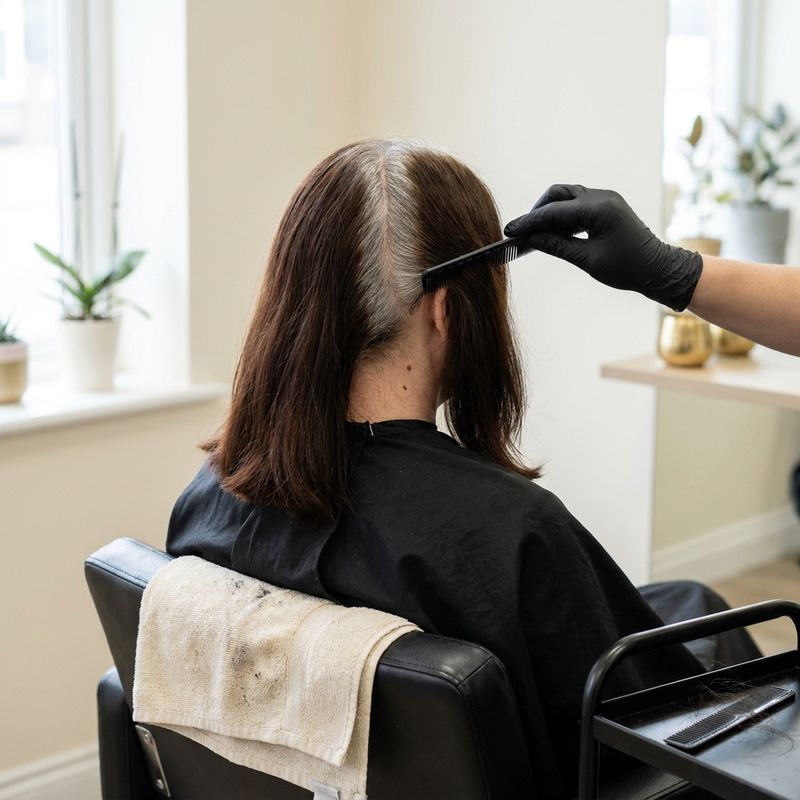
They come in with the roots showing, hang the bag on the chair back and say it before sitting down: “I’m done with dyeing.” They don’t ask whether it’s possible. They announce it, and what follows that sentence is a long consultation, not a service.
That is the real shift. With a gray coverage you know which mix to prepare. Here there is no mix to repeat. There is a path to design between the color they wear now and the gray that is going to stay, and the person in your chair expects you to tell them how long it takes and what happens in between.
Quick summary: stopping the dye does not mean stopping the salon. Permanent color already in the mid-lengths and ends stays until it is cut or removed, and the new gray comes in at the root, so for a while there will be a line. There are three ways to handle it: let it grow and cut the color out, blend the gray with lighter and darker strands while it grows, or remove the color from the lengths. The choice depends on length, current color and how much of a line the person can live with. Timing is not promised before measuring.
Can someone stop dyeing gray hair without going through the regrowth line?
They can stop dyeing, but the line cannot be skipped: while the gray grows in, there will be a border between the root and the color in the lengths. What gets decided in the consultation is how that border is carried (cut away little by little, softened, or removed along with the color) and how much colored length the person is willing to keep.
The darker the color in the lengths, the more it contrasts with the new gray. A very dark brown or a black shows the line as soon as the root starts to show; a blonde or a light brown softens it. That is why the first useful question is not “how fast do you want this?” but “what is the one thing you can’t stand seeing in the mirror?”
What to check before choosing a route
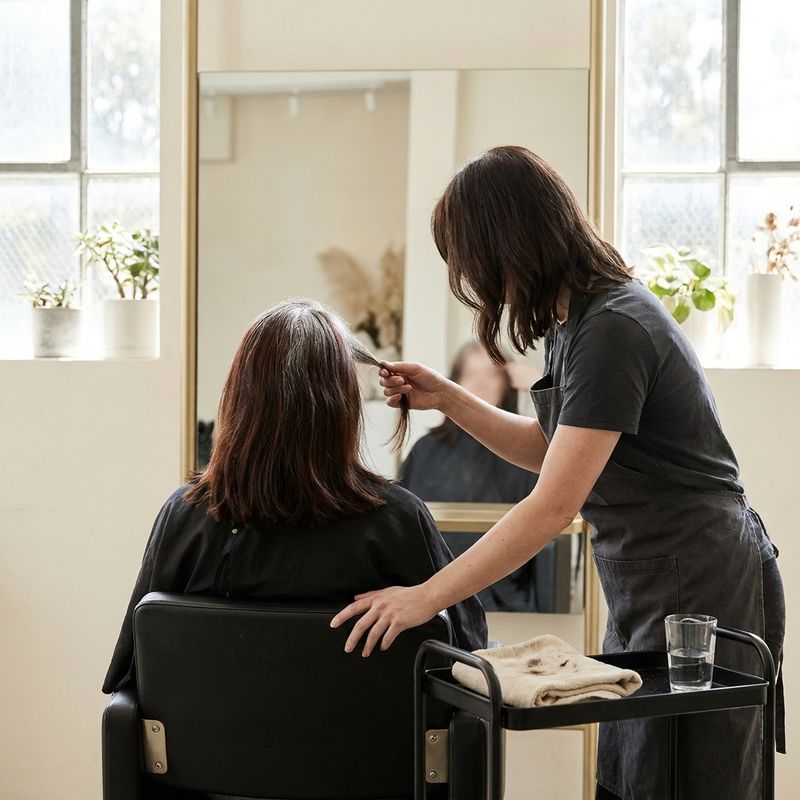
With the person seated and the hair dry, these are the five things that change the plan:
| What you look at | Why it changes the route |
|---|---|
| Hair length | It sets how much color has to be removed or hidden. With long hair the transition stretches out; with a short cut the color is gone in fewer visits. |
| Color in the lengths | The darker it is, the more visible the line. A dyed blonde and a black ask for different paths. |
| Where the gray sits | Scattered through the temples and parting, it blends more naturally than gray concentrated in one band, which usually calls for a combined technique. |
| Hair history | If the hair carries years of bleach or dark color, removing that color is not a default option: it depends on the state of the fiber. |
| How much line the person tolerates | Whether they can live with a silver stripe or need it not to show decides everything. |
Write it down before proposing anything. A consultation that ends in “we’ll see as we go” is the one that ends in an emergency touch-up a few weeks later.
Three routes to natural gray
Route 1: grow it out and cut the color away gradually
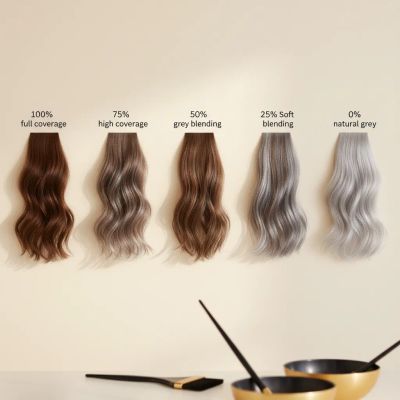
This is the route that adds no color to the lengths and the one that asks for the most patience. Every so often a stretch of colored length is cut away (the transition cut we mention in our gray coverage levels), and the gray gains ground from the root.
It works well when the person accepts the line and isn’t scared of cutting. What you have to say plainly: the border will be visible from start to finish, and it will show more the darker the color in the lengths. Between visits, a toner and a shine treatment help the gray come in luminous rather than neglected.
Pro tip: ask them to decide the final length before starting. That length is the target the timeline is worked out from.
Route 2: blend the gray while it grows
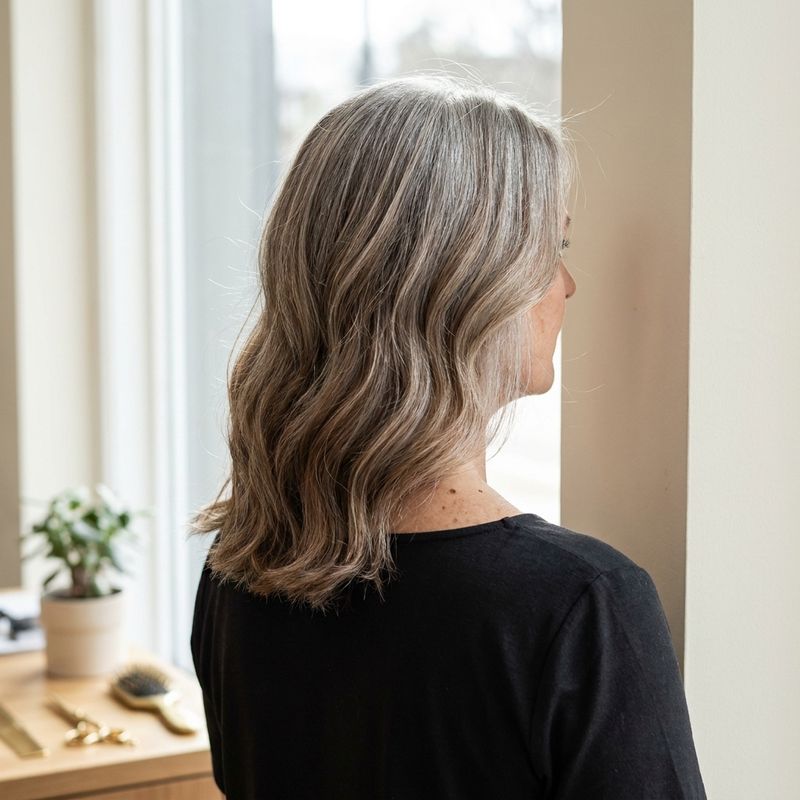
If the line is what they can’t stand but they don’t want to cut, you work the mix: lighter and darker strands that soften the border so the root grows without a hard stripe. That is the logic behind French Blending (a L’Oréal Professionnel brand name), which we develop in our French Blending article; if the goal is a silver gray, the Quiet Silver formula takes it another way; and if there is already a very saturated color on the hair, the bottom-up gray blending technique works the border step by step.
Here the person keeps coming to the salon, with visits that are further apart and longer. The color in the lengths doesn’t disappear: it softens. If they change their mind, the new root is covered like any other gray coverage.
Route 3: remove the color from the lengths and take it to gray
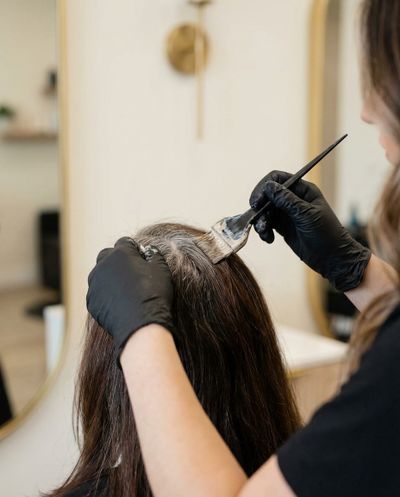
This is the most direct route and the most delicate. It means lifting the artificial color out of the mid-lengths and ends (with a color remover or a controlled bleach, depending on the case) so the length moves closer to the tone of the gray. When the color to remove is dark, a warm underlying tone usually appears and has to be toned afterwards; how to correct it is covered in our article on orange hair after bleaching.
This route only works if the hair can take it. Before proposing it, do a strand test and see how that fiber reacts. If it can’t take it, lighten in stages or go back to route 1 or 2: slower, but the hair arrives in one piece.
If the service includes color, a toner included, the allergy test goes in before the color appointment, not on the same day: Wella, in its Koleston Perfect leaflet, says to always do it 48 hours before any color service.
| Route | It fits if… | What has to be accepted |
|---|---|---|
| 1. Grow and cut | The person tolerates the line and isn’t afraid of cutting | The border shows throughout the process |
| 2. Blend | They want the line not to show and prefer not to cut | Salon visits during the transition |
| 3. Remove the color | They want to reach gray sooner and the hair can take it | More chemistry on the lengths and warm tones to tone |
What timeline do you give someone who wants to stop dyeing?
None, until you measure. The timeline isn’t set by the service: it is set by the length. The transition ends when the gray has grown to the length the person decides to keep, so any number of months said before looking is a promise with nothing behind it.
What you can do at the first visit is measure with your fingers, from the root to where the color ends, and notice how much gray has grown since the last touch-up. That stretch between visits is the real pace of that head of hair, and with it you can say “at this pace, to get to here, we’ll need several visits”, without numbers pulled out of thin air.
Between visits: what keeps being worked on
When the dye stops, the salon work moves somewhere else. When the gray comes in dull or with a yellowish cast, it gets toned (see how to neutralize unwanted tones); shine and moisture are cared for just the same; and the cut, in route 1, is the main service. The person who stops dyeing keeps coming, at a different pace and for different reasons.
Common mistakes in a transition
- Giving a timeline before measuring the length. If the gray then doesn’t reach where the calendar said, the frustration is yours.
- Doing “one last coverage” without a plan. Each root coverage leaves color in a stretch that later has to come out: if the decision to transition is already made, that visit belongs in the plan.
- Proposing route 3 without a strand test. Removing color from a fiber that can’t take it is paid for in the hair.
- Saying “you don’t need maintenance anymore.” Gray hair needs care too, and someone who hears it that way stops coming just when a consultation is most useful.
Frequently asked questions
How long does it take to stop dyeing gray hair completely?
It depends on how much colored length the person wants to keep, not on a fixed number. The transition ends when the gray has grown to that length or when the color in the lengths has been cut or removed. Measure at the first visit and agree the final length with the person before talking about timing.
Can someone stop dyeing without cutting their hair?
Yes. By blending the gray with strands (route 2) or by removing the color from the lengths (route 3, if the hair can take it). With permanent color in the lengths, the border doesn’t go away on its own: it is cut, softened or removed.
What if they change their mind halfway?
They can go back to covering. The new root is covered like any other coverage; what changes are the lengths that were lightened, which have a different porosity and are formulated separately. Our French Blending article covers how going back is approached.
In summary
- Someone who stops dyeing keeps coming to the salon, for a different service.
- The line between the root and the color exists while the gray grows in; it is cut, softened or removed.
- Check five things before choosing: length, color in the lengths, where the gray sits, hair history and how much line the person tolerates.
- The timeline comes from the length the person decides to keep: measure before giving one.
- With color, a toner included, allergy test before the color appointment; if you are going to remove color, strand test.
Calculate professional formulas with AI
Want to formulate the root mix at each visit of a transition, based on each person’s starting level and gray percentage?
What is the sentence you find hardest to say in the consultation when someone announces they are done with dyeing?
Manufacturer sources
Manufacturer documents consulted for this article. A copy of each one is kept, and the passages noted from it are checked against that copy.
How do you guide someone who wants to stop dyeing their gray hair?
In the app, we ask you a question like this one, but about your own client.
Up for this week’s case? →Related articles

Practice with our colorimetry tools
Calculators, neutralization wheel, AI consultation...
The Blendsor newsletter
Color techniques and trends for professionals. No spam.
A client in the chair right now?
The Blendsor advisor gives you the precise formula for this technique with your salon's brands — and saves it to your client's card.
Ask about your caseWritten by the Blendsor team
Professional hair colorimetry experts with experience in AI-assisted formulation. We combine color science, salon practice and technology to help colorists formulate with precision.