What Developer to Use With Bleach on the Scalp
What developer to use with bleach on the scalp: what Wella's sheets say for Blondor Multi Blonde, how long to leave it on, and what to check on the skin first.
Blendsor
Blendsor Team
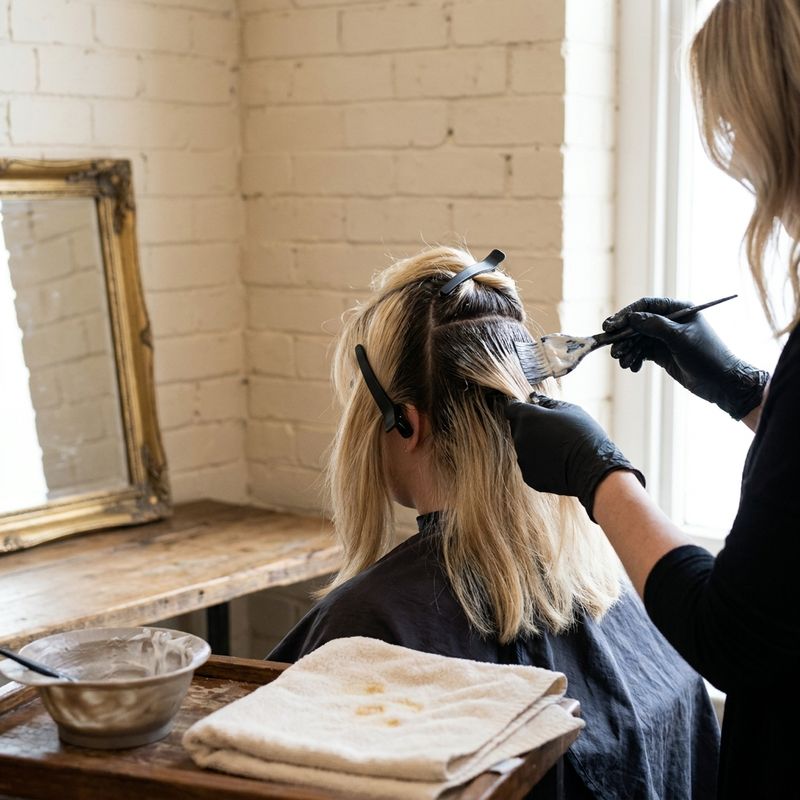
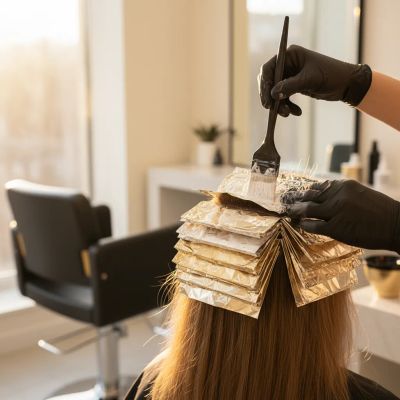
Root touch-up on a lightened blonde: an inch and a half of dark regrowth and a packed schedule. Bumping up the developer so the root gets there faster is tempting. Is that OK when the mix sits right on the skin?
The lightener’s own instructions answer that, and the answer changes with where the mix goes.
What follows is about one lightener, Wella’s Blondor Multi Blonde Powder: what it asks for on the skin, what its sheets leave unsaid, and how to decide in that gap. The full technique is in our bleaching guide, and developer volumes in general are in developer volumes: which one and why. This article is part of the guide to professional coloring techniques.
Quick summary: for Blondor Multi Blonde Powder on the scalp, the ceiling is 20 volume (6%): Wella’s US lightening guide (2020) says not to exceed it for on-scalp lightening, and Wella’s global fact sheet from 2019 says 6% or below on the scalp. It’s a maximum: going lower still follows the sheet. Away from the skin, neither document picks a volume for you. Timing: both cap it at 50 minutes, and the US guide adds: check frequently, no heat. With another lightener, its own sheet rules.
What developer do you use with bleach on the scalp?
For Blondor Multi Blonde Powder, 20 volume (6%) or lower. Wella’s US lightening guide (2020) puts it in its on-scalp lightening column: “Add developer not exceeding 6%/20 Vol.” The global Blondor fact sheet, dated August 2019, says the same: “For on-scalp application, use a 6 % or below.”
Two things to read carefully. First, “or below” makes it a ceiling, not an instruction. If the strand test or the state of the skin calls for lower, you go lower. Second, the figure belongs to this lightener. With another powder, its own sheet applies, and a number doesn’t carry from one product to another because they look alike.
| Zone | What the Blondor Multi Blonde Powder sheets say | What you decide |
|---|---|---|
| On the scalp | Wella’s US lightening guide (2020): not exceeding 20 vol (6%) for on-scalp lightening. The 2019 global sheet: 6% or below | Your ceiling is 20 volume (6%). Go lower if the skin or the test asks for it |
| Away from the scalp | The US guide gives the mixing ratio with no volume cap. The global sheet lists developers of 1.9, 4, 6, 9 and 12% | The strand test and the lift you need decide. Keeping 9 and 12% for away from the skin is our deduction, not a line from Wella |
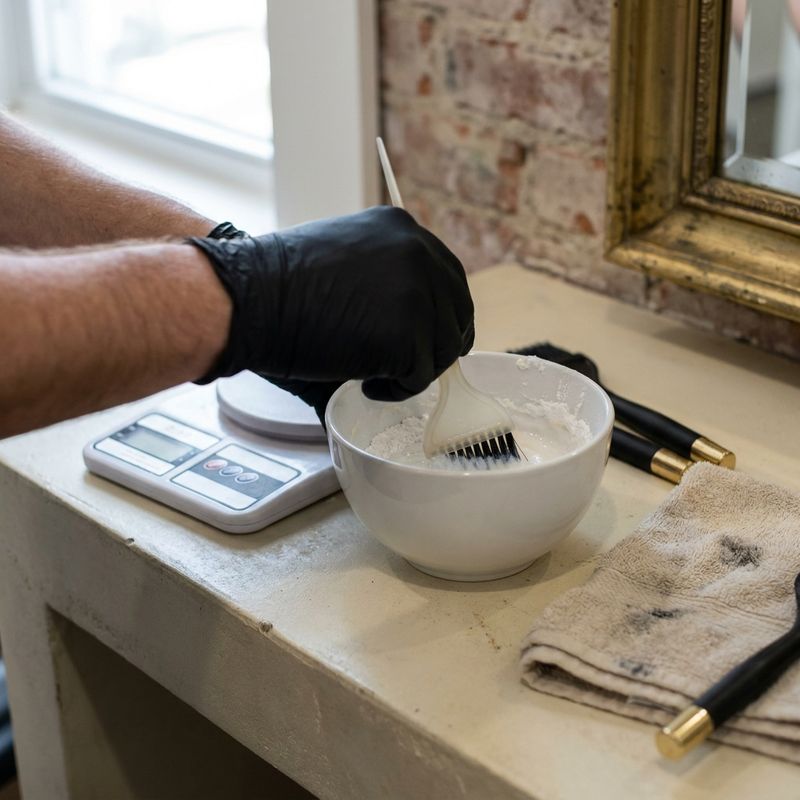
Before the bowl, the question of where that mix is going.
What about the developer when the mix doesn’t touch the skin?
The sheets go quiet. The global one lists the developers this powder takes, up to 12%, without saying which goes where, and the US guide gives the off-scalp ratio with no volume cap. So there is no Wella line that picks the volume for you, and it’s better to say so than to fill the gap with “30 is normal.”
That part is decided by a strand test, done with the same mix you’ll use on the head. How to do it is in the strand test. If the hair is porous or has a history, the volume needs even more care: see developer volume for porous hair.
There is one practical rule that follows from the sheet: if a pass of the brush is going to touch skin, the bowl is mixed for skin. A bowl built for the lengths and used at the regrowth is the easiest way to go over the ceiling without noticing.
How long do you leave bleach on at the roots?
Wella’s global fact sheet from 2019 caps it: “Do not exceed 50 mins.” Wella’s US lightening guide (2020) says the same for Multi Blonde Powder and marks it “NO HEAT.”
The 50 minutes are a cap, not a recommended time. The US guide adds the part that matters at the chair: check frequently until the lightening you want is reached.
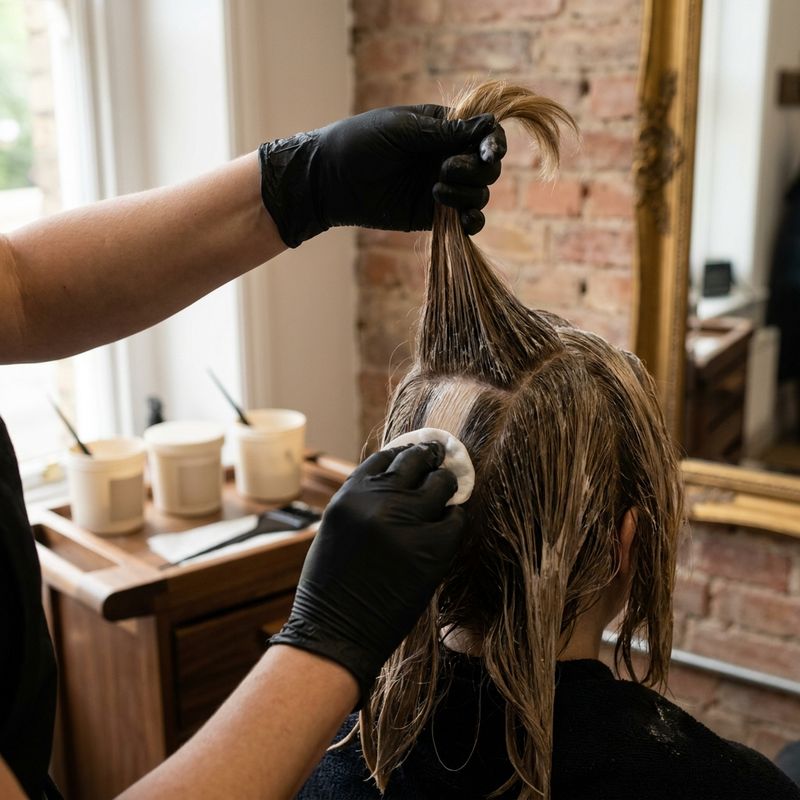
A stripe wiped clean with cotton shows the tone underneath.
In practice the clock is the ceiling and the hair is the criterion: you check strand by strand and rinse off when you reach the tone you want or when the cap arrives, whichever comes first. The order of application on virgin hair (mids and ends first, roots last) is explained in the bleaching guide. In a touch-up like the one at the top, the mix goes on the new growth only and stays off the previously lightened hair: how to avoid banding is in banding after a bleach root touch-up.
What should you check on the scalp before applying?
The skin. Among the warnings on Wella Spain’s store page for this lightener is one that has nothing to do with volume: do not use the product if the scalp is sensitive, irritated or damaged. They are two separate warnings, and going lower on volume does not satisfy the second.
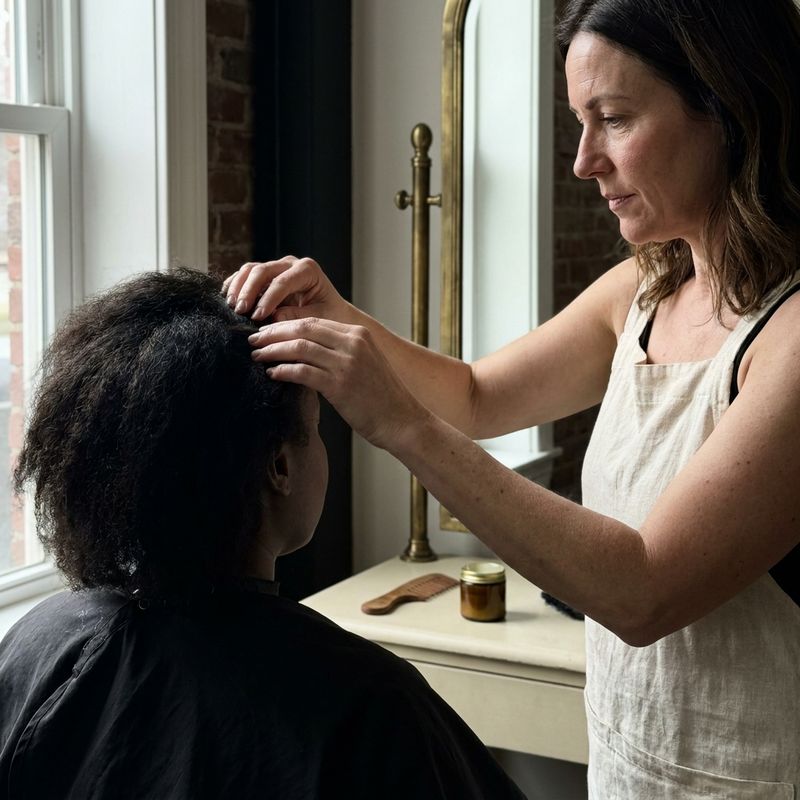
Before applying anything, look at the skin in good light.
Before sectioning, open the parting in window light and look at the skin where the product will go. Ask about any recent itching or stinging. If the skin is like that, the service doesn’t happen: the sheet says so without hedging.
The same page adds two more warnings for this powder: don’t use it on hair previously colored with metallic dyes, and don’t mix or apply with metal bowls or tools. What to do if you suspect metals is in metals in hair and bleaching.
If the hair is already lightened, or has a relaxer or perm in its history, cross the strand test with a hair elasticity test: if the strand stays stretched or snaps, that hair isn’t ready to lift today. And if an oxidative toner follows the bleach, its allergy test goes on the timing its manufacturer gives (for Koleston Perfect, Wella asks for 48 hours before any color service) and, if it gives none, not on the same day as the color appointment. How to fit it into the schedule: scheduling the 48-hour allergy test.
What mixing ratio goes with that developer?
Wella’s US lightening guide says to add developer to Blondor Multi Blonde Powder at 1:1.5 up to 1:2, on the scalp and off it. It doesn’t say when to use each end.
Within that range, the ratio changes how much lightener there is per part of developer, but it doesn’t change the developer’s volume. The scalp ceiling doesn’t move with the ratio.
What are the most common mistakes with developer at the roots?
- Reading “or below” as “the top figure by default”: the ceiling is the maximum the sheet asks for in that zone, not the automatic choice. Skin that asks for it, or a test that recommends it, justifies going lower.
- Carrying Blondor’s figure over to another lightener: every powder comes with its own sheet, and that is the one that rules. If you don’t have yours at hand, don’t substitute this one.
- Using the lengths bowl at the roots: the shortest road to going over the ceiling. If the mix will touch the skin, mix it for the skin.
- Taking the 50 minutes as the processing time: it is the cap in Wella’s sheets. The real time is set by the tone you see when you check.
- Dropping the volume to work on irritated skin: the skin warning stands on its own. If the skin is irritated when you part the hair to check, there’s no lightening that day, whatever the volume.
Frequently asked questions
Can I use 30 volume (9%) developer with Blondor on the scalp?
Not with the sheet in hand: Wella’s global fact sheet says 6% or below for on-scalp application, and 9% is above that. Away from the skin, the global sheet lists 9 and 12% among this powder’s developers without saying which technique each is for: there, the strand test decides.
If I stay at 20 volume or below, is the scalp safe?
No. The ceiling is the maximum the sheet asks for in that zone, not a guarantee. Wella Spain’s page also says not to use the product if the scalp is sensitive, irritated or damaged, at any volume.
How many minutes can bleach stay on the roots?
Up to 50 minutes: that is the cap in Wella’s global fact sheet (2019) and in its US lightening guide (2020), which also says no heat. Within it, check often and rinse when you reach the tone you want.
Does this rule hold for any lightener?
No. Everything above is about Blondor Multi Blonde Powder. With another powder, its own sheet: the maximum developer on the skin and the time are data for each product.
In short
- On the skin: Blondor Multi Blonde Powder asks for 20 volume (6%) or below, per Wella’s US lightening guide (2020) and its global sheet from 2019.
- A ceiling, not an obligation: “or below” leaves room to go lower if the skin or the test calls for it.
- Time: Wella’s global sheet and US guide cap it at 50 minutes, and the US guide says no heat. The tone you see decides when to rinse.
- Skin before volume: if the scalp is sensitive, irritated or damaged, Wella Spain’s page says not to apply.
- Another lightener: its own sheet rules.
Calculate professional formulas with AI
Want to calculate a bleaching mix from the starting level and each person’s chemical history?
What developer do you use with bleach on the scalp?
In the app, we ask you a question like this one, but about your own client.
Up for this week’s case? →Related articles
Practice with our colorimetry tools
Calculators, neutralization wheel, AI consultation...
The Blendsor newsletter
Color techniques and trends for professionals. No spam.
A client in the chair right now?
The Blendsor advisor gives you the precise formula for this technique with your salon's brands — and saves it to your client's card.
Ask about your caseWritten by the Blendsor team
Professional hair colorimetry experts with experience in AI-assisted formulation. We combine color science, salon practice and technology to help colorists formulate with precision.