Dia Light 10.21: what the chart says and what it leaves out
Dia Light 10.21 sits under correction and Very Neutralizing in L'Oréal Professionnel's chart. What the chart and product page say on mix, time and allergy.
Blendsor
Blendsor Team
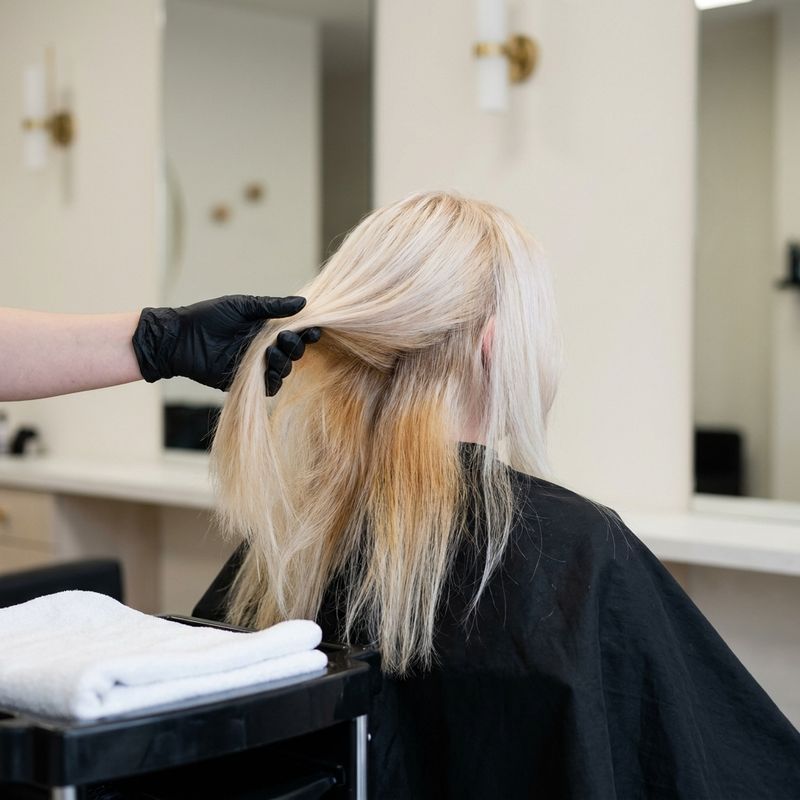
Someone sits in your chair with freshly lightened blonde hair and a warm patch in the mid-lengths that wasn’t in the plan. You open the L’Oréal color chart looking for the shade that fixes it, and Dia Light 10.21 shows up under correction. Does it take that tone out?
It’s a fair question, and the answer comes in two halves: what the chart does write and what it leaves unwritten. Here are both, with what the product page adds and what only the person looking at the hair can decide. If you want to refresh how unwanted tones read first, start with the colorimetry basics guide.
Quick summary: in L’Oréal Professionnel Spain’s color chart, Dia Light 10.21 is one of the seven essential shades of the correction service and sits in the Very Neutralizing group. The chart doesn’t say which color it corrects, how it is mixed or how long it stays on. The mix (1:1.5 with DIActivateur) comes from the product page, the allergy test from L’Oréal Professionnel Spain’s page, and the minutes from what you see on a strand test.
Where does the chart put Dia Light 10.21?
Under the correction service and in the Very Neutralizing group. L’Oréal Professionnel Spain’s color chart (January 2024) describes CORRECCIÓN (correction) as “Neutralizar tonos indeseados (rojos, cobres, verdes & amarillos)”, that is, neutralizing unwanted tones (reds, coppers, greens and yellows), and lists seven essential shades: 10.12, 10.21, 7.11, 8.21, 10.22, 6.11 and 5.11. On the Dia Light shade page, 10.21 is in the Very Neutralizing grid.
On the Dia Light services page, MATIZAR (toning) sits next to correction, and it helps to see them together:
| Chart service | How it is described | Essential shades |
|---|---|---|
| CORRECCIÓN (correction) | Neutralize unwanted tones (reds, coppers, greens and yellows) | 10.12, 10.21, 7.11, 8.21, 10.22, 6.11, 5.11 |
| MATIZAR (toning) | Tone after lightening | 10.82, 10.18, 10.12, 10.32 and clear |
10.21 is on the correction list and not on the toning list. 10.12 is on both.
A word on the document, because where it comes from matters: it is the L’Oréal Professionnel Spain chart from January 2024, as a copy hosted by a distributor and stamped “C1 - Internal use”. In a search on November 6, 2026 it did not appear on the L’Oréal Professionnel Spain website.
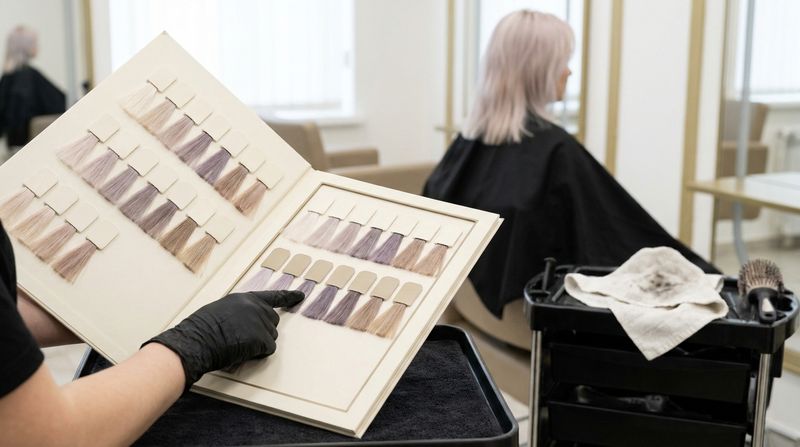
The chart groups its shades by service.
Does 10.21 remove yellow or copper?
The chart doesn’t say. It names four unwanted colors (reds, coppers, greens and yellows) and gives seven shades, but it pairs none of the seven with any of the four. With the chart in hand you can’t write that 10.21 removes yellow, or that it removes copper.
You can’t read it backwards either. That 10.21 isn’t on the toning list doesn’t mean it can’t tone: the chart shows a selection of “essential shades”, not the whole range, which by its own count is 70 shades.
So who decides which tone each shade corrects? Whoever looks at the hair. Which tone is unwanted shows under light that doesn’t lie (the salon lighting guide covers how to set it up), and that is salon judgment, not a data point in the chart. The basics of neutralizing an unwanted tone are in the guide to neutralizing unwanted tones.
What mix does 10.21 take: what does the Dia Light page say?
The L’Oréal Professionnel Spain page describes Dia Light as an acid tone-on-tone color, in gel-cream form and ammonia-free, and says it does not lighten. The mix it gives is 1:1.5 with DIActivateur. It accepts any DIActivateur and recommends 6 volume for blondes and 9 volume for brunettes.
That is the mix for the range. The page gives one and the chart gives none, not even for the correction service: no ratio specific to 10.21 is written in either document. The US and UK pages differ on which developers they allow, as you’ll see below. For a refresher on what changes when you go up or down in volume, there’s the developer volumes guide; for the full gloss technique, the hair gloss guide.
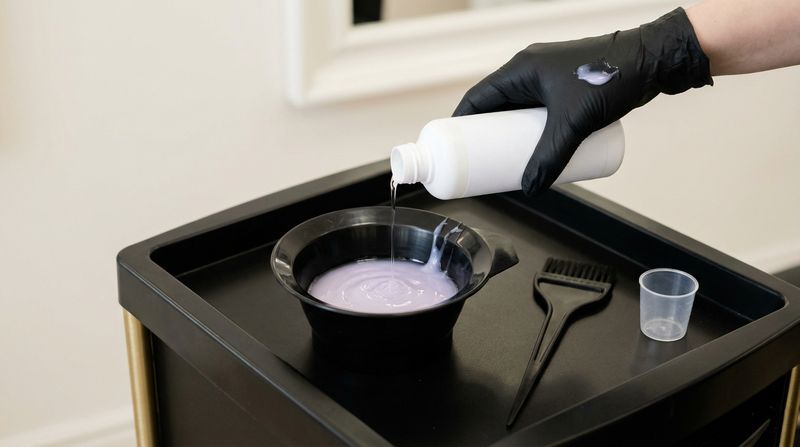
Ratio and developer come from the product page.
How many minutes do you leave 10.21 on?
The Spanish page doesn’t give minutes for 10.21. The only timing the Spanish page gives is that the cool shades of levels 9 and 10 tone and add shine to blondes in 5-10 minutes. It doesn’t say which shades it counts as cool and it gives no minutes for the correction service. The chart gives no time either.
That’s why the Spanish page’s 5-10 minutes aren’t written next to 10.21: they belong to the cool shades of levels 9 and 10 on blondes, and the page doesn’t say which ones it means. How each brand counts time (and what each page leaves out) is in toner processing time by brand.
With no minutes written down, a strand test before the full head makes the call.
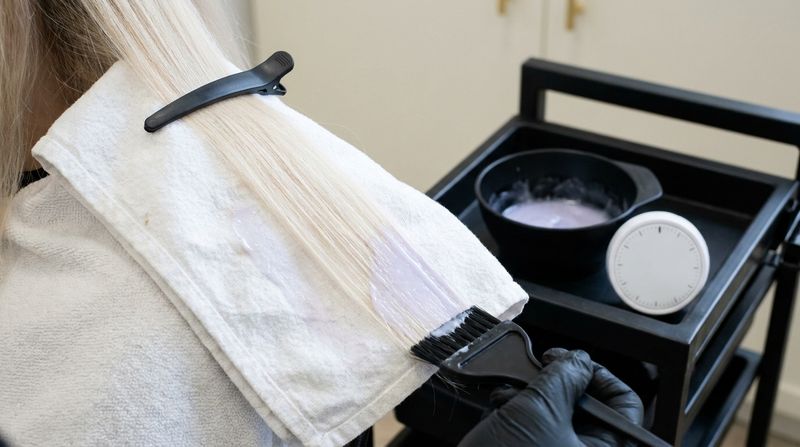
The strand shows how many minutes it needs.
Is an allergy test needed to correct with Dia Light?
Yes, according to L’Oréal Professionnel Spain’s page: it marks the allergy alert test as required 48 hours before each use of the product. “Each use” includes the times Dia Light is used to correct.
The US and UK pages don’t mention an allergy test, so check the directions that come with your product. Either way, the test is booked ahead of the correction appointment, so on the day of the service it’s already done. How to fit it into the schedule without losing the slot is in the 48-hour allergy test.
Do the US and UK pages say the same?
Not always. On the UK page, L’Oréal Professionnel asks you to mix Dia Light only with 6 or 9 volume DIActivateur and gives 20 minutes on dry hair; for toning on shampooed, towel-dried hair, 5-20 minutes depending on the result. On the US page it also accepts 15 volume and gives a time of 2 to 20 minutes, without separating shades or services.
None of those figures is for 10.21. Each brand, and sometimes each country, sets its own limit: check your manual.
How do you decide a correction with the chart and the page?
Each document answers a different question, and the order keeps them from blending:
- Look at the hair first, under light that doesn’t lie, and decide which tone is unwanted. Neither the chart nor the page does that for you.
- Find the service on the chart: correction or toning. It’s the brand’s way of grouping its shades, not a recipe.
- Read the mix and the developer on the product page for your market.
- Check the allergy test is done, with the lead time your product’s directions give (the Spanish page says 48 hours before each use). If your directions require it and it isn’t done, the Dia Light correction waits for another appointment.
- Do a strand test and note the mix and minutes before moving to the full head.
That’s the rule worth keeping: a shade on the chart tells you which service the brand lists it under; which color is unwanted in the hair is the call of whoever is looking at it.
Pro tip: in each client’s record, note which document each fact comes from: the service from the chart; the mix and developer from the product page; the minutes from the strand. If the result isn’t what you expected, you’ll know which of the three to check.
Which conclusions about 10.21 are worth avoiding?
- Reading “correction” as “removes yellow”: the chart sets four unwanted colors beside seven shades and doesn’t say which goes with which. What you can say is which service lists 10.21.
- Assuming it can’t tone because it isn’t on the toning list: the chart shows a selection of essential shades. A shade missing from a list says nothing about what it can do.
- Borrowing minutes from another shade or another country: the 5-10 minutes on the Spanish page belong to the cool shades of levels 9 and 10 on blondes. The 20 minutes on the UK page are for dry hair. For 10.21 there are no minutes written down.
Frequently asked questions
What is Dia Light 10.21?
It is one of the shades of Dia Light, L’Oréal Professionnel’s acid tone-on-tone color. In the Spanish color chart it is listed among the seven essential shades of the correction service and in the Very Neutralizing group.
Does 10.21 remove yellow or copper?
The chart doesn’t say. It names reds, coppers, greens and yellows as the unwanted tones of correction and lists seven shades, but it doesn’t pair each color with a shade. Which tone is unwanted is the call of whoever is looking at the hair.
Which developer do you mix 10.21 with?
The Spanish Dia Light page gives one mix for the whole range: 1:1.5 with DIActivateur. It accepts any DIActivateur and recommends 6 volume for blondes and 9 volume for brunettes. The chart gives no mix.
How long do you leave 10.21 on?
Neither the Spanish page nor the chart gives minutes for 10.21 or for the correction service. The only timing the Spanish page gives, 5-10 minutes, is for the cool shades of levels 9 and 10 on blondes. A strand test sets the time.
Is an allergy test needed with Dia Light?
The Spanish page marks the allergy alert test as required 48 hours before each use of the product, including when it is used to correct.
In summary
- Where 10.21 is: in L’Oréal Professionnel Spain’s chart, among the seven essential correction shades and in the Very Neutralizing group.
- What the chart doesn’t say: which color each shade corrects, how it is mixed and how long it stays on.
- What the Spanish page gives: the range’s mix (1:1.5 with DIActivateur, 6 volume for blondes and 9 for brunettes) and the allergy test 48 hours before each use.
- What the salon decides: which tone is unwanted and how many minutes, under honest light and with a strand test.
Formulate corrections with Blendsor
Want to plan a correction around each client’s starting level and chemical history, with each line’s mix and tone at hand?
Which tone do you run into most when correcting a blonde?
Manufacturer sources
Manufacturer documents consulted for this article. A copy of each one is kept, and the passages noted from it are checked against that copy.
Note each one's country: the same line's instructions can differ from one market to another, so follow the directions for the product you use.
Related articles
Practice with our colorimetry tools
Calculators, neutralization wheel, AI consultation...
The Blendsor newsletter
Color techniques and trends for professionals. No spam.
You know the theory. What about today's case?
Send a photo to the Blendsor advisor and get an answer grounded in colour theory: toner, developer and timing, with the brands on your shelf.
Ask about your caseWritten by the Blendsor team
Professional hair colorimetry experts with experience in AI-assisted formulation. We combine color science, salon practice and technology to help colorists formulate with precision.