How to Apply a Cool Shade on Virgin Hair: Where to Start
How to apply a cool shade on virgin hair per Schwarzkopf's UK IGORA ROYAL manual: mid-lengths and ends first, the 2 cm tip for cool shades, and what it omits.
Blendsor
Blendsor Team
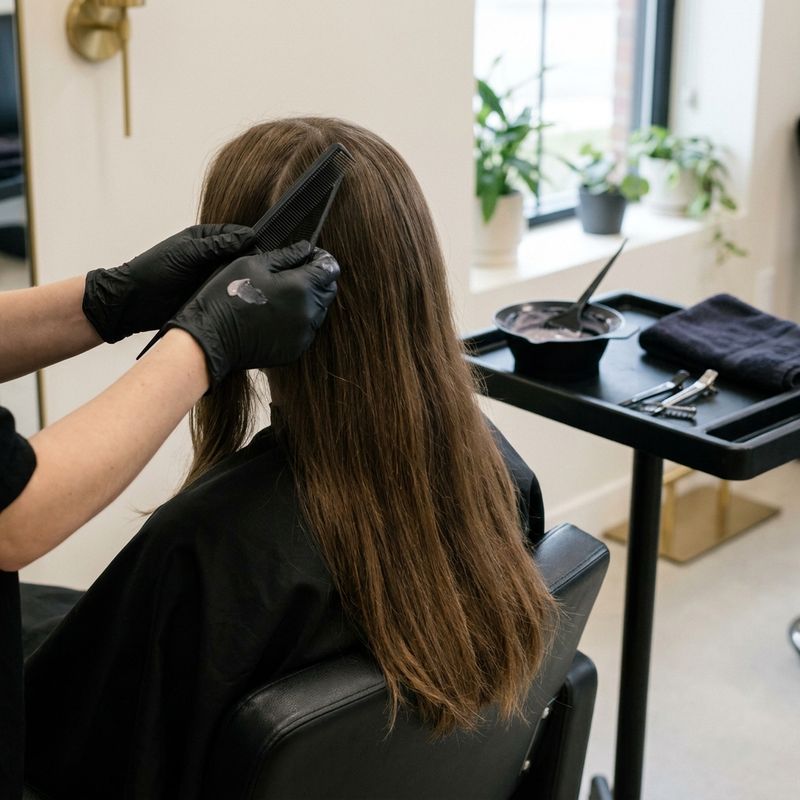
This head of hair is about to get color for the first time. Natural brown from root to ends, never touched by a tube of color, and in the photo you’ve been shown, a cool brown without a trace of warmth. The bowl is mixed, the brush is in your hand, and the question lands: where do you start?
Virgin hair looks like the easy case, as long as it really is virgin: to confirm it, ask what’s been on the hair rather than whether it’s ever been colored. No previous color, no henna, no bands to read. But there is no earlier visit either, nothing that shows you how this head takes color, and whatever you paint today becomes the reference for every touch-up that follows.
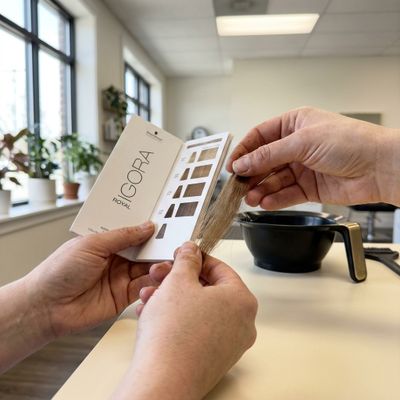
Here is the order Schwarzkopf’s UK IGORA ROYAL manual gives for a first application, the tip it adds for cool shades and, just as useful, what it leaves unsaid.
Quick summary: in Schwarzkopf’s UK technical manual for IGORA ROYAL, the virgin application starts with the mid-lengths and ends, in small sections, for 10 minutes (15 minutes for Fashion shades), and then moves on to the re-growth area for 30-45 minutes. For cool shades, its Fashion shades and Highlifts pages add a tip: on the first application, do not apply to the area up to 2 cm from the hairline, and apply a neutralizing shade there last.
In what order does color go on hair that has never been colored?
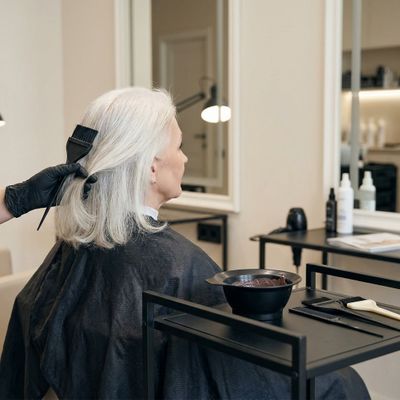
The UK technical manual for IGORA ROYAL calls it the virgin application, and it runs in two stages. First the color goes on the mid-lengths and ends, in small sections, and develops for 10 minutes (15 minutes for Fashion shades). Then it goes on the re-growth area (the manual’s word; on virgin hair, the root area) and develops for 30-45 minutes. The Spanish edition has the same block on page 8, titled «Aplicación sobre cabello natural».
| Stage | Where the color goes | Development time |
|---|---|---|
| 1st | Mid-lengths and ends, in small sections | 10 minutes (15 minutes for Fashion shades) |
| 2nd | Re-growth area, next to the roots | 30-45 minutes |
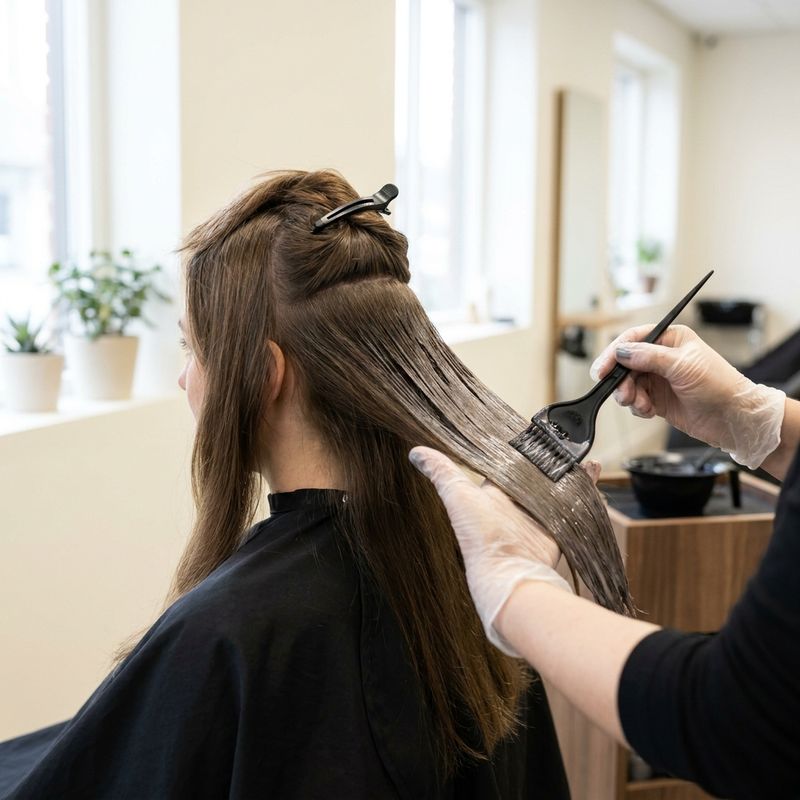
On a first visit, the lengths go first.
Notice what changes compared with a root touch-up. There, the manual puts the color on the re-growth area and gives a separate step, with its own times, for the mid-lengths and ends; here the roots come last, not first. Two services, two clocks, and it pays not to blend one with the other.
The IGORA ROYAL manual doesn’t give a reason for this order: it gives the order and the minutes. What you can do is follow it and write down on the client card what you did and at which minute. And for the Fashion shades, page 14 gives the mixing ratio with the developer: 1:1.
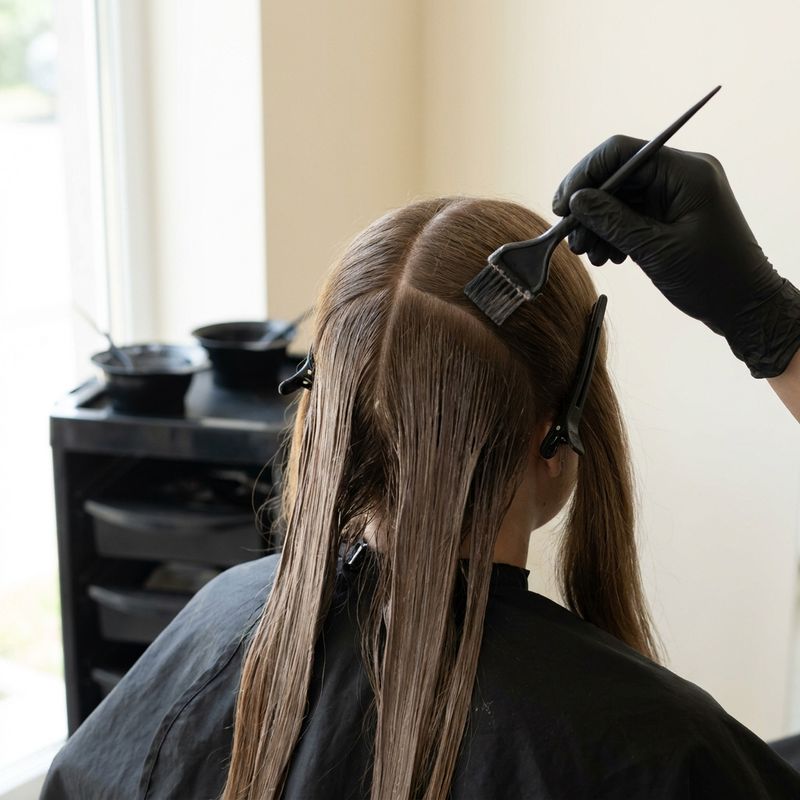
With the lengths done, the root area waits its turn.
What does the manual say about cool shades on a first application?
On the Fashion shades page of Schwarzkopf’s UK IGORA ROYAL technical manual, page 14, under «Application tip», there is this line:
«For cool shades, do not apply to the area up to 2cm from the hairline on the first application. Apply a neutralising shade to that area last to prevent over-pigmentation.»
The Spanish edition carries the same tip on its Tonos Moda page.
On the salon floor, it comes to this: on a first cool shade, the area up to 2 cm from the hairline waits until the end, with a neutralizing shade. Mind the word: the hairline is the edge where the hair starts, not the whole root area, and on the Highlifts page the same paragraph names «the root area» separately. The reason the manual gives is one: preventing over-pigmentation, meaning that band can end up with more color than you wanted.
It helps to separate what it says from what it doesn’t:
- What it says: cool shades, first application, the area up to 2 cm from the hairline, and a neutralizing shade in that area, last, to prevent over-pigmentation.
- What it doesn’t say: which neutralizing shade, how much, or for how long; how that band fits with the 30-45 minutes of the re-growth area on page 8; whether the band runs along the whole hairline or just the front; or whether its «cool shades» are exactly the «Cendrés & Cools» family of the shade matrix on page 34.
- Where else it is, and where it isn’t: the Highlifts page (Ultra Blonde and Special Blonde, 10- and 12-Series) carries the same tip for its cool shades, with its own timing for lifting; the Natural shades and Absolutes pages don’t carry it.
Pro tip: what the manual leaves open is for whoever formulates to decide, with the strand in front of them. Write on the client card which neutralizing shade you put on that band and for how long: the next visit starts from there.
Does my shade count as cool? Check its family
The manual doesn’t define «cool shade». What it does give you, in the table on page 8, is the family each code belongs to, and its shade matrix on page 34 also groups the reflects into color families, one of them «Cendrés & Cools». In IGORA ROYAL, the 2 cm tip sits on the Fashion shades page (and, for the lifting blondes, on the Highlifts page), so before you apply it, check which column your code falls in.
Two IGORA ROYAL examples. In the UK manual’s table, the 5-1 (Light Brown Cendré on the UK shop) sits in the Naturals column, because the -1 reflect is there, and that page doesn’t carry the tip. The 5-21 (Light Brown Ash Cendré on the UK shop: Ash with Cendré as the secondary reflect) is in the Fashion Tones column, because the -21 is there, and that page does. In the matrix on page 34, the -1 sits with the «Naturals» and the -21 with the «Cendrés & Cools». In English the -1 is Cendré and the -2 is Ash; in Spanish they are ceniza and humo, which is the mix-up behind Cendré vs. Ash in Igora. To read the level and both reflect digits properly, the color level guide will get you there.
The number of each reflect belongs to each brand: the above applies to IGORA ROYAL, not to the .1 of another house. And if your shade is a Natural or from Absolutes, the cool-shade tip isn’t on its page: follow the block for natural hair and whatever your range’s page says. If the case includes gray hair, the split changes: you will find it in IGORA ROYAL Absolutes for gray coverage.
Before you mix: three checks for a first visit
Virgin hair doesn’t spare you the tests. If anything, it’s the first time this hair meets a color, and there’s no history to warn you.
- Allergy test. Also on virgin hair. Do it within the window the manufacturer gives and, if it gives none, at least not on the same day as the color appointment. The IGORA ROYAL technical manuals don’t mention the test; that minimum is Blendsor’s recommendation and doesn’t come from the manual. How to fit it in the calendar: scheduling the allergy test.
- Strand test. On a small, discreet strand, before you color the whole head, to see how that cool shade takes on that hair. How to run it: the strand test.
- Elasticity. Stretch a wet strand: if it lengthens and doesn’t spring back, or it snaps, that hair isn’t ready for chemistry that day. It’s explained in the hair elasticity test.
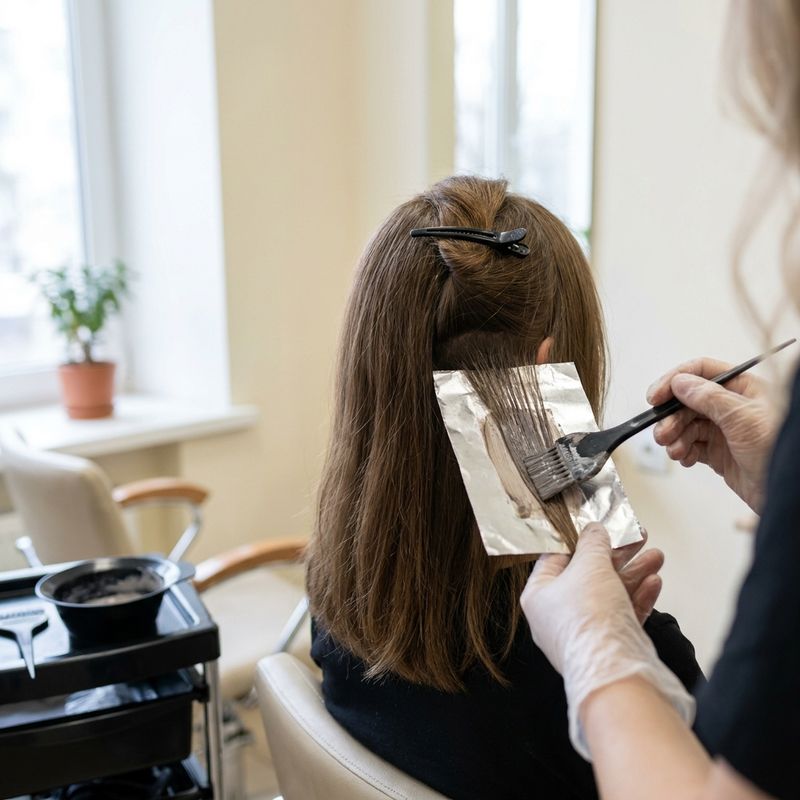
A test strand answers before the whole head does.
Four things that slip through with a first cool shade
- Painting root to ends out of habit, as in a touch-up or as another range asks. On natural hair, the IGORA ROYAL manual starts with mid-lengths and ends.
- Taking the cool shade all the way to the hairline without thinking about that band. If you’re going to, make it a decision, not an oversight.
- Assuming the manual asks for it with any cool shade. Check the family of the code on page 8 first: the tip is on the Fashion shades and Highlifts pages, not on the Natural shades or Absolutes pages. If you use it with a Natural, that’s your judgment, not the manual’s.
- Filling in from memory what the manual doesn’t say: the neutralizing shade, the amount or the minutes for that band. Try it on the strand and write it on the client card.
And on other brands?
This article reports what the IGORA ROYAL manuals say, and the order isn’t the same in every range. In Koleston Perfect, for example, Wella’s usage guide says that for a full-head application at the same depth or darker, you apply the mix immediately from roots to ends. Each brand, and sometimes each country, sets its own limits: check your manual.
Frequently asked questions
How many centimeters from the hairline are left until last on the first application of a cool shade?
Two, according to Schwarzkopf’s UK technical manual for IGORA ROYAL: «do not apply to the area up to 2cm from the hairline on the first application». That band isn’t left bare: a neutralizing shade goes on it, last. It’s a tip on the Fashion shades page, and the Highlifts page repeats it. Other editions can differ, so check yours.
Which neutralizing shade goes on that band?
The manual doesn’t say. It speaks of «a neutralising shade» without saying which one, how much, or for how long. That is decided on the strand test.
Does the tip apply to a plain Cendré like the 5-1?
In IGORA ROYAL, per the UK manual’s table, the 5-1 is a Natural shade and its page doesn’t carry the tip. For that case, the manual gives the block for natural hair: mid-lengths and ends first, then the re-growth area.
Do I still need an allergy test if it’s the first time this hair is colored?
Yes. Virgin hair doesn’t cancel the test: do it before the color, within the window the manufacturer gives and, if it gives none, at least not on the same day as the color appointment.
In summary
- First application on natural hair: mid-lengths and ends first (10 minutes; 15 for Fashion shades), then the re-growth area (30-45 minutes).
- First cool shade from the Fashion shades or Highlifts: the area up to 2 cm from the hairline goes last, with a neutralizing shade.
- What the manual doesn’t say: which neutralizing shade, how much or for how long. Decide it on the strand.
- Check the code’s family: the 5-1 is a Natural shade and its page doesn’t carry the tip.
- Allergy: within the manufacturer’s window and, if there is none, not on the day of the color appointment.
Calculate professional formulas with AI
In the «Change from one shade to another» shortcut, the Blendsor app asks you, before giving you the plan, what’s been on this hair (with the option «Nothing, virgin hair») and what tone they are after. The band at the hairline and the order of application are your call, manual in hand.
What do you write on the client card for a first cool shade?
Manufacturer sources
Manufacturer documents consulted for this article. A copy of each one is kept, and the passages noted from it are checked against that copy.
Note each one's country: the same line's instructions can differ from one market to another, so follow the directions for the product you use.
Does the UK IGORA ROYAL manual still say, for cool Fashion shades, not to apply to the area up to 2 cm from the hairline on the first application?
In the app, we ask you a question like this one, but about your own client.
Up for this week’s case? →Related articles
Practice with our colorimetry tools
Calculators, neutralization wheel, AI consultation...
The Blendsor newsletter
Color techniques and trends for professionals. No spam.
You know the theory. What about today's case?
Send a photo to the Blendsor advisor and get an answer grounded in colour theory: toner, developer and timing, with the brands on your shelf.
Ask about your caseWritten by the Blendsor team
Professional hair colorimetry experts with experience in AI-assisted formulation. We combine color science, salon practice and technology to help colorists formulate with precision.