Client Doesn't Like the Color: What to Do and How to Avoid It
What to do when your client doesn't like the color: stop, ask what bothers them, check the hair dry and offer one specific adjustment, not another tone blind.
Blendsor
Blendsor Team
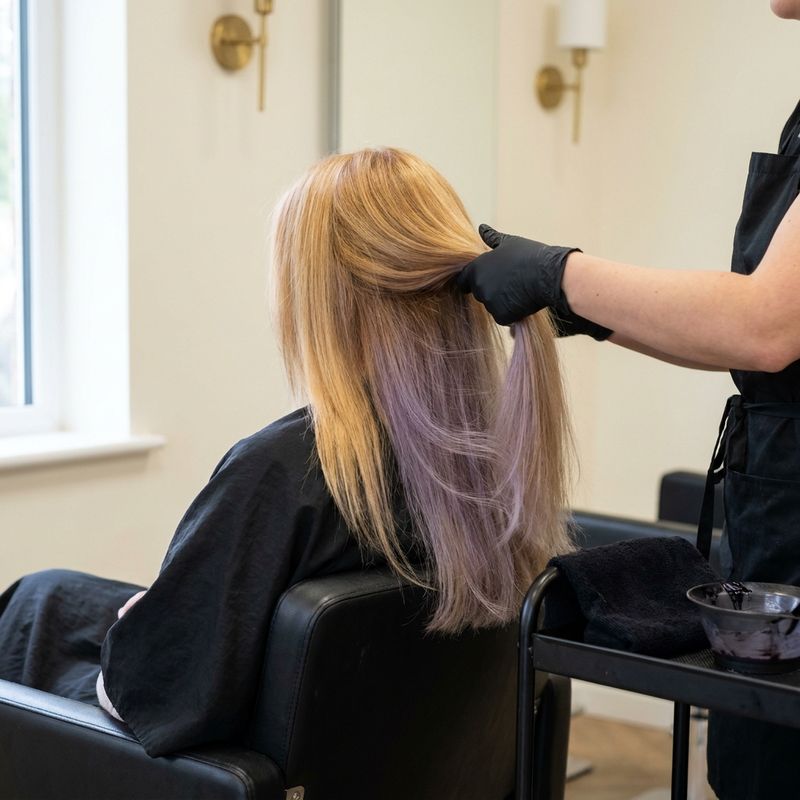
Someone sits down and asks for a golden blonde. You tone it cool to clean up the underlying pigment, and once it’s dry a violet cast shows on the lengths. They turn to the mirror, touch the lengths and say: “It’s… different.” The yellow is gone, and so is the golden they asked for. What’s in the mirror isn’t the color they had in mind.
When a client doesn’t like the color, the problem is rarely just in the mix. It sits in what was taken for granted before, and in what you do in the minutes that follow, with the cape still on.
This article covers what to do when that person already sees it and isn’t convinced, and what to ask before mixing so it happens less often.
Quick answer: Stop, and don’t correct on the spot. Ask what exactly they don’t like (tone, level, evenness, or simply that it isn’t what they pictured), look at the hair dry in a light the client can see, and decide whether it’s a technical fault of yours or a difference in taste. Only then offer one concrete adjustment. For next time: before mixing, ask what they mean by their tone and whether they’d rather go warmer or cooler.
What do you do when a client doesn’t like the color and is still in the chair?
Don’t mix anything yet. Stop, ask what bothers them in concrete terms and look at the hair dry before deciding whether there is something to fix or only something to talk about. Correcting on the spot, with the disappointed face in front of you, usually layers a second color over the first without knowing what you are fixing.
An order that works in the salon:
- Ask something specific. “What isn’t working for you: the tone, how light or dark it came out, or that it isn’t what you pictured?” If the answer is “I don’t know, I just don’t like it”, ask “do you see it cooler, warmer, flatter?”
- Show them what you see. Hold a section next to the swatch book or the photo they brought. The gap between what they asked for and what’s there is often smaller than it feels, or sits somewhere other than where they point.
- Look at it dry and in daylight, not only under the station lights. Wet hair looks darker and can hide the real tone, and station lighting can push a tone in a direction daylight doesn’t confirm. How to note this on the client card is further down.
- Separate two cases. If the color has a technical fault (a cast from over-toning, uneven zones), you fix it. If it’s well done and simply isn’t what that person pictured, it isn’t a fault, and the way out is a conversation and an adjustment.
- Offer one thing, not three. One concrete adjustment, with what changes and what doesn’t. If it needs another service, say so clearly before opening the bowl.
| What they say | What it usually is | What you do |
|---|---|---|
| ”It looks violet or gray” | Too much cool tone, easier to see on lighter or more porous lengths | Look dry; if it’s slight, it may fade with washes or be balanced with the opposite tone, kept sheer; see toning mistakes |
| ”I wanted it lighter” | A change of level, not of tone | A toner isn’t the tool for lift; assess another pass with a strand test |
| ”I wanted it warmer, more golden” | The warmth that person wanted to keep was neutralized | Ask how much warmth they want and redo the tone with less neutralizing |
| ”It’s not the one in the photo” | The photo and the starting hair don’t match, or the photo has a filter or flash | Compare against swatches, dry, and decide which part of the photo is reachable |
| ”It looks different at home” | Different light or different hair state | Note it on the client card and review at the next visit |
A toner is chosen for tone, not level; whether it lifts is something to check in each line’s own instructions. L’Oréal Professionnel’s US page says of Dia light that it “provides no grey coverage or lift”. If the person wants another level, another shade from the same mix won’t give it.
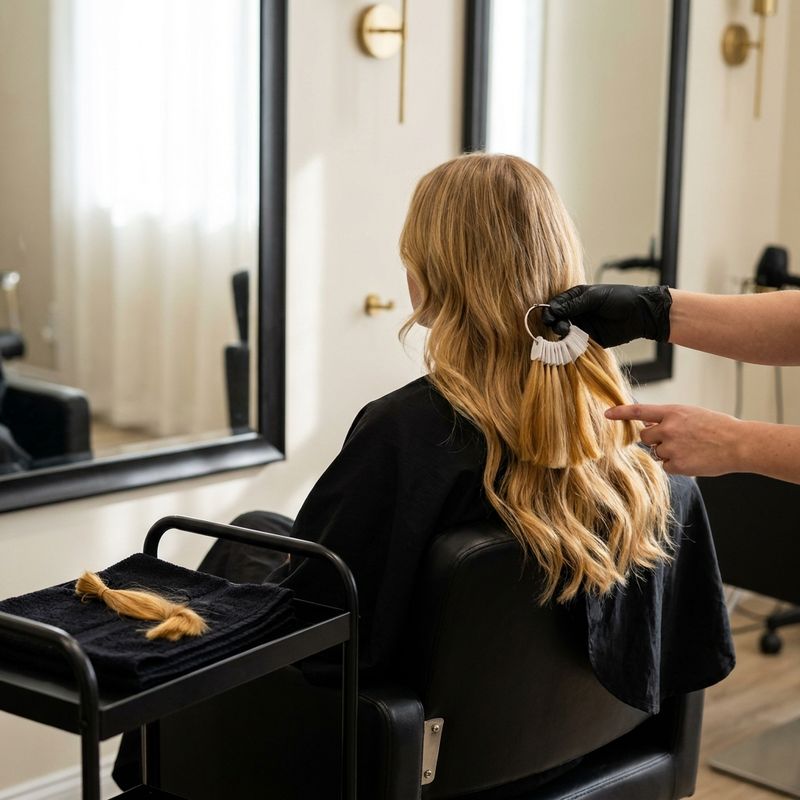
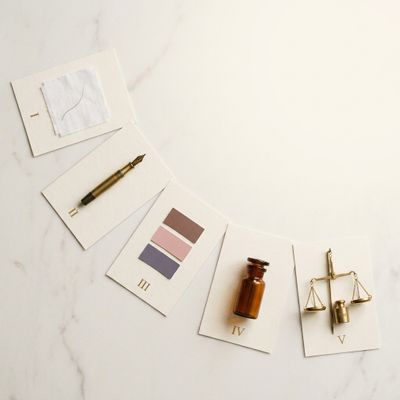
Before you mix anything: each person’s golden is found in the swatch book.
Why does someone dislike a color that is well done?
Almost always for one of three reasons, and all three start before anything is mixed.
The word doesn’t mean the same to both of you. “Golden”, “natural”, “ash” or “light blonde” are names, not measurements. Your golden may be a subtle warm tone, and theirs a summer yellow. If each side pictures a different one and nobody checks it against hair or a swatch, the mismatch arrives with the dryer.
The tone was chosen without asking. Toning cool to clean up the underlying pigment is a reasonable technical decision. But neutralizing the warmth is exactly what can take away the golden that person asked for. It’s the same mechanism described in toning mistakes: the toner cancels the warmth and, when there is no warmth left to cancel, what you see is its own cast.
It was judged in another condition. With wet hair, under a single light or with product just applied, the color looks right. Once it’s dry, or at home, the tone that wasn’t in view shows up. On lighter or more porous lengths the tone tends to show first.
The good news is that all three can be asked about in time. All three cost less than a second service.
What should you ask before mixing so it doesn’t happen?
Four questions that fit into the consultation without lengthening it. Each one changes something: the formula, the tone or how you show it at the end.
- “What is golden to you? Show me.” With a photo on their phone or with the swatch book. If they use a photo, keep in mind that flash and room light change color: how to photograph hair color so it looks real.
- “What bothers you about the color you have now?” It’s a question about direction: if they can’t stand the yellow or the orange, they want it calmed down; if what they miss is warmth, toning cool is the wrong road.
- “If we’re unsure, do you prefer warmer or cooler?” One question avoids silently choosing between two directions. It’s the one that would have changed the tone in the opening scene.
- “Where will you see it most, in home light or office light?” It doesn’t change the formula, but it changes how you show it at the end.
For underlying pigment, level and porosity, which already belong to your consultation, the guide is professional color consultation. What gets added here is the part you can’t see in the hair: what that person means by their tone.
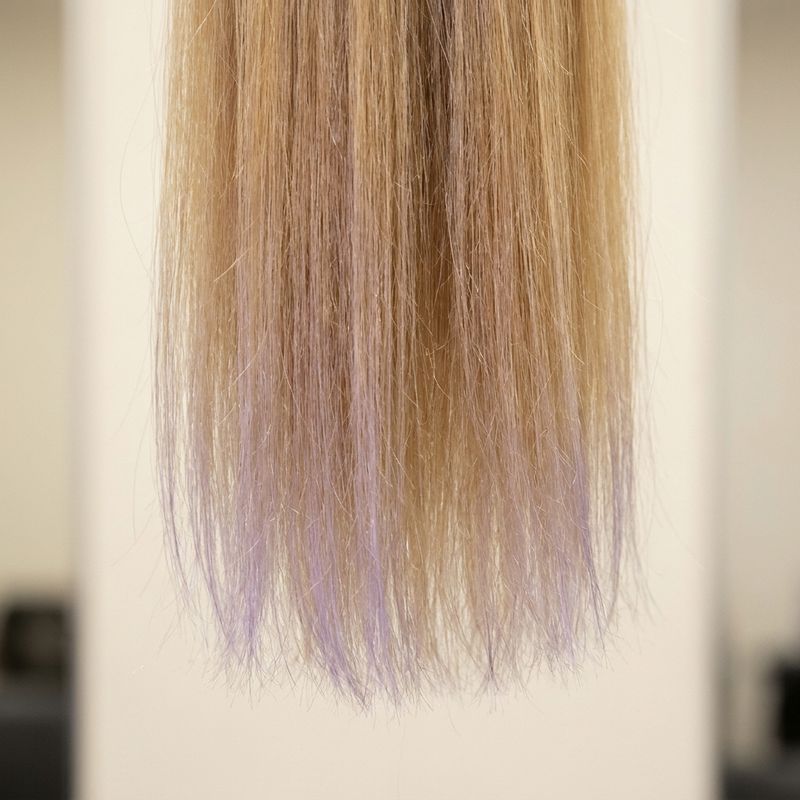
Dry, the cast stays at the ends, which is where the tone tends to show first.
What should you check before calling the color done?
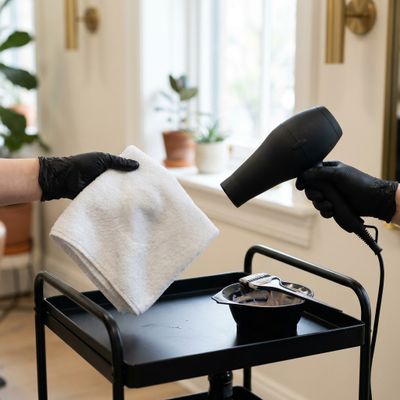
Before taking the cape off, dry the hair and look at it with the person in front of you. Dry hair with no finishing product shows the real color, and that is the one they should sign off on. If you only checked under the station lights, write it down as is: “station, dry” or “station and daylight, dry” takes half a line on the client card and later saves you an argument.
Two things worth looking at at that point:
- Lengths and ends first. They tend to be the zones with the most color history and the ones that over-tone first. If a cast shows up, it’s most likely there.
- Root against the rest. If the root comes out warmer than the lengths, the feeling that “this isn’t even” will arrive even if the tone is right. Better to see it now than in three weeks.
The detail on why drying matters and what each toner’s documentation asks for is in toner on dry or wet hair. And how to see color under salon light, in salon lighting to see true hair color.
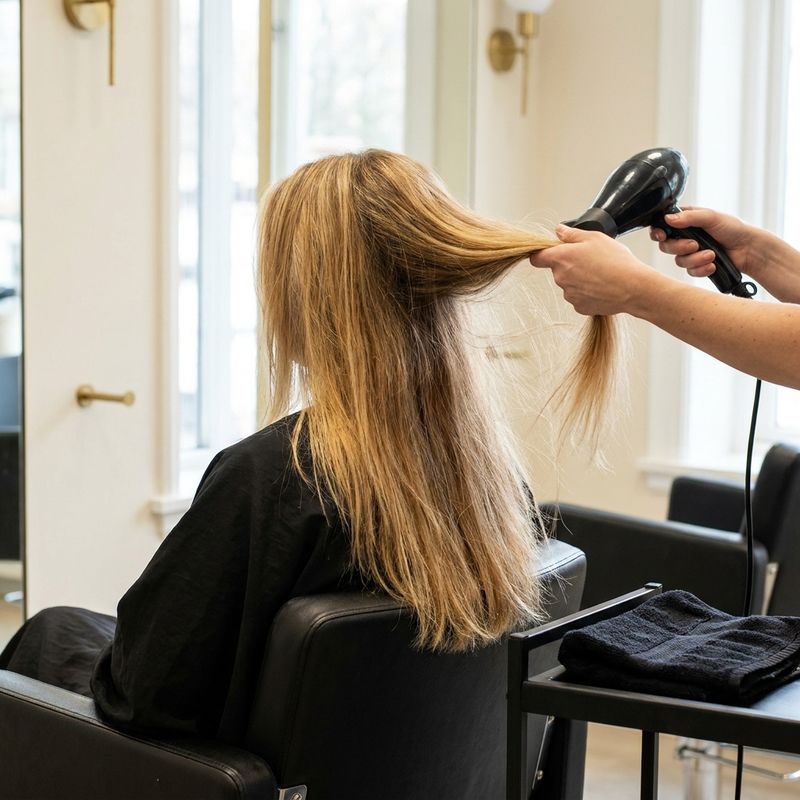
The color is signed off on dry hair, with the window light in view.
How do you offer the adjustment without another blind round?
The right adjustment depends on what the person told you in step one. Three common ways out:
- If it’s a slight case of over-toning, it sometimes fades with washes, and a clarifying shampoo can help remove some of the deposit; how much depends on the line you used. If you’d rather correct today, it’s balanced with the opposite tone, using only as much as it takes to even it out. In the opening scene, the tone opposite that violet is yellow, the family of the golden that person asked for. The step by step is in toning mistakes.
- If they want another level, toner isn’t the tool. Before lightening again, a strand test and, if the hair is already lightened, an elasticity test: they tell you whether that fiber can take another pass today. How to do them, in the strand test and in the elasticity test.
- If they prefer to wait and see, that’s fine, as long as what was decided and when it will be reviewed is written down. A “we’ll see” with no date is a complaint that comes back bigger.
And set your policy before it happens, not with the person in front of you: which adjustments belong to the service and which are already another service. If the fix turns into a correction, the price and the stopping point go in writing, as in how to quote a color correction session by session.
How do you write it down for the next visit?
Write three things on the client card, one line each: what they asked for in their own words, what was done and what bothered them, with the light and the hair state in which it was checked. If that person comes back in six weeks saying “it looks different at home”, what you wrote today saves you from starting over. How to record the underlying pigment by zone and the stopping point is in what to record after a color correction.
The rule worth keeping: the color isn’t signed off until that person sees it dry and says whether it’s the one they pictured.
Frequently asked questions
What do I do if my client doesn’t like the color but it’s well done?
Stop and ask what bothers them in concrete terms before touching anything. If the color is well done and it’s a difference in taste, the way out is a small, clear adjustment, not repeating the whole service. What changes, what doesn’t and the cost of the change, if there is one, are said before the bowl opens.
When is it my mistake and when is it a matter of taste?
It’s a technical fault if the color has something that would look wrong to anyone: a cast from over-toning, uneven zones, or a tone that doesn’t match the formula you chose. It’s a matter of taste if the result is consistent with what was agreed and the person expected something else. Looking at the hair dry and comparing it with what they asked for separates the two.
Can I tone again to remove a violet cast?
It depends on what is causing it and on the state of the hair. If it’s a slight case of over-toning, it sometimes fades with washes; if it has to be corrected today, it’s balanced with the opposite tone, as sheer as possible and over the underlying pigment you have now. The detail is in toning mistakes.
How do I stop hearing this again at the next visit?
By asking before mixing what the person means by their tone, showing them a swatch or a photo while dry, and writing down what was asked for and what was done. A direction question like “warmer or cooler if we’re unsure?” avoids deciding in silence.
In short
- Stop before correcting. Ask what bothers them, with nothing mixed yet.
- Dry it and look with the person in front of you. The color is signed off dry, not with wet hair.
- Separate technical fault from taste. The first you fix; the second you talk through and adjust.
- Ask what their golden is before mixing. Then have them point to it in the swatch book.
- Write down what they asked for and what was done. It saves you starting over at the next visit.
Calculate professional formulas with AI
Want to plan the tone around the underlying pigment in front of you and what your client told you they are after?
What question do you ask before mixing so the color doesn’t surprise you at the blow-dry?
Manufacturer sources
Manufacturer documents consulted for this article. A copy of each one is kept, and the passages noted from it are checked against that copy.
Note each one's country: the same line's instructions can differ from one market to another, so follow the directions for the product you use.
Related articles


Practice with our colorimetry tools
Calculators, neutralization wheel, AI consultation...
The Blendsor newsletter
Color techniques and trends for professionals. No spam.
You know the theory. What about today's case?
Send a photo to the Blendsor advisor and get an answer grounded in colour theory: toner, developer and timing, with the brands on your shelf.
Ask about your caseWritten by the Blendsor team
Professional hair colorimetry experts with experience in AI-assisted formulation. We combine color science, salon practice and technology to help colorists formulate with precision.